
Burkina Faso, Mali and Niger unite for joint 2032 Africa Cup of Nations bid
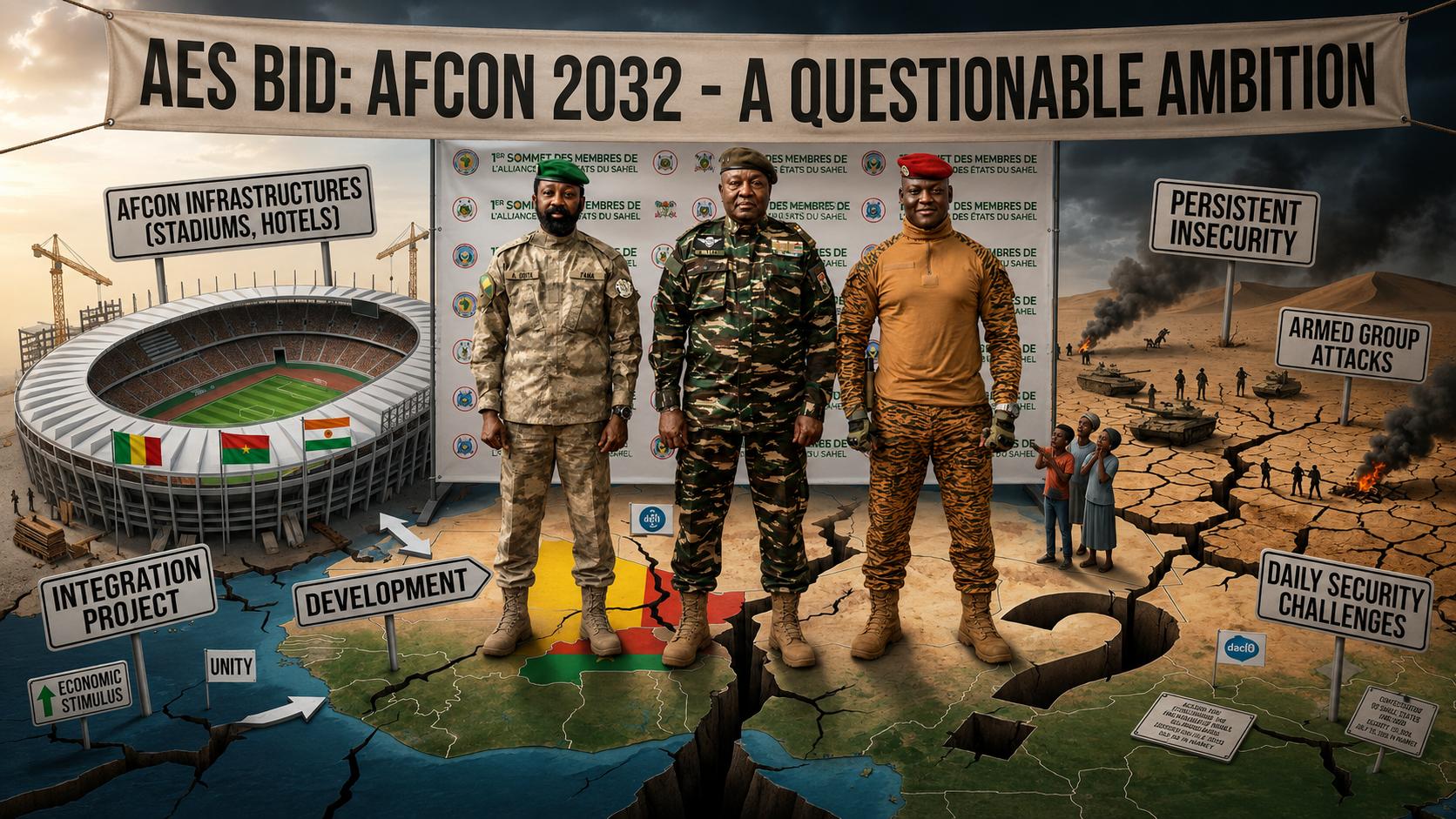
The governments of Burkina Faso, Mali and Niger have submitted a joint bid to host the 2032 Africa Cup of Nations (CAN), positioning the initiative as a beacon of cooperation among the three nations of the Alliance of Sahel States (AES). Yet beneath the rhetoric of continental unity, serious questions linger about whether these countries currently possess the necessary security and stability to pull off Africa’s premier football tournament.
Hosting the CAN is no mere logistical feat; it demands an environment where athletes, officials, media representatives, fans and thousands of visitors can move freely and safely for weeks. This is precisely where the trio’s candidacy faces its sternest test. Despite the military-led authorities in each nation vowing to restore order and reclaim territory from armed groups after their respective coups, violence remains a daily reality. Civilians, soldiers and critical infrastructure continue to be targeted, with entire regions still grappling with chronic insecurity.
A clash between ambition and immediate necessity
For critics, the timing of this bid appears misaligned with ground realities. When entire communities still face threats to their safety in markets, schools and on roads, can these nations realistically prioritize hosting an influx of international tourists and delegations? The question underscores a deeper concern: should the focus not first be on securing the safety of local populations before embarking on a continent-scale spectacle?
The logistical hurdles are equally daunting. A successful CAN requires world-class stadiums, but also robust road networks, international airports, ample hotel capacity, advanced medical facilities and foolproof security protocols. Yet Burkina Faso, Mali and Niger continue to divert significant financial resources toward counter-insurgency efforts, raising doubts about their ability to fund such an extravagant project.
International credibility hangs in the balance
Global football’s governing bodies, commercial sponsors and broadcast partners all insist on one non-negotiable condition: stability. Any whiff of ongoing violence or political uncertainty could derail not only the bid but also the tournament’s reputation. The reputational risk is particularly acute for Burkina Faso, Mali and Niger, whose post-coup transitions were initially justified by promises of improved security. Yet the persistence of attacks in border regions and urban centers has eroded public trust in the new leadership’s efficacy.
The debate transcends football. For many citizens, the true measure of success for the military-led governments remains the restoration of everyday security. The coups that ousted civilian leaders were sold to the public as a path to more effective counter-terrorism strategies. Today, however, the continued presence of armed groups in vast swathes of the three countries challenges that narrative.
Can a CAN bid be a catalyst for change?
Proponents argue that hosting a major tournament could galvanize national pride and spur infrastructure upgrades, from transportation to hospitality. Yet such benefits hinge entirely on the bid’s credibility—which, in turn, depends on demonstrable progress in security, governance and public trust. Until tangible improvements are made, skepticism will persist that Burkina Faso, Mali and Niger are prematurely shifting resources and attention away from the immediate needs of their people.
The path forward demands more than political declarations. It requires concrete, measurable steps toward stability—steps that reassure not only international stakeholders but, crucially, the citizens whose safety remains at risk. Only then can a CAN bid transcend ambition and become a genuine emblem of progress for the Sahel.