
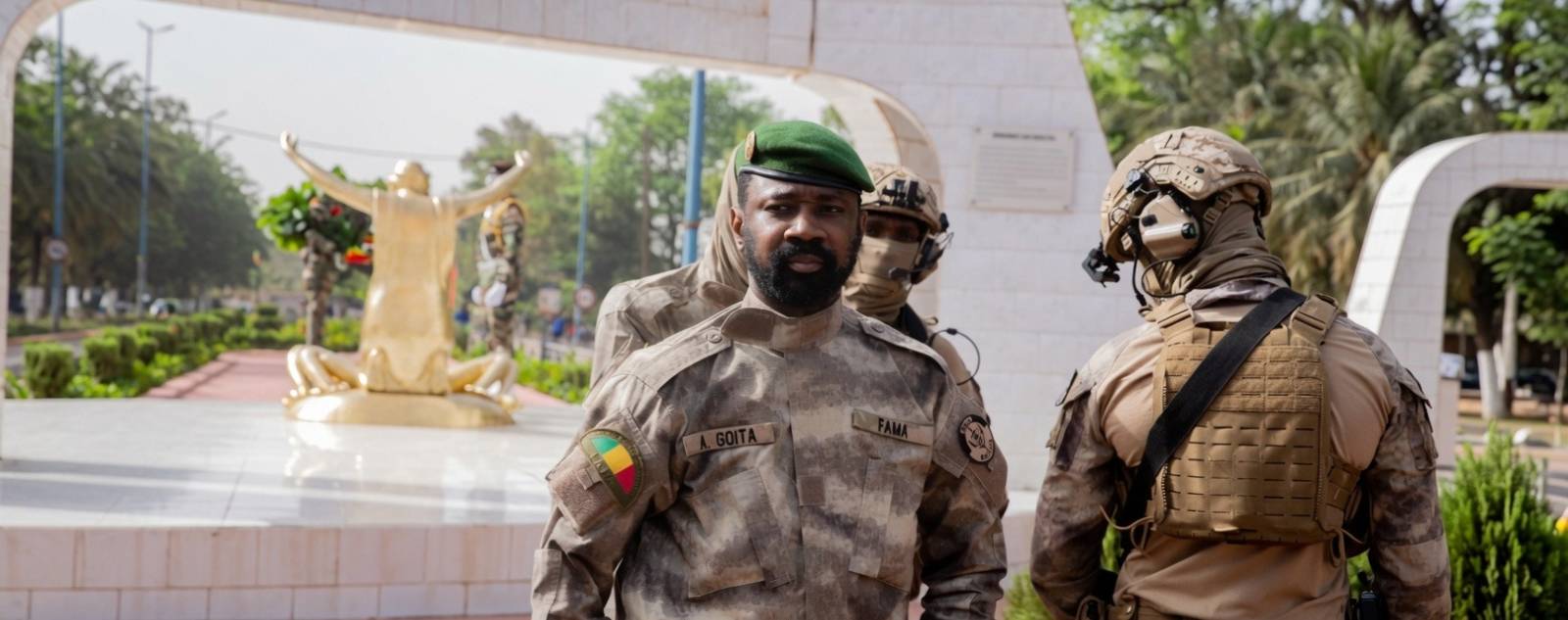
The Malian transitional government insists its armed forces are growing stronger and reclaiming control over the country’s territory. Yet, the inauguration of the Military Tribunal of Mopti in Sévaré on 19 October 2026 paints a far bleaker picture. With 72 defendants—69 of them soldiers—standing trial across 43 cases involving unlawful firearm trafficking, desertion, and violent offenses, the proceedings reveal an institution riddled with systemic failures breeding from within.
State-supplied arms fueling the enemy’s firepower
One of the most troubling disclosures is the rampant mismanagement of military equipment. Close to half of the cases center on lost, stolen, or diverted weapons, ammunition, and related supplies. This isn’t just bureaucratic incompetence—it’s a critical security flaw where arms meant for Malian troops are actively reaching hostile hands.
In the conflict zones of central and northern Mali, gear diverted from official inventories—whether through negligence, bribery, or deliberate cooperation—ends up in the possession of militant groups like the Group for the Support of Islam and Muslims (JNIM) and the Islamic State in the Greater Sahara (EIGS). While Bamako denounces foreign sponsors of terrorism, the Sévaré trials uncover a self-sustaining black market thriving within military facilities. The paradox is stark: Malian soldiers are increasingly falling to bullets funded by their own government’s defense budget.
Rising desertions and atrocities erode public trust
Desertion, labeled by military prosecutors as the second most frequent offense, signals a collapse in morale and a breakdown in discipline. The escalating number of soldiers abandoning their posts or disappearing without leave reflects a profound disillusionment that no patriotic rhetoric can mask. Despite repeated appeals for reinstatement and threats from top brass, the drain on frontline personnel persists.
Even more disturbing are the accusations of unlawful killings, torture, abductions, and sexual assaults carried out by troops against civilians. These crimes, now under the scrutiny of the military court, validate long-standing alerts from human rights observers. Such abuses drive a wedge between the army and local populations, cutting off vital intelligence networks while handing insurgents a powerful recruitment tool: the narrative of resistance against state brutality.
A justice system buckling under its own weight
The tribunal in Mopti, promoted as a showcase of transparency and efficiency, instead highlights severe systemic shortcomings. Authorities blame insecurity, a lack of judges, and logistical hurdles for the infrequent hearings. The outcome is a backlog of cases that leaves defendants in prolonged pretrial detention—some for years—a practice condemned by the Malian Bar Association as a violation of due process.
Demanding accountability from the top ranks
For Colonel Assimi Goïta and the military’s upper echelon, the Sévaré trials cannot be dismissed as mere administrative cleanup or a PR stunt. They represent a critical alert: no battle plan can triumph if command frameworks permit weapons to leak into enemy hands, if unit cohesion frays under strain, or if judicial processes move at a crawl. Before asking citizens for unwavering faith, Mali’s defense establishment must first address its internal rot—and plug the leaks sapping its vitality from the inside out.