
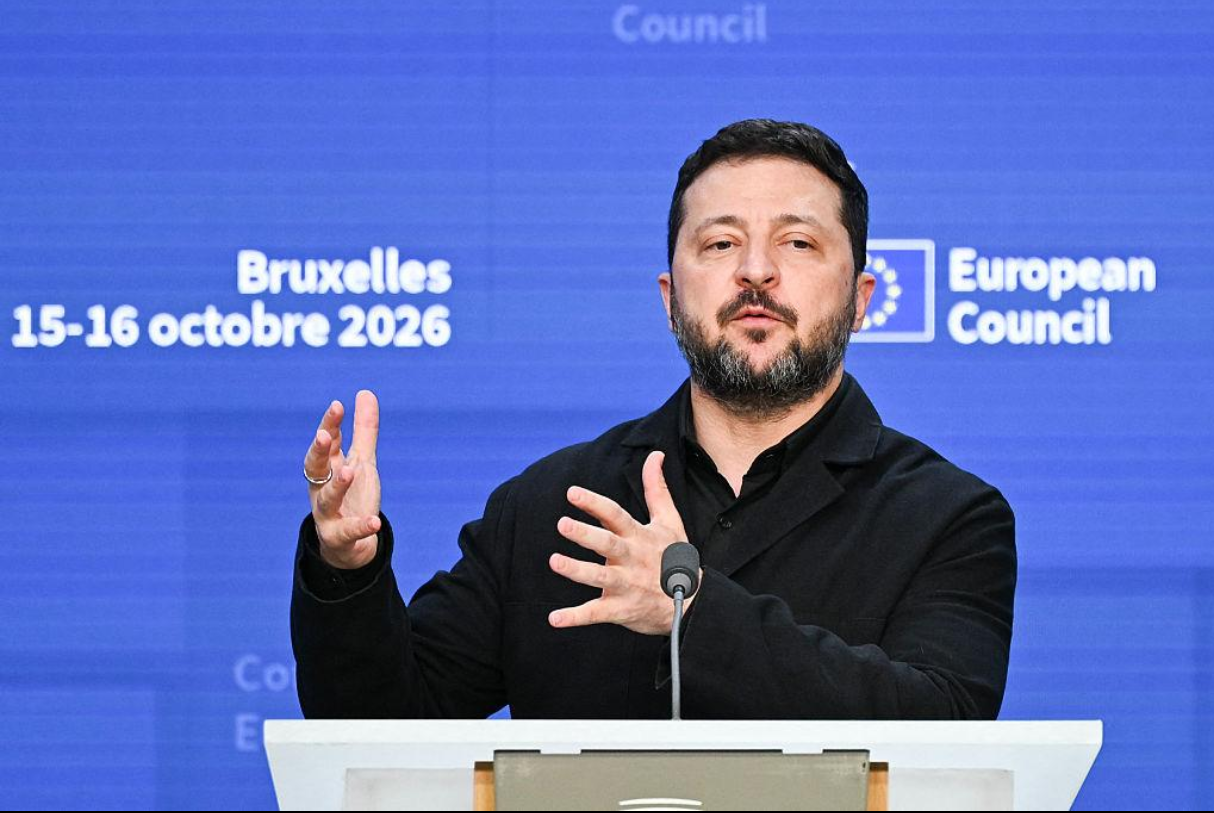
The strategic dilemma at the heart of Ukraine’s war took center stage on October 21, 2026, when President Volodymyr Zelensky announced his country’s willingness to freeze the current frontlines—a bold move aimed at halting further bloodshed. Yet, in a follow-up interview with CNN the next day, he drew a firm line: this pause in fighting would not equate to recognizing Russian-occupied territories as Moscow’s or abandoning Ukrainian-held areas, particularly in the embattled Donbass region.
The stakes of a battlefield pause
Zelensky’s proposal frames the frontline freeze as a pragmatic step toward de-escalation. Speaking to Fox News on October 21, he argued that halting active combat could create space for political dialogue after years of devastating conflict. The immediate goal? Stopping the loss of life and destruction. For Ukraine, this isn’t capitulation—it’s a tactical pause, one that buys time to address the war’s deeper, more intractable issues.
Crucially, the president emphasized that freezing the frontlines would not legalize Russia’s territorial gains. The existing battle lines would mark a temporary military status quo, not a formal acknowledgment of Moscow’s annexation claims. This distinction is vital: for Kiev, the integrity of its borders remains non-negotiable, even amid efforts to end the fighting.
Security guarantees as the next battleground
Beyond the ceasefire, Zelensky’s vision hinges on securing ironclad security guarantees from Washington and European capitals. Without them, any truce risks becoming a fragile interlude before renewed hostilities. The question looms: what form would these guarantees take? Would Western allies commit to military or diplomatic measures to deter future Russian aggression? And how would they respond if Moscow violated the terms of a potential deal?
These uncertainties arise against a backdrop of strained relations between Kiev and its key backers. Zelensky’s CNN interview highlighted recent tensions over U.S. support, including delays in military aid and critical communication systems for Ukrainian forces. Yet, despite these challenges, he continues to view America as indispensable to any lasting resolution. Europe’s role is equally critical, with Ukraine pressing for long-term commitments that go beyond mere ceasefire backing.
Territory: the non-negotiable line
On October 22, Zelensky doubled down on his stance in an interview with CNN, rejecting any notion of ceding territory. “Our land is vital because it’s about the people, not kilometers,” he stated, underscoring the human cost of the war and Ukraine’s unwavering claim to its sovereign borders. Even under a ceasefire, occupied regions would remain, in Kiev’s eyes, Ukrainian.
This position exposes the core tension in negotiations: How can the frontlines stabilize without legitimizing Russia’s military gains? For Moscow, control over occupied areas—especially the entirety of Donetsk—is a red line. For Ukraine, surrendering these territories would mean betraying its sovereignty and the sacrifices of its people. A ceasefire might reduce violence, but it wouldn’t resolve the fundamental dispute fueling the war.
A fragile path forward
Zelensky’s proposal opens a narrow diplomatic window, but it falls short of signaling an imminent peace deal. Russia and Ukraine remain deadlocked over territory, ceasefire terms, and the security mechanisms needed to prevent a return to war. Russian President Vladimir Putin, in his own remarks on October 22, expressed openness to U.S.-mediated talks while insisting on addressing Moscow’s security concerns—a stance that clashes with Kiev’s demands.
The critical question remains: Can the war be paused without conceding land? Ukraine’s answer seems to lie in separating the immediate military reality from the long-term legal recognition of its borders. A frontline freeze could mark the first step toward de-escalation—provided both sides agree on its terms and robust guarantees accompany the truce. Yet, with Moscow and Kiev’s territorial and security demands still at odds, the prospect of durable peace remains elusive.
For now, Ukraine walks a tightrope, balancing the urgent need to stop the fighting with an unyielding commitment to its sovereignty. The path is precarious, but it may be the only way to edge toward negotiations without sacrificing the nation’s heartland.