
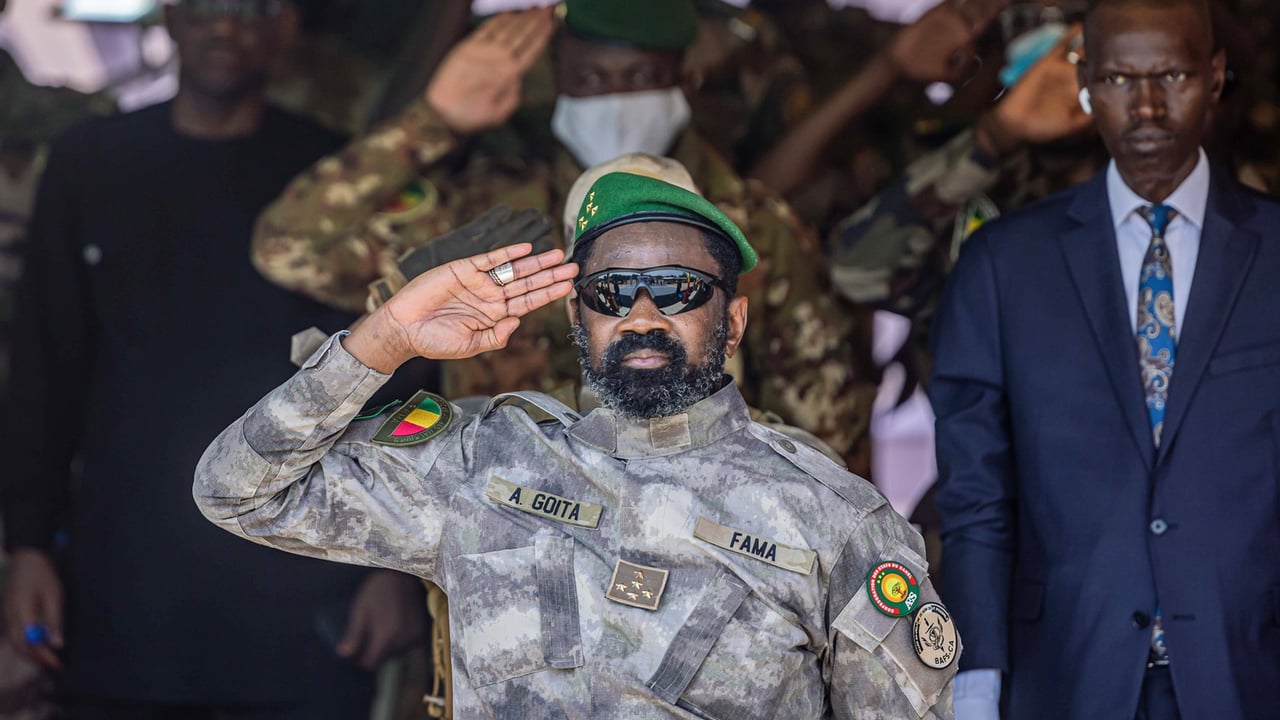

In the heart of Bamako, Assimi Goïta stands as a towering figure amidst a land grappling with profound challenges. The Malian head of state, whose leadership has reshaped the nation’s trajectory since 2020, finds himself at the epicenter of a fragile political and security landscape. His presence at the recent state funeral for Sadio Camara, the late defense minister, underscored both his centrality in Mali’s affairs and the volatile environment that continues to define his rule.
From coup leader to head of state: a swift ascent
Assimi Goïta’s journey from military officer to Mali’s de facto leader has been nothing short of meteoric. A colonel in the Malian armed forces, Goïta first rose to prominence in August 2020 when he led a coup that ousted then-president Ibrahim Boubacar Keïta. The move, initially hailed by many Malians weary of corruption and mismanagement, marked the beginning of a turbulent transition period.
By May 2021, Goïta orchestrated a second coup, this time detaining transitional leaders including Bah N’Daw, the civilian figurehead installed after the first takeover. The power grab solidified his control and set the stage for a new political order—one where the military’s influence would only grow stronger.
The weight of leadership in a fractured nation
Mali today faces a web of crises that test even the most seasoned leaders. Insurgencies in the north, fueled by groups like the Jama’at Nusrat al-Islam wal Muslimin (JNIM), have displaced hundreds of thousands and stretched the state’s resources to their limits. Economic stagnation, weakened institutions, and a population divided over the role of foreign partners have further complicated Goïta’s task.
His government’s pivot toward partnerships with private military companies and neighboring states reflects a pragmatic, if controversial, approach to security. Yet, this strategy has drawn criticism from both domestic observers and international actors wary of Mali’s growing isolation on the global stage.
Balancing power and legitimacy
Assimi Goïta’s authority rests on a delicate equilibrium. While sections of the military and urban populations continue to rally behind him, others question the sustainability of his rule. The absence of transparent elections and the suppression of dissenting voices have fueled debates about the true nature of his leadership—whether it is a path toward stability or an entrenched authoritarianism.
Recent political maneuvers, including the dissolution of opposition parties and the tightening grip on media outlets, suggest a leadership increasingly intolerant of dissent. Yet, Goïta’s defenders argue that such measures are necessary to prevent the country from descending into chaos, particularly in the face of relentless security threats.
The road ahead: uncertainty and resilience
As Mali lurches forward, the challenges facing Assimi Goïta are as daunting as they are numerous. The loss of key figures like Sadio Camara, a close ally and architect of the government’s security policies, leaves a void that will be difficult to fill. The nation’s future hinges on Goïta’s ability to navigate the treacherous waters of domestic politics, regional alliances, and an unforgiving security landscape.
For many Malians, the question remains: Can a leader forged in the crucible of military upheaval steer the country toward lasting peace and prosperity? The answer may well define not just Goïta’s legacy, but the very soul of Mali itself.