
From French Colonial Ambition to Nationalist Cradle
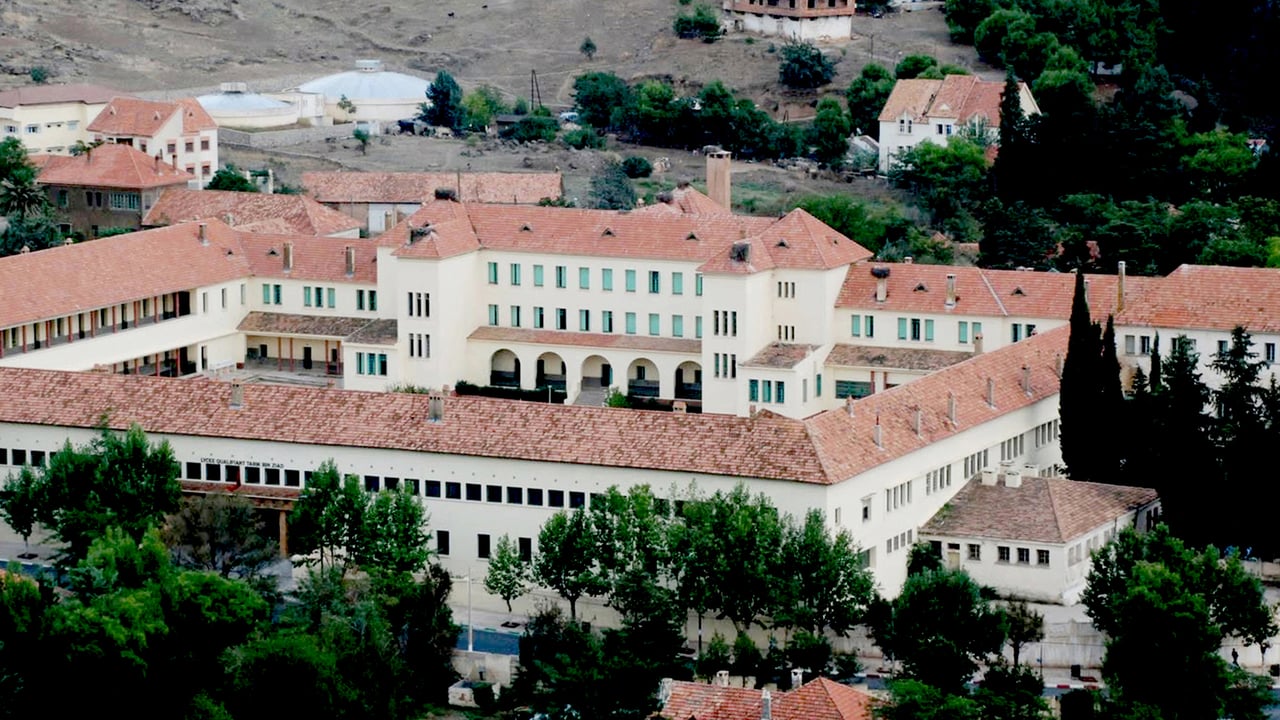
The Collège Berbère d’Azrou, later renamed Lycée Tarik Ibn Ziad, stands today as a silent witness to one of Morocco’s most fascinating educational experiments. Conceived by the French Protectorate in the 1920s, this institution was designed to mold a compliant Amazigh elite—fluent in French, distanced from the nationalist hotbeds of Fès and Rabat, and destined to serve colonial administration and military structures.
History, however, had other plans. The school’s alumni would go on to shape Morocco’s destiny in ways no colonial strategist could have foreseen, producing a generation of independent thinkers whose influence stretched far beyond the classroom.
Alumni Who Shaped a Nation
Among the most notable graduates were figures who would later become pillars of the Moroccan state. Thirteen alumni rose to the rank of general, serving under King Mohammed V and his successor, King Hassan II. Others carved out distinguished careers as ministers, governors, and magistrates. Their rise to power was not merely academic; it was forged in the fires of Morocco’s struggle for independence and subsequent nation-building.
A School That Defied Its Purpose
The institution’s original mission—to cultivate a Francophone Amazigh elite loyal to colonial interests—collapsed under the weight of its own contradictions. Instead of producing obedient administrators, the Collège Berbère d’Azrou became a breeding ground for nationalist fervor. The very students it sought to distance from political movements would go on to play pivotal roles in Morocco’s independence movement and post-colonial governance.
Notably, several alumni were swept up in the turbulent events of 1971 and 1972, when Morocco faced two failed coups. Their involvement in these events underscored the complex legacy of the school—a place where colonial ambition clashed with the realities of a nation awakening to its own identity.
The Legacy of a Unique Educational Model
Scholars like Mohamed Benhlal, in his book Le collège d’Azrou : une élite berbère civile et militaire au Maroc, 1927-1959, have meticulously documented the school’s history and its alumni. Their work reveals how the Collège Berbère d’Azrou transcended its original purpose, becoming one of the most influential elite training grounds in modern Morocco. Its story is a testament to how educational institutions, regardless of their initial design, can evolve into catalysts for national transformation.
Lessons from a Colonial Experiment
The rise and evolution of the Collège Berbère d’Azrou offer a compelling case study in the unintended consequences of colonial policy. What began as a tool of cultural and political control ultimately became a symbol of resistance and progress. Today, the school’s legacy endures in the achievements of its alumni and the broader narrative of Morocco’s journey toward self-determination.
From its modest origins in the Atlas Mountains to its role in shaping a nation, the Collège Berbère d’Azrou remains a landmark in Morocco’s educational and political history.