
Tchad : entre cérémonies officielles et routine des marchés, l’impossible ferveur du 11 août
In N’Djamena, the 66th anniversary of Chad’s independence was marked by the traditional military parade. Caught between economic necessities and a lack of cultural initiatives, widespread public enthusiasm for the celebration remains hard to find.
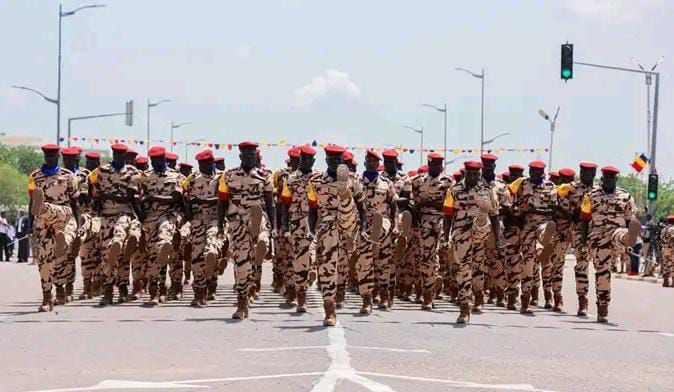
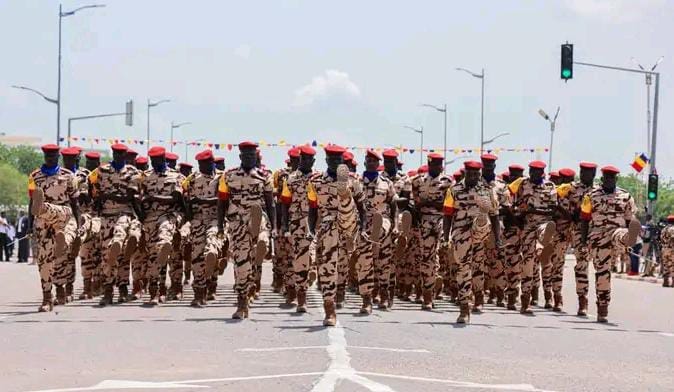
This August 11th, 2026, Chad commemorated the 66th anniversary of its independence. In the capital city of N’Djamena, the customary military parade once again served as the primary highlight of a day that struggled to transform into a genuine popular festivity. Across the city’s markets and most neighborhoods, daily life proceeded without interruption.
In the Chadian capital, while national symbols of the holiday were certainly visible, popular enthusiasm remained understated. As is tradition, the armed forces took center stage in the ceremonies, staging a display of strength and discipline. This solemn demonstration underscored the gravity of Chad’s accession to sovereignty in 1960.
Yet, along the vibrant streets of N’Djamena, the atmosphere was notably devoid of the expected celebratory buzz. Markets bustled, vendors diligently tended to their stalls, and business continued as usual. For a significant portion of the populace, this commemorative day felt more like an ordinary workday than a grand national gathering.
A celebration rooted in institutional protocol
Over the decades, the military parade has solidified its position as the indispensable cornerstone of August 11th. Defense and security forces, civil authorities, and institutional representatives converged for a meticulously choreographed ceremonial event. This highly institutionalized spectacle emphasizes the State’s pivotal role in preserving national memory. However, it leaves a fundamental question unanswered: how can citizens be encouraged to fully embrace and participate in this significant observance?
In numerous other African capitals, national holidays have progressively evolved to incorporate cultural events, sports, and recreational activities. Popular concerts, festivals, exhibitions, or athletic competitions successfully draw in a much broader audience, especially the youth.
In N’Djamena, this festive dimension remains largely underdeveloped. The absence of a major public concert, bringing together artists and the general public, deprives the capital of a moment of collective communion that could extend the official proceedings into a more widely celebrated event.
The reality of economic imperatives
The uninterrupted activity in the markets on a national holiday starkly illustrates a poignant social reality. For small traders, street vendors, and those in the informal sector, a day without work translates directly into an unbearable loss of income.
In an economy where survival largely hinges on daily labor, celebrating independence cannot mean halting commerce. Financial urgencies naturally take precedence over the official calendar. This contrast lends a peculiar resonance to the national holiday: even as authorities celebrate the nation’s sovereignty, a substantial segment of the population is striving to secure its basic subsistence.
The challenge is particularly critical for young people. In a capital city boasting a dynamic demographic, where artists, athletes, and creators seek platforms to express themselves, August 11th could be transformed into a national showcase for their talents.
The possibilities are abundant: a proliferation of free concerts, sports tournaments, cultural festivals, or open stages for emerging talents. The objective is not to merely transform the independence anniversary into a spectacle of entertainment, but rather to empower the people to take an active role in the celebration.
Sixty-six years later, what model for a national holiday?
A national holiday transcends mere official pronouncements and military formations. It ought to embody a vehicle for historical transmission, cultural enrichment, and intergenerational dialogue. This 66th anniversary presents a valuable opportunity to reconsider how Chad honors its past. While the military parade undeniably retains its legitimacy within republican ceremonial, it cannot solely encapsulate the entire memory and aspirations of a nation.
In N’Djamena, the striking disparity persists between the vibrant markets, the relative quiet of the streets, and the formality of the ceremonies. The State commemorates, the army parades, and citizens go about their work.
The task now is to innovate a more inclusive celebration, one in which citizens cease to be mere spectators and become full participants. For 66 years after independence, sovereignty is not solely expressed through uniforms; it is also embodied in culture, art, sports, and the collective spirit of a nation.