
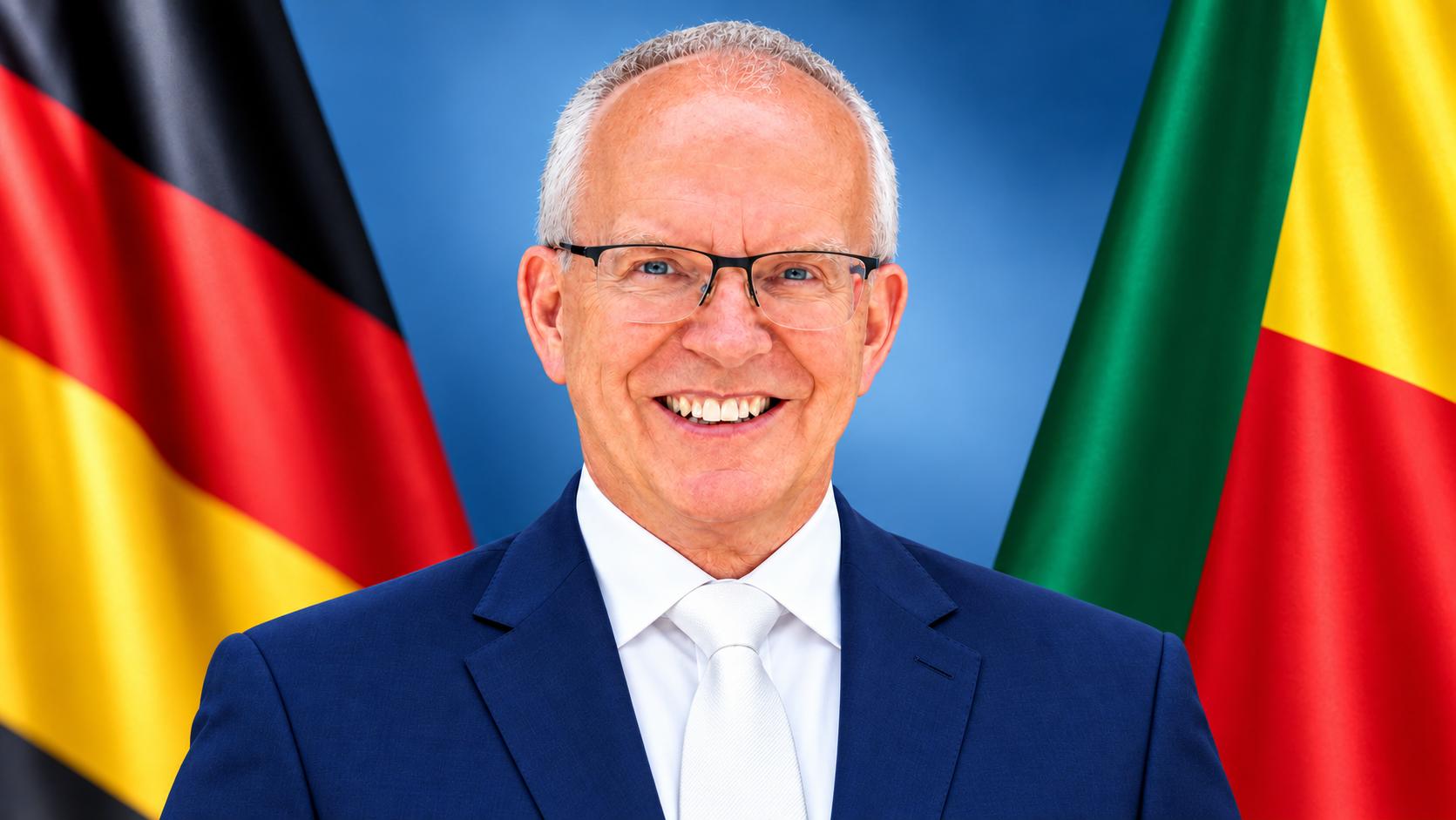
The diplomatic corridors between Cotonou and Berlin are buzzing with activity as the Republic of Benin and the Federal Republic of Germany edge closer to sealing a landmark bilateral security agreement. While global headlines often focus on flashpoints in the Sahel, the real story lies in the behind-the-scenes alignment of interests that’s driving this partnership forward—one rooted in both shared security imperatives and long-term economic ambitions.
The German ambassador to Benin, Dr. Stefan Buchwald, recently underscored this strategic evolution during the country’s national unity celebrations. His remarks weren’t just ceremonial; they laid bare the core motivation: Berlin is doubling down on its commitment to accompany Benin not just in the short term, but in a sustainable partnership that addresses both immediate threats and future growth.
Security cooperation: from reactive measures to structured resilience
The catalyst for this intensification is the deteriorating security situation in northern Benin, where cross-border spillovers from Sahelian conflicts have grown increasingly volatile. Germany’s approach isn’t limited to quick fixes. Instead, it’s building a framework that integrates institutional support, operational insights, and capacity-building into a cohesive strategy.
Central to this effort is the near-finalisation of a bilateral security pact that will serve as the legal and technical backbone for deeper collaboration. This agreement will institutionalise joint strategic assessments, regular high-level military dialogues, and targeted support for Benin’s Forces de Défense et de Sécurité (FDS). The focus isn’t merely on equipment supply but on systematic upskilling—training programs tailored to operational needs, logistical streamlining, and interoperable crisis response mechanisms.
The economic pivot: unlocking private investment as a force multiplier
Security partnerships rarely exist in isolation, and Germany’s engagement with Benin is no exception. Berlin’s broader agenda is to intertwine stability with prosperity, transforming security cooperation into an economic catalyst. This dual-track approach is becoming a blueprint for Germany’s West African strategy, where political commitment meets pragmatic economic engagement.
The cornerstone of this drive is the Glo-Djigbé Industrial Zone (GDIZ), a flagship project designed to attract foreign direct investment. Coupled with Benin’s pro-business reforms—spearheaded by the Agence de Promotion des Investissements et des Exportations (APIEx)—the country is positioning itself as an investment hub for European firms seeking stable, low-risk opportunities in Francophone Africa.
Ambassador Buchwald’s call for the reopening of Benin’s embassy in Berlin underscores the depth of this economic realignment. Such a move isn’t symbolic; it’s a strategic signal to German businesses that Cotonou is serious about creating an enabling environment for trade, logistics, and industrial partnerships.
Sustainable development as the glue binding the partnership
While security and economics dominate headlines, the partnership’s sustainability hinges on social and environmental resilience. Germany’s development cooperation with Benin is built on three pillars designed to foster long-term stability while aligning with local priorities:
- Good governance and decentralisation: Strengthening public finance management and empowering local governments to deliver services more efficiently. This ensures that resources flow directly to communities, reducing systemic vulnerabilities that often fuel insecurity.
- Private sector and vocational training: Bridging the skills gap by aligning educational programs with market demands. The goal? Reduce youth unemployment—a key risk factor for radicalisation—while nurturing a workforce that can sustain economic growth.
- Natural resource stewardship: Promoting biodiversity conservation and sustainable water management to safeguard Benin’s ecological assets. These initiatives aren’t just environmental necessities; they’re economic opportunities, from eco-tourism to climate-resilient agriculture.
What’s driving Berlin’s strategic shift?
The convergence of security and economic interests isn’t happenstance. Several undercurrents explain Germany’s deeper bet on Benin:
- Geopolitical repositioning: As global powers recalibrate their African strategies, Germany is seeking to balance its presence across the continent, avoiding over-reliance on any single country or region.
- Sahel spillover containment: The instability in Mali and Burkina Faso has created a security vacuum that threatens to spread southward. Benin’s relative stability makes it a natural partner for preventive engagement.
- Economic diversification: Europe’s push for supply chain resilience is turning Africa into a key alternative. Benin’s strategic coastal position and improving business climate make it a prime candidate for German investors.
- Model of collaboration: Berlin is keen to demonstrate that development aid and security cooperation can coexist without compromising sovereignty—a lesson it’s applying here before scaling up in other West African states.
What lies ahead for Benin and Germany?
The roadmap for this partnership is clear, but execution will determine its success. Key milestones include:
- The ratification of the bilateral security pact, which will unlock dedicated funding and joint mission frameworks.
- The expansion of German corporate presence in Benin, supported by APIEx’s incentives and the GDIZ’s infrastructure.
- The operationalisation of decentralised governance reforms, ensuring that development benefits reach grassroots levels.
- The reopening of the Beninese embassy in Berlin, symbolising a commitment to reciprocity and mutual growth.
For Benin, this partnership offers a lifeline to consolidate its stability and economic transformation. For Germany, it’s an opportunity to carve out a leadership role in shaping West Africa’s future—one that balances security imperatives with economic pragmatism. The months ahead will reveal whether this ambition translates into measurable progress, but one thing is certain: the dynamics in Cotonou-Berlin ties are no longer just diplomatic routines. They’re part of a broader recalibration of power, priorities, and partnerships in the region.