
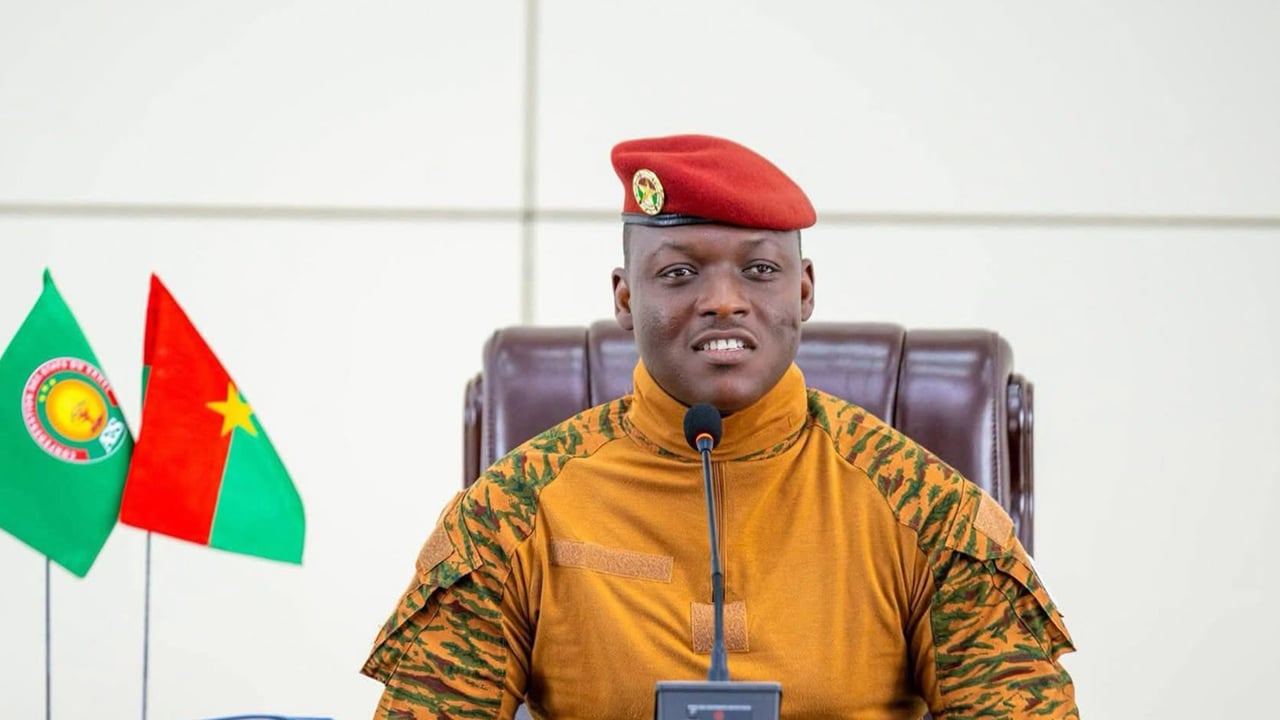

Decoding the ideological synergy between Burkina Faso’s leader and France’s far-right figurehead
The alignment between Burkina Faso’s transitional leader and Marine Le Pen, once dismissed as improbable, now reveals deeper structural forces shaping Sahelian politics. Beyond surface-level rhetoric, their shared discourse on anti-colonial sovereignty and national independence reflects a rare convergence of interests that transcends geography.
The historical roots of a modern alliance
To understand this partnership, we must trace its origins. Traoré’s ascent in Burkina Faso follows decades of post-colonial disillusionment, where foreign intervention and economic dependency have fueled resentment. Meanwhile, Le Pen’s political rise, marked by skepticism toward global institutions and immigration controls, has carved a niche within France’s mainstream debate. Their mutual emphasis on reclaiming political autonomy has created an unexpected yet potent ideological bridge.
Colonial legacies and institutional distrust
Both narratives hinge on a rejection of perceived external interference. Traoré’s administration has positioned itself as a bulwark against Western influence, while Le Pen’s platform consistently challenges European Union policies she views as infringing on French sovereignty. This shared skepticism forms the bedrock of their dialogue, creating a feedback loop that resonates across civil society in both nations.
Economic nationalism as a unifying force
While their approaches differ—Traoré prioritizes resource nationalization and military self-reliance, Le Pen focuses on protectionist trade policies—their mutual emphasis on economic nationalism underscores a broader shift. In Burkina Faso, this translates to tighter control over mining concessions, while in France, it manifests as calls to limit foreign ownership in strategic sectors. This parallelism illustrates how sovereignty, when framed as self-determination, can serve as a universal rallying cry.
Tactical maneuvers and shifting geopolitical alignments
The Burkina Faso-France relationship has never been static, but the current trajectory suggests a historic inflection point. Traoré’s outreach to Le Pen’s movement isn’t merely symbolic; it signals a strategic pivot away from traditional alliances. Observers note that Burkina Faso’s recent accords with Russia and its distancing from Western partners have created fertile ground for this unusual partnership.
Diplomatic isolation and strategic resilience
Isolated by international sanctions and wary of neocolonial undertones in aid agreements, Burkina Faso’s leadership has sought unconventional partners. Meanwhile, Le Pen’s party, increasingly sidelined in European power circles, finds resonance in Traoré’s uncompromising stance. Their mutual positioning as anti-establishment figures has fostered a partnership that defies conventional diplomatic norms.
The role of public perception
This alliance isn’t just a top-down phenomenon. Grassroots movements in both countries have amplified narratives of resistance, framing Traoré and Le Pen as champions against systemic oppression. Social media campaigns in Ouagadougou and Paris have further blurred traditional political divides, creating a transnational dialogue that transcends institutional channels.
What this alignment means for Sahelian sovereignty
The implications of this convergence stretch far beyond Burkina Faso’s borders. As other Sahelian nations grapple with similar challenges—military coups, economic stagnation, and shifting global alliances—the Burkina Faso-Le Pen dynamic offers a template for alternative governance models. The question now is whether this partnership can translate ideological alignment into tangible benefits for local populations.
Security and trade: the practical dimensions
On the ground, the alliance has already yielded concrete developments. Burkina Faso’s military cooperation with Russia, coupled with Le Pen’s advocacy for reduced French military presence in Africa, has reinforced the captain’s position. Meanwhile, the potential for expanded trade between Burkina Faso and like-minded partners in Europe could open new economic avenues, though such moves remain politically contentious.
The specter of isolation and its consequences
Critics warn that this path risks deepening Burkina Faso’s isolation from traditional partners. Western governments have already signaled disapproval of Traoré’s alignment with figures like Le Pen, raising concerns over human rights and regional stability. The challenge for Burkina Faso’s leadership will be balancing strategic autonomy with international cooperation essential for development.
Looking ahead: a new paradigm or a passing trend?
Only time will reveal whether this alliance represents a fundamental realignment in Sahelian politics or a temporary convergence of interests. What remains clear, however, is its potential to reshape regional power dynamics. For Burkina Faso, the stakes are high; for Le Pen’s movement, it’s an opportunity to validate its global ambitions. The world is watching to see if their shared rhetoric can deliver on its promises—or if it will crumble under the weight of political realities.