
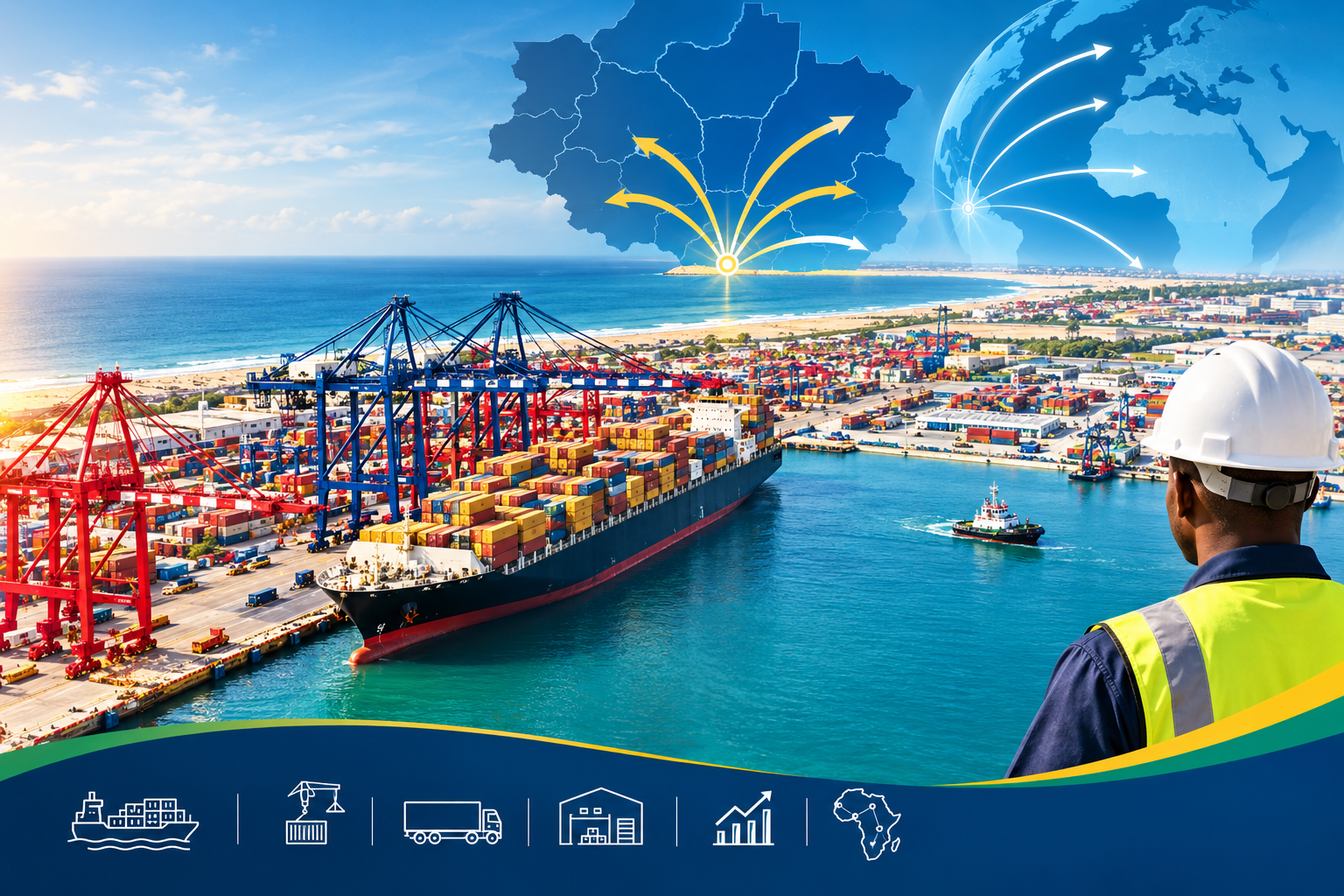
The Port of Cotonou is no longer just a regional gateway it’s evolving into a strategic crossroads that is reshaping West Africa’s trade landscape. While external disruptions once threatened its dominance, behind-the-scenes transformations have positioned it as a resilient logistics hub, far beyond its traditional hinterland ties. The numbers tell the story: 2025 traffic soared to 14.7 million tons a 52% jump while transshipment volumes surged by 312% and exports climbed sharply, reflecting a deliberate shift from dependency to diversification.
Redefining regional trade: a port no longer bound by borders
For years, the Port Autonome de Cotonou’s fate was closely tied to its neighboring landlocked markets Niger, Burkina Faso, and Mali. But today, its strategy is built on something stronger than geography: adaptability. Now, the port is actively expanding beyond traditional transit corridors to become a redistribution hub, fueling flows not only into Benin but across the Gulf of Guinea and beyond. Transshipment volumes, a key indicator of this pivot, have surged by 152% in the first half of 2026 alone, signaling a clear reorientation from inward-focused logistics to outward-facing trade facilitation.
Breaking away from hinterland dependency
Relations with Niger have faced strain, yet traffic growth has not stalled. Instead, Cotonou’s response has been structural: doubling down on transshipment, export growth, and partnerships with regional economies. The result? A decline in reliance on any single corridor and an increase in alternative trade routes, including renewed focus on Nigerian and other coastal markets. By moving beyond the Niger-Benin corridor, the port is not just weathering regional turbulence it’s recalibrating the entire subregional trade map.
The machinery behind the climb: modernization that moves faster than crises
None of this growth has been accidental. A multi-year modernization drive valued at over €450 million has overhauled Cotonou’s operational core. New terminals, expanded basins, upgraded quay infrastructure, and a digitalized logistics chain have cut processing times and improved predictability. Central to this transformation is the Terminal 5 project, supported by a $110 million loan from the African Development Bank, aimed at increasing capacity and accommodating larger vessels. The goal is clear: build resilience not just for today’s challenges, but for tomorrow’s.
From cargo handler to economic catalyst
The ripple effects of these changes stretch across Benin’s economy. Port-driven sectors from logistics and transport to banking, insurance, and digital services are expanding, supported by a more efficient infrastructure that reduces costs and accelerates trade. The rise in oil and industrial exports, particularly through the Glo-Djigbé Industrial Zone, has added another layer: Cotonou is no longer just a gateway for transit goods, but increasingly a launchpad for Benin’s own manufactured and energy products. In 2025, exports through the port grew by 74.8%, a figure that reflects not just volume, but a shift in economic identity.
A port’s new role: centerpiece of Benin’s competitive future
The Container Port Performance Index recently recognized Cotonou’s progress, ranking it 303rd in 2024 a leap of nearly 100 places from the previous year. While global rankings offer only a snapshot, they underscore a deeper shift: Cotonou is being redefined not just as a transit point, but as a destination for international operators seeking efficiency and connectivity. For Benin, this transformation is strategic. By enhancing logistics speed, reliability, and access to markets, the port is helping local businesses integrate more competitively into global value chains.
The long game: sustainability, security, and scale
Yet challenges remain. Logistics costs still weigh heavy, corridor security demands constant attention, and market share in parts of the hinterland is still being recaptured. But the trajectory is unmistakable. With continued digitalization, infrastructure upgrades, and diversification of trade partners, Cotonou is not just defending its position it’s staking a claim to a central role in West Africa’s trade ecosystem. The port is no longer reacting to change; it’s driving it.
The message from Cotonou is clear: in a region where borders shift and trade lanes reroute overnight, flexibility isn’t optional it’s essential. And through strategic foresight, heavy investment, and relentless operational innovation, the Port of Cotonou is proving that resilience can be built one ton at a time.