
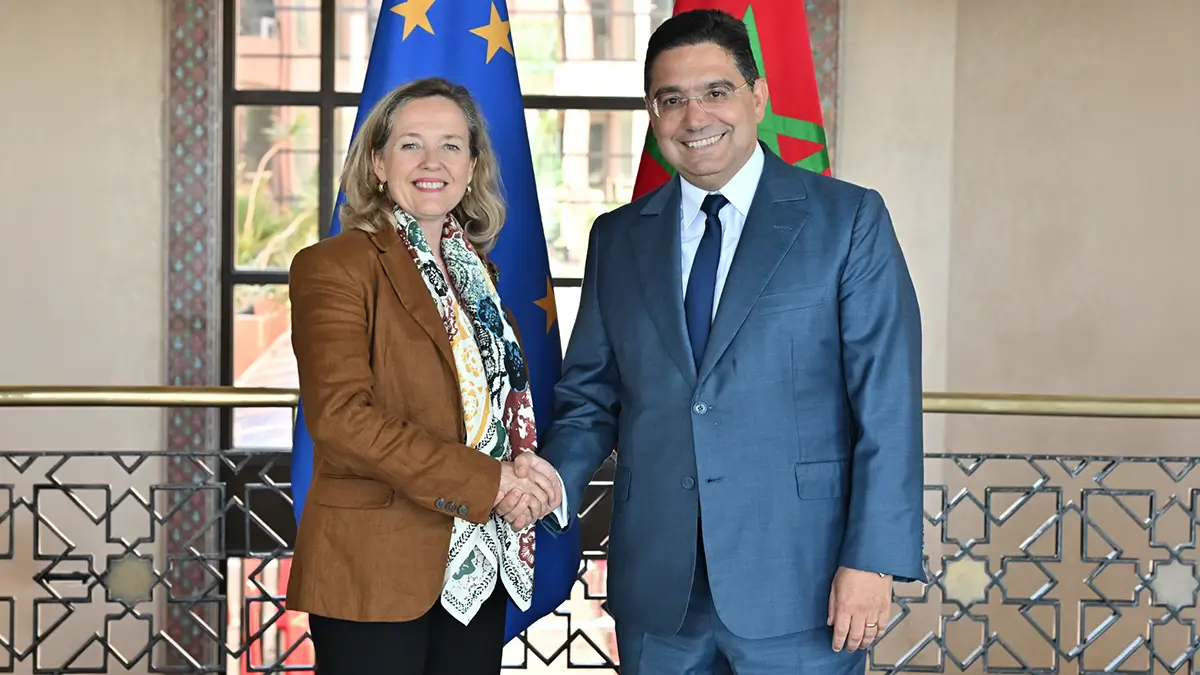
Nadia Calviño praises Morocco’s bridge role between Africa and Europe during BEI visit
- European Investment Bank president met with Moroccan Foreign Minister Nasser Bourita and Economy Minister Nadia Fettah.
- New agreements combine loans and grants totaling over €365 million for rail and highway infrastructure.
The European Investment Bank (BEI) president Nadia Calviño concluded her official visit to Morocco by highlighting the country’s pivotal role as a regional connector between Africa and Europe. This marks her first official trip to the North African nation since assuming leadership of Europe’s primary investment institution.
Morocco: Europe’s strategic partner in North Africa
During her visit — coinciding with the 21st anniversary of BEI’s permanent presence in Morocco — Calviño met with Foreign Minister Nasser Bourita to discuss strengthening economic ties. She emphasized Morocco’s strategic importance as “a pillar of stability, shared prosperity, and regional security” for both Africa and Europe.
The BEI president praised Morocco’s economic reforms under King Mohammed VI, noting they have “consolidated the country’s macroeconomic framework” and enhanced investor confidence. Calviño’s visit underscored the deepening partnership between the BEI and Morocco, with a focus on sustainable development and climate resilience.
€365 million investment package for resilient infrastructure
Calviño also met with Economy and Finance Minister Nadia Fettah to finalize a €365 million investment package combining loans and grants. This funding will strengthen Morocco’s transport infrastructure, with €15 million dedicated to climate adaptation measures for the national railway network and €50 million in BEI loans for rail resilience. The remaining €300 million will enhance highway safety and resilience through the national motorway authority.
50 years of partnership: over €12 billion invested
Since establishing operations in Morocco nearly five decades ago, the BEI has mobilized over €12 billion across sectors including renewable energy, SMEs, health, water, and education. Calviño’s visit included a symbolic stop at a Rabat public school participating in the “Morocco 88” youth music program, supported by both the Moroccan Ministry of Education and the BEI. The initiative fosters social cohesion and youth development through extracurricular music clubs in secondary schools.
In an interview with the Moroccan press agency, Calviño commended Morocco’s economic trajectory, noting that ongoing reforms have “positioned the country as a gateway for international investment” while reinforcing its role in regional stability and sustainable growth.