
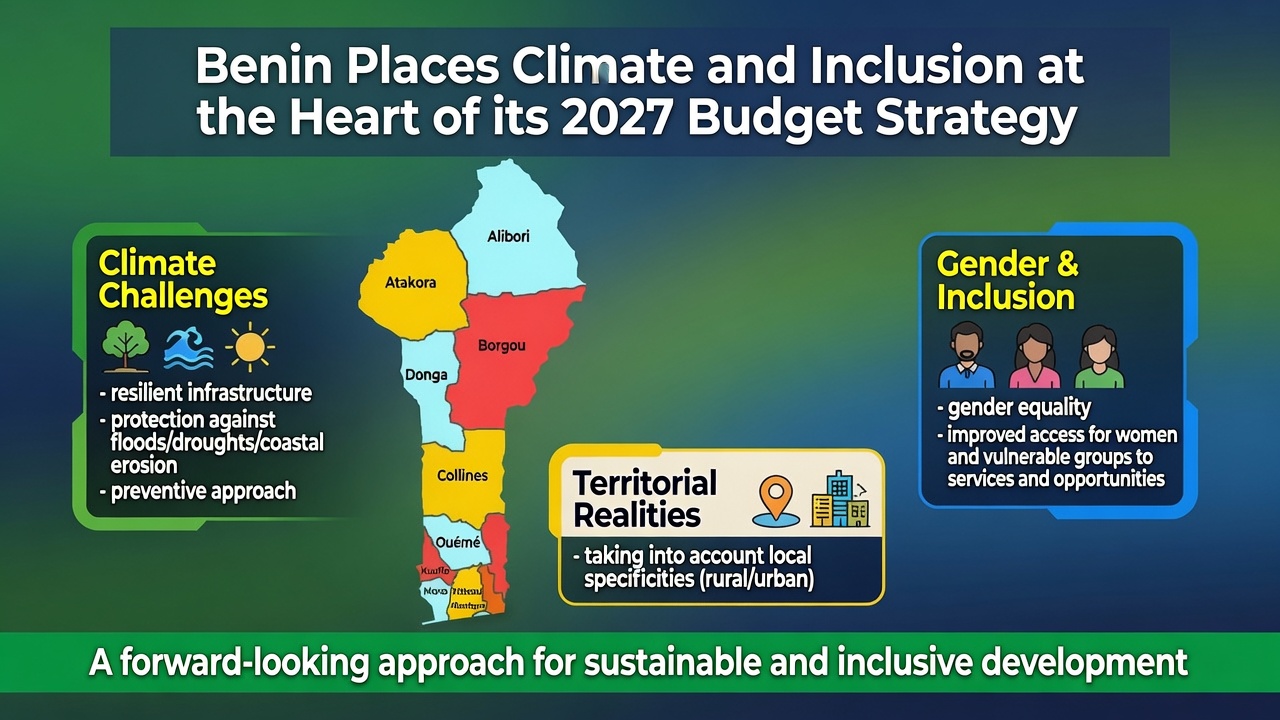
In a landmark initiative to modernize public policy, the Government of Benin has unveiled its 2027 budget framework, placing climate resilience, gender equality, and territorial realities at the core of financial planning. This forward-thinking approach marks a significant departure from traditional budgeting, positioning public investment not merely as an administrative exercise but as a strategic tool for sustainable development and long-term stability.
The decision reflects a strategic pivot in response to escalating environmental threats, including recurrent extreme weather events, resource depletion, and persistent social inequalities. Rather than reacting to crises after they unfold, the new framework prioritizes proactive measures, embedding risk mitigation into the very fabric of fiscal policy. This paradigm shift underscores a commitment to anticipatory governance, where prevention takes precedence over remediation.
climate integration as a cornerstone of fiscal planning
The inclusion of climate considerations represents a pivotal evolution in Benin’s budgetary practices. By aligning financial allocations with environmental imperatives, the government aims to fortify critical infrastructure, shield vulnerable communities, and bolster the nation’s capacity to withstand natural disasters such as floods, droughts, and coastal erosion. This preventive strategy not only enhances resilience but also demonstrates fiscal prudence by curbing the exorbitant economic and social costs associated with future catastrophes.
gender equity as a driver of inclusive growth
Another landmark feature of the 2027 budget framework is its emphasis on gender mainstreaming. Recognizing the differential impacts of public policies on men and women, the government has committed to reallocating resources to ensure equitable access to essential services, economic opportunities, and social protection mechanisms. This inclusive approach targets marginalized groups—particularly women, youth, and other at-risk populations—fostering a more balanced and equitable development trajectory.
territorial specificity as a key to effective governance
The framework also elevates the role of territorial planning, acknowledging that Benin’s diverse regions face unique challenges. Urban centers and rural areas experience distinct pressures, from infrastructure deficits to agricultural vulnerabilities. By tailoring budgetary allocations to local realities, the government enhances the efficiency and relevance of its interventions, ensuring that national policies resonate with the lived experiences of citizens across the country.
This holistic approach signals a more adaptive and responsive public administration, one that aligns fiscal strategy with the evolving economic, social, and environmental landscape. Beyond mere financial allocations, the 2027 budget emerges as a dynamic instrument for national transformation, reducing systemic vulnerabilities while laying the groundwork for resilient and sustainable progress.
The proactive stance adopted by Benin has also strengthened its standing among international development partners. In an era where climate action, social inclusion, and sustainable finance dominate global agendas, the country’s alignment with these priorities positions it favorably to secure additional funding for resilience projects, ecological transition initiatives, and localized development programs.
Ultimately, the 2027 budget framework embodies a vision of governance that prioritizes foresight over reaction. By embedding climate resilience, gender equity, and territorial nuance into its financial blueprint, the government is not merely preparing for the future—it is actively shaping it. This strategic initiative reflects a modern, equitable, and resilient approach to public finance, one designed to deliver broad-based benefits and secure a prosperous path forward for all citizens of Benin.