
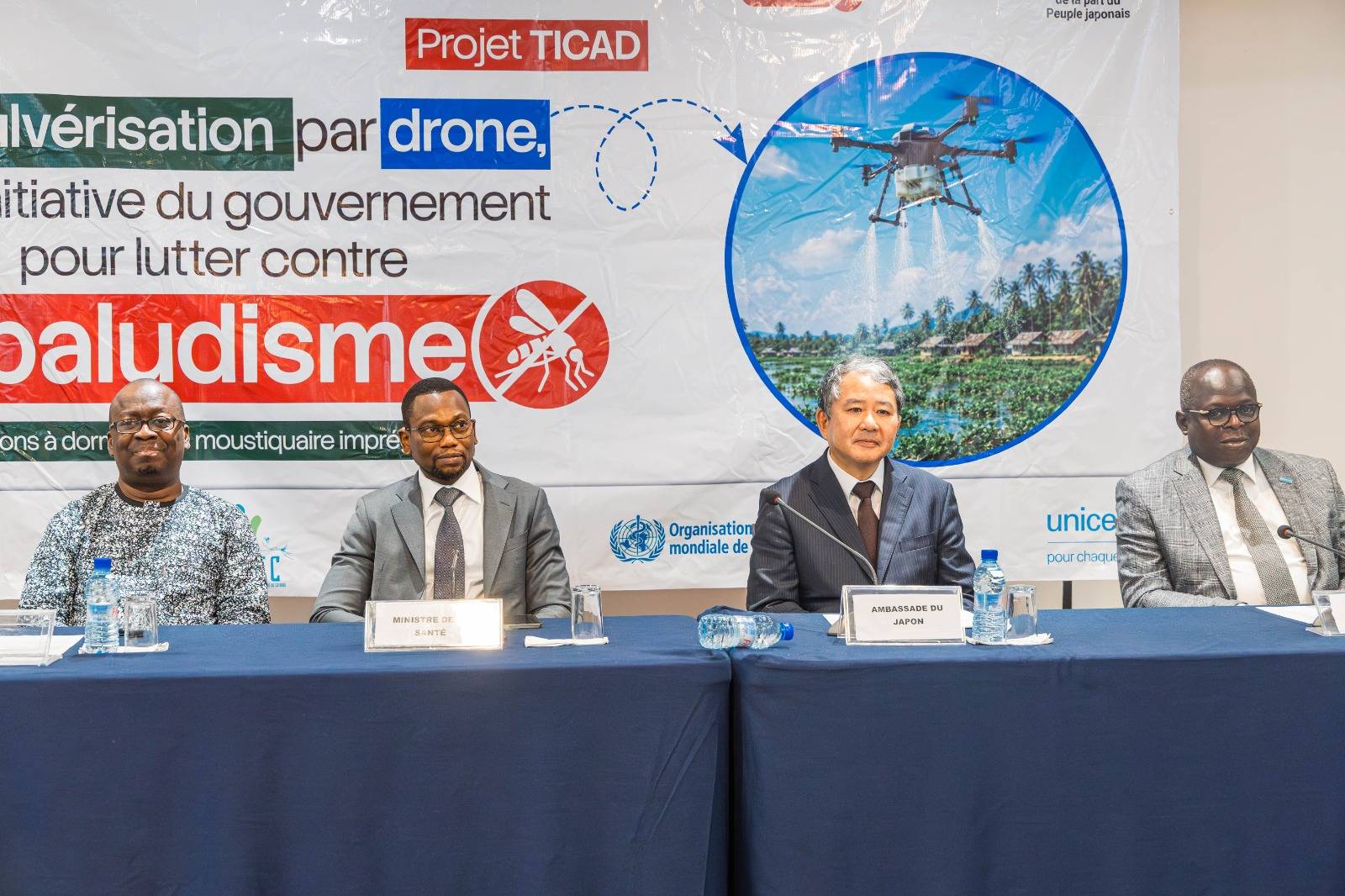
On Tuesday, June 30, 2026, the government of Bénin officially inaugurated a groundbreaking initiative that merges artificial intelligence, geospatial mapping, and specialized spraying drones to neutralize malaria larval habitats. Supported by UNICEF and backed by a 2.3 million dollar investment from Japan, this high-precision strategy is being rolled out across six pilot municipalities. This technological leap represents more than just scientific progress; it offers vital relief to local communities currently struggling under the heavy economic and health burdens of this endemic disease.
A technological offensive against a persistent threat
While the official launch took place in Cotonou, the real impact of this project is already being felt in the marshlands of Abomey-Calavi and the rural landscapes of Copargo. By introducing the “Integrated Action for Malaria Prevention” project, the Minister of Health, Professor Benjamin Hounkpatin, has established a powerful alliance between modern science and community action. The objective is to fundamentally shift the tide against the nation’s most significant health challenge.
For decades, the fight against malaria relied on reactive measures such as distributing bed nets and providing medical treatments. This new initiative, launched alongside the Ambassador of Japan, H.E. Uezono Hideki, and UNICEF Deputy Representative Aude Rigot, adopts a proactive, surgical approach. The strategy targets the vector at its source before it can even pose a threat to the population.
Precision tools for a surgical strike
The operation utilizes a sophisticated three-part technological framework. First, geospatial mapping and artificial intelligence analyze topographical and weather data to pinpoint high-risk environmental zones with metric accuracy. Following this analysis, advanced drones take flight over endemic areas to distribute a larvicide approved by the World Health Organization (WHO). These devices ensure that mosquito larvae are neutralized before they reach adulthood.
Minister Benjamin Hounkpatin emphasized that this method allows for a sustainable reduction in mosquito density. He noted that the use of drones enables interventions that are faster, more precise, and highly effective, particularly in areas that were previously difficult for health workers to reach on foot.
Six pilot regions at the forefront
The government has selected six communes for this initial phase, chosen for their diverse ecological and demographic profiles: Copargo, Djougou, Tchaourou, Ouidah, Abomey-Calavi, and Cotonou. These locations range from high-density urban centers to isolated rural villages, providing a comprehensive testing ground for the drone fleet.
The 2.3 million dollar funding from Japan aligns with the national “Bénin 2060 Alafia” vision. This investment also reflects international priorities discussed at TICAD9, focusing on strengthening the resilience of African healthcare systems against biological threats.
Economic relief for local families
Beyond the clinical benefits, the project is generating significant hope among families and small-scale entrepreneurs. Malaria is not only a health crisis but also a financial drain on Bénin households. By preventing the disease at its source, the program aims to protect the purchasing power of local residents.
In the Abomey-Calavi market, a cloth vendor named Amavi shared the reality of this burden. She explained that during the rainy season, her children are frequently hospitalized, costing her nearly 60,000 CFA francs (about 100 USD) in medical bills—an amount equivalent to a full month’s profit. For workers in the informal sector in Tchaourou or Cotonou, reducing malaria cases means fewer missed workdays and greater financial stability.
Empowering youth for sustainable health
The project also prioritizes human engagement, a core focus for UNICEF. Local youth in the participating communes are being trained to act as health security advocates. Working with community leaders, these young volunteers monitor ground interventions, raise awareness, and promote environmental hygiene, such as managing stagnant water, to prevent new breeding sites from forming.
Aude Rigot of UNICEF highlighted that this synergy between technical innovation and civic mobilization is the key to achieving a lasting impact. By combining drone technology with local vigilance and existing vaccination efforts, Bénin is creating a comprehensive defensive shield. If successful, this pilot model could serve as a blueprint for the entire West African region, signaling a future where the shadow of malaria is finally lifted.