
The Bénin is undergoing a silent agricultural revolution, one that promises to reshape its fruit export sector while securing its place in global markets. Under the leadership of President Romuald Wadagni, the government is implementing a bold strategy that merges cutting-edge technology with robust logistics. At the heart of this transformation: the completion of a state-of-the-art vitroplant facility in Glo-Djigbé and the inauguration of a cutting-edge fruit terminal at Cotonou’s international airport.
The end of raw exports: shifting toward agro-industrial excellence
For decades, Bénin’s agricultural sector relied on exporting raw, unprocessed fruits—a model plagued by post-harvest losses and low added value. The new vision abandons this outdated approach. By focusing on high-demand crops like pineapple, cashew nuts, and mango, the country is targeting lucrative international markets that demand strict quality and traceability standards. The overarching goal? To transition from subsistence farming to a competitive agro-industry, maximizing revenue while minimizing waste.
The Projet d’Appui à la Compétitivité des Filières Agricoles et à la Diversification des Exportations (PACOFIDE) is the driving force behind this shift. Through this initiative, Bénin is building a self-sufficient agricultural ecosystem where technology, infrastructure, and market access converge to unlock unprecedented economic potential.
Glo-Djigbé: Africa’s next seed powerhouse
Nestled within the Glo-Djigbé Special Economic Zone is a game-changing facility: an industrial-scale vitroplant production unit capable of generating 13.5 million disease-resistant, high-yield seedlings annually. This facility is more than just a factory; it is the cornerstone of Bénin’s agricultural sovereignty.
Minister of Agriculture, Livestock, and Fisheries Adin Yeton Bloukounon Goubalan, during a recent inspection, emphasized the strategic importance of this project: “In every agricultural powerhouse, seed technology is the engine of transformation. No nation can achieve agricultural success without controlling its seed industry.”
The benefits are clear:
- For farmers: Access to genetically superior, uniform seedlings that guarantee higher yields and resilience against climate stress and pests.
- For the economy: Sustainably increased productivity per hectare, reducing pressure on land resources while boosting competitiveness against regional rivals like Côte d’Ivoire and Ghana.
To ensure seamless adoption, the government is developing a 1,000-hectare elite demonstration farm where new varieties will be rigorously tested before distribution. This “open-air lab” will serve as a proof of concept, demonstrating the economic viability of modern seed technology to skeptical yet hopeful local producers.
Cotonou’s fruit terminal: preserving quality from farm to flight
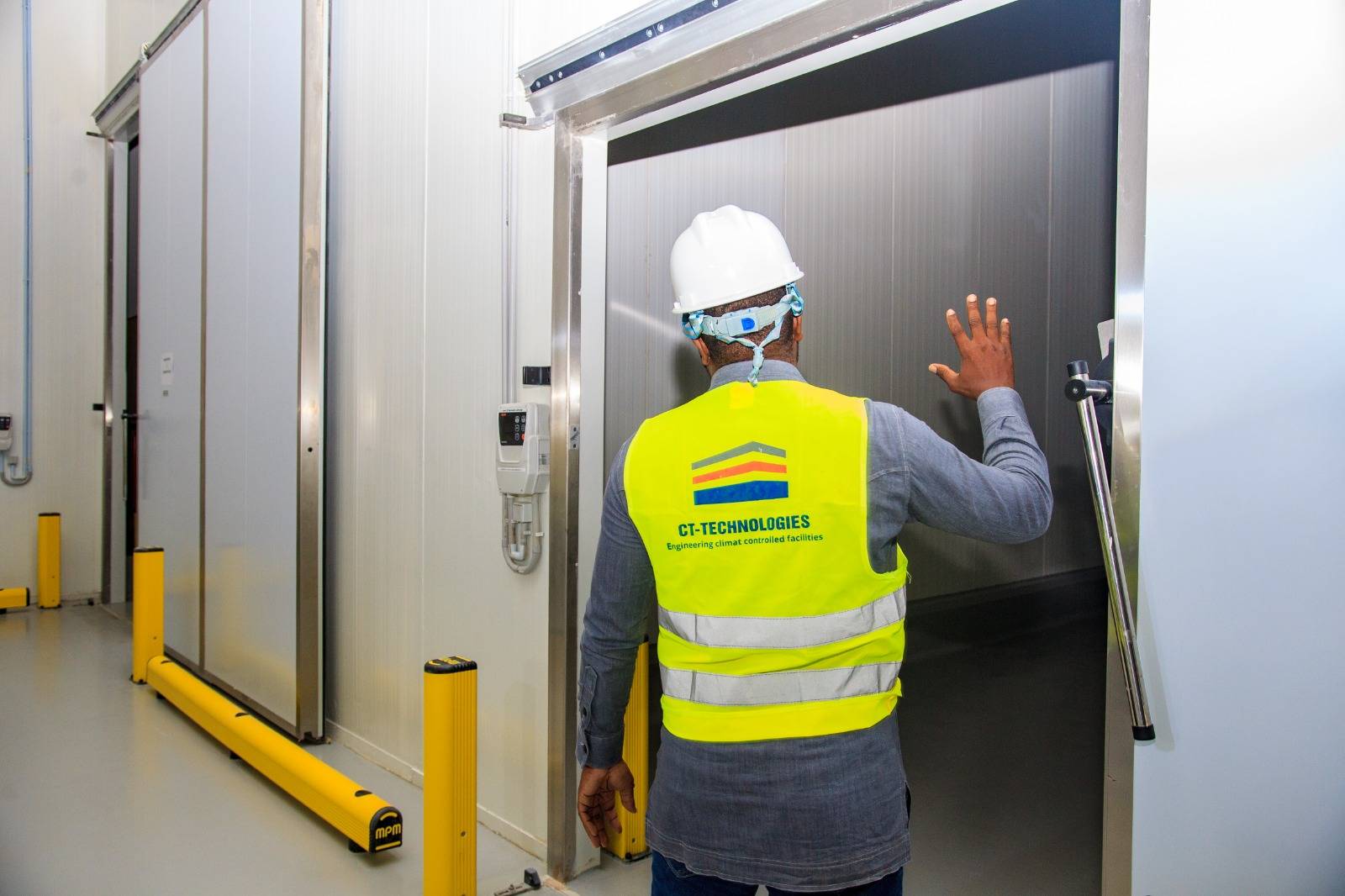
Agricultural success hinges not just on production but on preservation. Recognizing this, Bénin has invested in a next-generation fruit terminal at Cotonou’s Bernardin Gantin International Airport. Equipped with advanced cold storage, refrigerated chambers, and streamlined customs zones, the terminal can process up to 736 pallets of fresh produce simultaneously.
The impact is immediate. By maintaining the cold chain from harvest to export, Bénin drastically reduces post-harvest losses—often as high as 30% in traditional supply chains. Pineapples, mangoes, and other perishables will reach European and Asian markets fresher, commanding premium prices and reinforcing Bénin’s reputation as a reliable supplier.
A policy of economic sovereignty wins local and global trust
The recent ministerial inspection confirmed that both projects are on schedule, a testament to the government’s commitment to agricultural modernization. Minister Bloukounon Goubalan underscored the broader implications: “Seeds are the foundation of production. By mastering seed technology, we reclaim control over our agricultural destiny and enhance our global competitiveness.”
This integrated strategy—combining high-tech seed production with world-class logistics—addresses decades-old structural gaps. It also signals to international investors that Bénin is no longer just a source of raw materials but a structured, technologically advanced partner in the global food supply chain.
The future: a Bénin that exports added value, not just produce
By interconnecting the Glo-Djigbé seed hub with the Cotonou fruit terminal, Bénin is laying the groundwork for a resilient, export-driven agricultural economy. This dual infrastructure approach ensures that the wealth generated by the land stays within national borders, empowering local farmers, processors, and traders.
The message is clear: Bénin is no longer content with being a supplier of raw commodities. It is building an agro-industrial ecosystem where technology, quality, and logistics converge to create a new era of agricultural prosperity. The green revolution is not a distant dream—it is unfolding in real time, with the tools to dominate international fruit markets.