
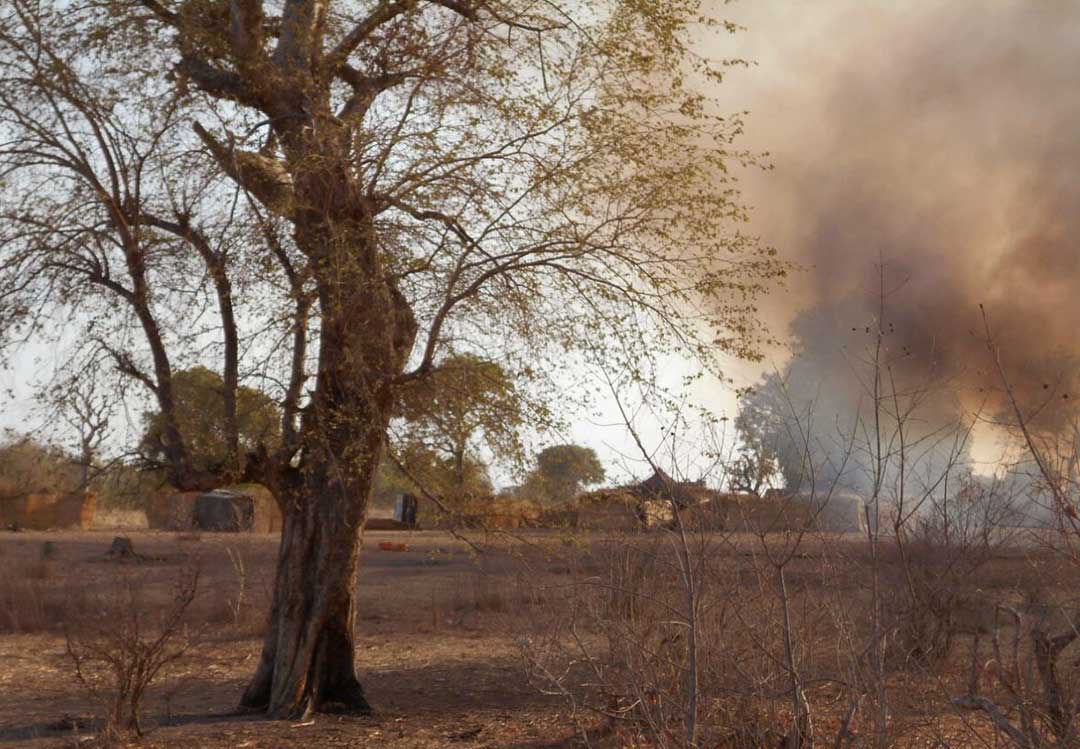
The Sambisa forest, spanning 60,000 square kilometers in Nigeria’s Northeast, once thrived as a wildlife haven before militants seized its dense terrain. Today, this sprawling landscape is a battleground where Boko Haram’s splinter factions and soldiers clash relentlessly.
Since 2016, the Sunni Group for Preaching and Jihad (JAS) and the Islamic State’s West Africa Province (ISWAP) have fought for dominance over Sambisa’s strategic hideouts. Recent skirmishes suggest tensions are escalating, with both groups leveraging the forest’s thick canopy to launch attacks and control smuggling routes.
Malik Samuel, a senior researcher at Good Governance Africa, notes, «Initially, JAS’s conflict was survival-driven, but both factions have since rebounded, retaining operational strength against Nigerian forces and the Multinational Joint Task Force.»
Security analyst Zagazola Makama, based in Borno, reports heightened clashes in and around Sambisa, with both sides claiming heavy casualties. «While unverified, their claims underscore the fierce rivalry that now rivals their broader insurgency against state forces», he observes.
Since Boko Haram’s uprising in 2009, violence has spilled into Cameroon, Niger, and Chad, leaving over 40,000 civilians dead and displacing 2 million, per UN figures.
The JAS has gained notoriety for abductions, looting, and deadly raids, while ISWAP focuses on territorial control, taxation, and establishing shadow governance—though its brutality remains unmatched. Sambisa and Lake Chad’s islands have long served as their strongholds.
Tactical shifts and enduring threats
Makama highlights, «The latest reports reveal insurgents retain active communication networks and operational capacity despite counterterrorism pressure. Their inter-faction battles pose dual challenges: unpredictable attacks and potential erosion of insurgent cohesion.»
With Nigerian and multinational forces preoccupied by ISWAP’s military campaigns, Taiwo Adebayo, a Boko Haram specialist at South Africa’s Institute for Security Studies, warns, «Security strategies must evolve to treat JAS as a distinct, adaptive threat—not merely a weakened rival of ISWAP.»
Samuel predicts a prolonged stalemate: «ISWAP’s inability to penetrate JAS’s Barwa stronghold hampers efforts to dismantle its leadership. Proximity in the islands fuels inevitable clashes over territory and resources. Outside these zones, JAS’s numerical disadvantage and lesser territorial reach leave it vulnerable to ISWAP’s superior firepower and foreign fighter alliances.»