
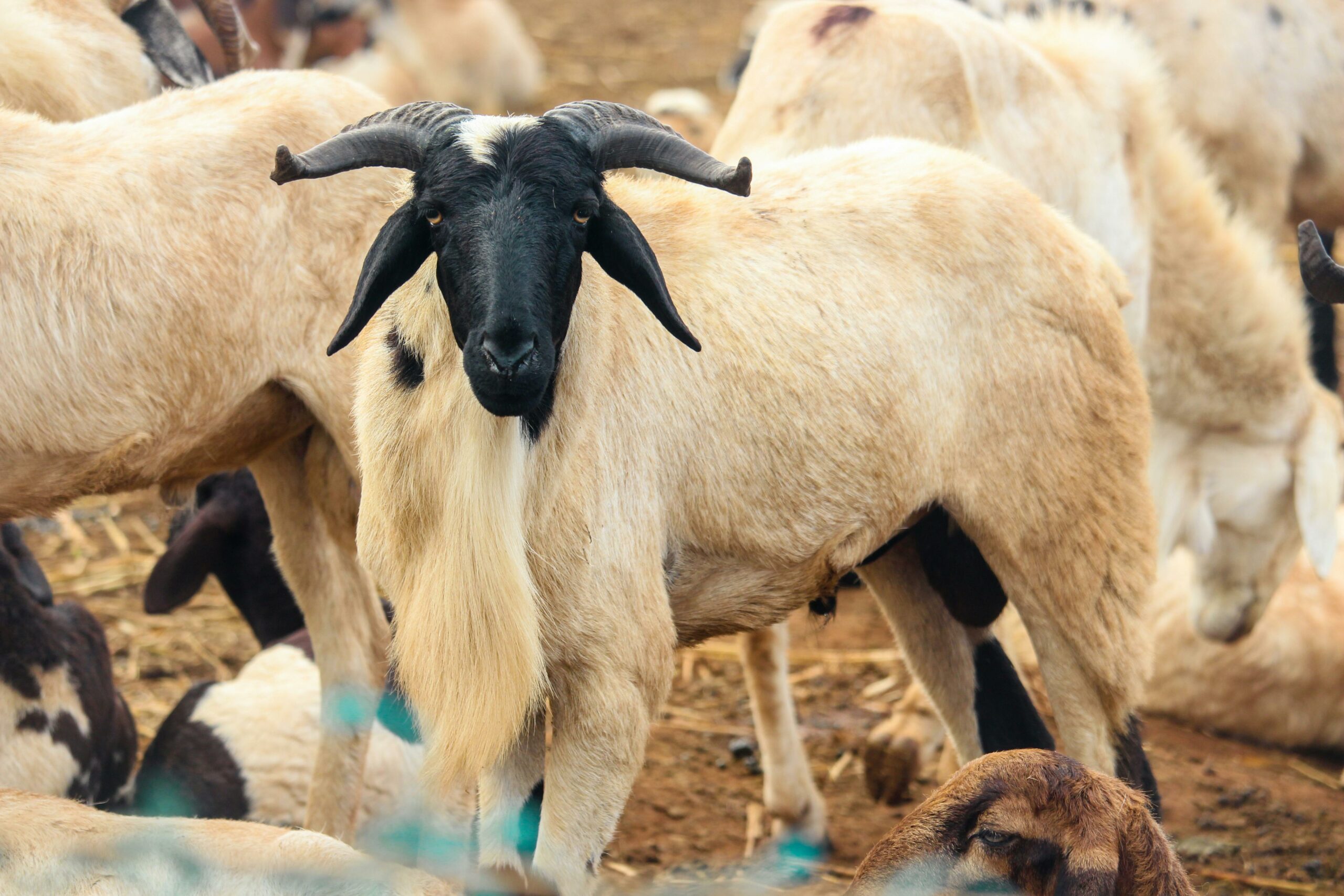
Tabaski spending crisis: why Senegalese families struggle to afford sheep
Every year, millions of Senegalese plunge into debt to purchase a sheep for Tabaski. From rotating savings clubs to microfinance institutions and informal lenders, a complex web of borrowing has emerged around a religious celebration that has become a social crisis. While Morocco has implemented a solution, Senegal continues to wait.
Two weeks before Tabaski, a wave of anxiety sweeps across Dakar’s neighborhoods, from the bustling streets of Almadies to the quiet corners of Sacré-Cœur. The price of a sheep has climbed again—from 120,000 to 150,000 CFA francs for a decent animal, and up to 300,000 CFA francs or more for those deemed “prestigious.”
“How will I ever find this money?” fathers ask themselves, a question that returns every year like an unavoidable punishment. Tabaski, once a simple act of faith, has morphed into a social obligation where prestige outweighs devotion.
The sheep is no longer about faith—it’s about money
Mamadou Sall, a resident of Sacré-Cœur earning 60,000 CFA francs a month, begins stressing in May. By July, he must find 150,000 CFA francs—two and a half months’ salary—to buy a sheep. Not to feed his family for a week, but to meet societal expectations. To ensure his neighbors see him as a provider. To uphold his family’s standing.
Mamadou cannot turn to a bank; no lender would extend credit for a sheep. Instead, he relies on his local tontine, where 150,000 CFA francs come at a steep cost. Interest rates during Tabaski season soar to 30% or even 50% annually. On a 150,000 CFA franc loan, that means immediate fees of 3,750 to 6,250 francs, followed by 12 months of repayments.
Mamadou is far from alone. Between 35% and 45% of all microfinance loans in Senegal during Tabaski season are for sheep purchases—a staggering figure that reveals how one religious tradition has hijacked household finances.
The soaring sheep prices since 2010
In 2010, a sheep cost 60,000 to 80,000 CFA francs. Today, prices range from 150,000 to 250,000 CFA francs—an increase of 87% to 275% in just 15 years. This surge isn’t tied to general inflation but to speculative demand concentrated over two months. Demand during Tabaski is inelastic; people will buy at any cost. Breeders and middlemen exploit this reality, driving prices higher without fear of backlash.
Senegal’s minimum wage is 60,239 CFA francs per month. To buy a 150,000 CFA franc sheep, a minimum-wage worker must set aside two and a half months of full salary. This doesn’t include other Tabaski expenses: clothes, food, gifts. For the 60% of Senegalese living below the poverty line, this is impossible without debt.
Who borrows for the sheep?
In 2024, microfinance institutions recorded a 62% surge in loan applications compared to non-Tabaski periods, with average requests ranging from 120,000 to 200,000 CFA francs. This flood of credit applications crashes down in just two months.
The tangled web of informal debt
With traditional banks largely inaccessible for sheep purchases, an elaborate system of borrowing has taken root. Rotating savings clubs, microfinance institutions, and private lenders all thrive during Tabaski.
| Loan source | Ordinary period | Tabaski period |
|---|---|---|
| Local tontines | 15-30% per year | 30-50% per year |
| Formal microfinance | 24-36% per year | 36-48% for short-term loans |
| Private informal lenders | 30-40% per year | 50-60%+ per year |
| Commercial banks | Almost inaccessible | Almost inaccessible |
Tontines accelerate their lending cycles during Tabaski, with interest rates reaching 30% to 50% annually. A 150,000 CFA franc loan can balloon to 172,500 to 225,000 CFA francs after 12 months. Microfinance institutions offer slightly better terms, but their annual effective rates still range from 24% to 48% for short-term loans. Families borrowing in July for August’s Tabaski face immediate financial charges of 3,000 to 6,000 CFA francs on a 150,000 CFA franc loan.
Social media amplifies the pressure
Worse still, Tabaski’s transformation has been accelerated by social media. What was once confined to neighbors’ eyes is now broadcast to hundreds on WhatsApp and Instagram. 67% of young people in Dakar report feeling social pressure to buy a sheep for Tabaski, according to a 2023 study by Cheikh Anta Diop University. Nearly half of those surveyed cited social media as the primary source of this pressure.
For many poor families, this pressure feels unbearable. They borrow to meet expectations. The burden falls heaviest on men, as Senegalese culture dictates that the husband buys the sheep. Failure to do so risks shame, perceived failure, and the judgment of neighbors.
The hidden cost: reduced household spending
Households that borrow for Tabaski reduce food and healthcare spending by 18% to 25% in the following three months. Children’s school fees go unpaid, essential medicines go unbought. The true economic cost of Tabaski’s social expectations far exceeds the price of the sheep itself.
Even more alarming, some farmers divert agricultural loans—meant for seeds and fertilizer—toward sheep purchases. Between 8% and 12% of Senegalese agricultural loans are misused for Tabaski spending. A farmer who could have boosted his harvest by 30% instead sells his credit for fleeting social prestige. When the next farming season arrives, he lacks the funds to invest.
Morocco solved this 25 years ago
In 1999, Morocco’s king made a bold decision: every poor Moroccan would receive a sheep for Tabaski—not as charity, but as a right. The goal was to ensure the religious celebration wasn’t held hostage to market forces.
Since then, Morocco has distributed millions of sheep. In 2023 alone, 2.8 million sheep were provided through the Zakat Al-Fitr program. The annual cost? About 450 million Moroccan dirhams, equivalent to roughly 43 billion CFA francs—less than 0.1% of Morocco’s national budget.
Morocco recognized a simple truth: a religious celebration whose access depends on personal wealth isn’t truly a religious celebration. It’s a social distinction mechanism masquerading as tradition. By treating Tabaski as a public good rather than a private expense, Morocco made a political decision. Senegal could follow suit.
Where does Senegal stand?
Senegal, by contrast, has no national program. A handful of municipalities and private religious organizations offer limited assistance, but that’s it. The rest of the country is left to navigate a treacherous market of usurious rates and the psychological weight of social expectations.
Recovery agencies report a troubling trend: household over-indebtedness peaks three months after Tabaski. Families juggle loan repayments while trying to survive. Food budgets shrink. Healthcare bills go unpaid. Children are pulled from school.
The mental health toll is equally severe. A 2022 study by the Dakar Mental Health Research Center found a surge in calls to helplines three weeks before Tabaski. Among men aged 30 to 55, the number of calls doubles. The dread of not affording a sheep, the shame, the fear of judgment—it all weighs heavily.
How did we get here?
On one hand, there’s the pressure to flaunt wealth. Tabaski has become a display of social status, a far cry from its original religious purpose. Urban conspicuous consumption has merged with tradition. Social media has accelerated this shift. Tabaski is now about showing off your sheep, your wealth, your respectability.
On the other hand, there’s a glaring absence of public policy. The Senegalese government treats Tabaski as a non-issue. Politicians don’t debate it. Media coverage is scarce. Meanwhile, millions of households sink into debt every year.
Mamadou is already fielding calls from his tontine. Tabaski 2025 looms closer. Sheep prices climb. Interest rates rise. The cycle repeats itself.