
Breaking down financial barriers to essential healthcare in Burkina Faso
For years, accessing medical care in Burkina Faso was a luxury few could afford. High upfront costs, exorbitant exam fees, and mandatory deposits created an invisible wall between patients and life-saving treatments. Since March 13, 2024, the government has begun dismantling this barrier through significant healthcare reforms.
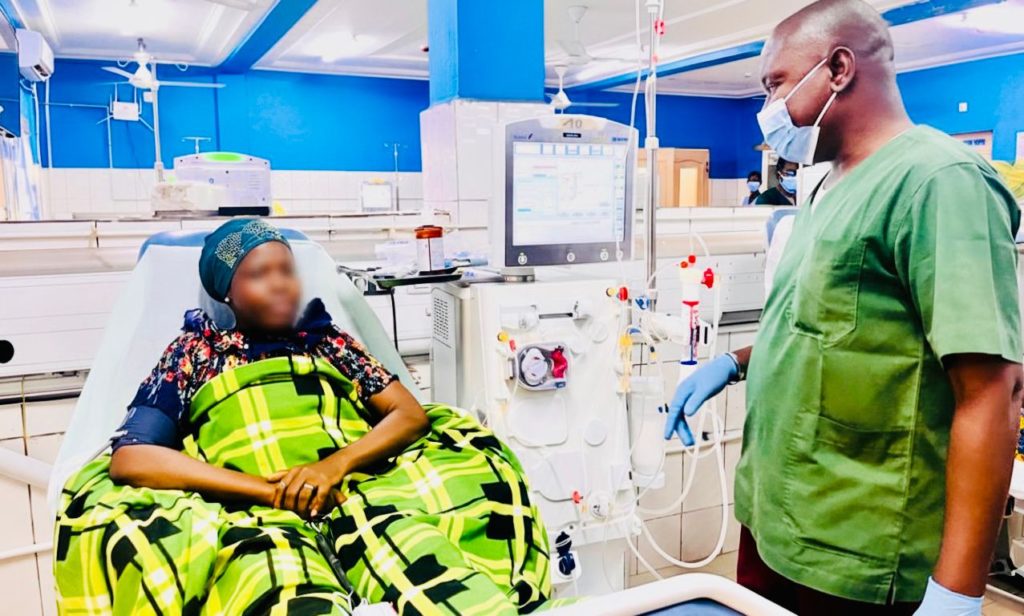
These changes include reduced prices for critical medical exams and the elimination of the 500,000 FCFA deposit required for dialysis in public health facilities. The impact has been immediate and profound, transforming how Burkinabè people approach healthcare.
Real lives transformed by accessible healthcare
Madi Diallo’s story is one of thousands that highlight the urgency of these reforms. Three years ago, his sister’s life ended because her family couldn’t afford the 500,000 FCFA deposit required for emergency dialysis. Today, that deposit no longer exists, though he acknowledges the reform came too late for his family.
At the Bogodogo University Hospital Center, Dame Ouédraogo Nikiéma Élodie recently underwent an MRI pelvic scan. She paid just 40,000 FCFA, including consumables—a stark contrast to the 150,000 FCFA she would have paid elsewhere. For her, this wasn’t just a financial relief but a chance to continue supporting her community through local savings groups known as tontines.
Measurable impact across the country
The government’s healthcare reforms have delivered concrete results:
- MRI scans: Reduced from 100,000 FCFA to 40,000 FCFA
- CT scans: Reduced from 50,000 FCFA to 25,000 FCFA
- Dialysis: Mandatory 500,000 FCFA deposit eliminated entirely
- Emergency dialysis: Reduced to 2,500 FCFA
At the Ziniaré Regional Hospital, Director Mady Zorné reports a 60% decrease in patient evacuations to Ouagadougou since the reforms took effect. The ability to perform all necessary exams on-site has not only reduced costs but also improved the quality of care for patients in rural areas.
Challenges remain despite progress
While these changes represent a major step forward, significant challenges persist. The Yalgado Ouédraogo University Hospital in Ouagadougou serves as a microcosm of the national healthcare system’s limitations. With nearly 100 patients receiving dialysis daily across 34 machines—and a waiting list that can only be shortened by a patient’s death—the system remains under immense pressure.
Tuina Nsoma Hélène, head of the dialysis department, emphasizes the urgent need for structural improvements: “The elimination of the 500,000 FCFA deposit has allowed 16 new patients to begin treatment since the reform. But we need more machines, more qualified staff, and expanded facilities to truly meet the demand.”
Patient perspectives on the healthcare revolution
Dame Sanou Traoré Salimata, who has lived with kidney failure since 2018, began dialysis only after overcoming the financial barrier of the 500,000 FCFA deposit with family support. Today, she celebrates the government’s action as a recognition of patients’ dignity in the face of chronic illness.
Youl Sié, also undergoing dialysis, advocates for decentralized care: “We need dialysis centers in every community. Being forced to travel far from home disrupts families and children’s education. Healthcare should never come at the cost of our social fabric.”
Looking ahead: A healthcare system in transition
The Burkina Faso government’s healthcare reforms have undeniably improved access to essential services, particularly for vulnerable populations. The reduction in exam costs has made diagnostic imaging more accessible, while the elimination of dialysis deposits has saved lives. Yet, as the Sourou Sanou University Hospital in Bobo-Dioulasso demonstrates, the system still faces capacity constraints.
Dr. Hamidou Sawadogo, a nephrologist at the Bobo-Dioulasso center, notes that while 17 new patients have begun dialysis since the reform, the center’s limited capacity means many acute cases remain untreated. He calls for immediate expansion of facilities, recruitment of qualified staff, and procurement of additional dialysis machines.
The journey toward universal healthcare in Burkina Faso is far from complete. Machine shortages, long waiting lists, and uneven access to specialized care persist. But for patients who can now walk into public hospitals without fearing impossible bills, these reforms represent a lifeline—a step toward a future where healthcare is a right, not a privilege.
As one patient put it: “Little by little, the bird builds its nest.” In Burkina Faso, healthcare is slowly but surely becoming a reality for all.