
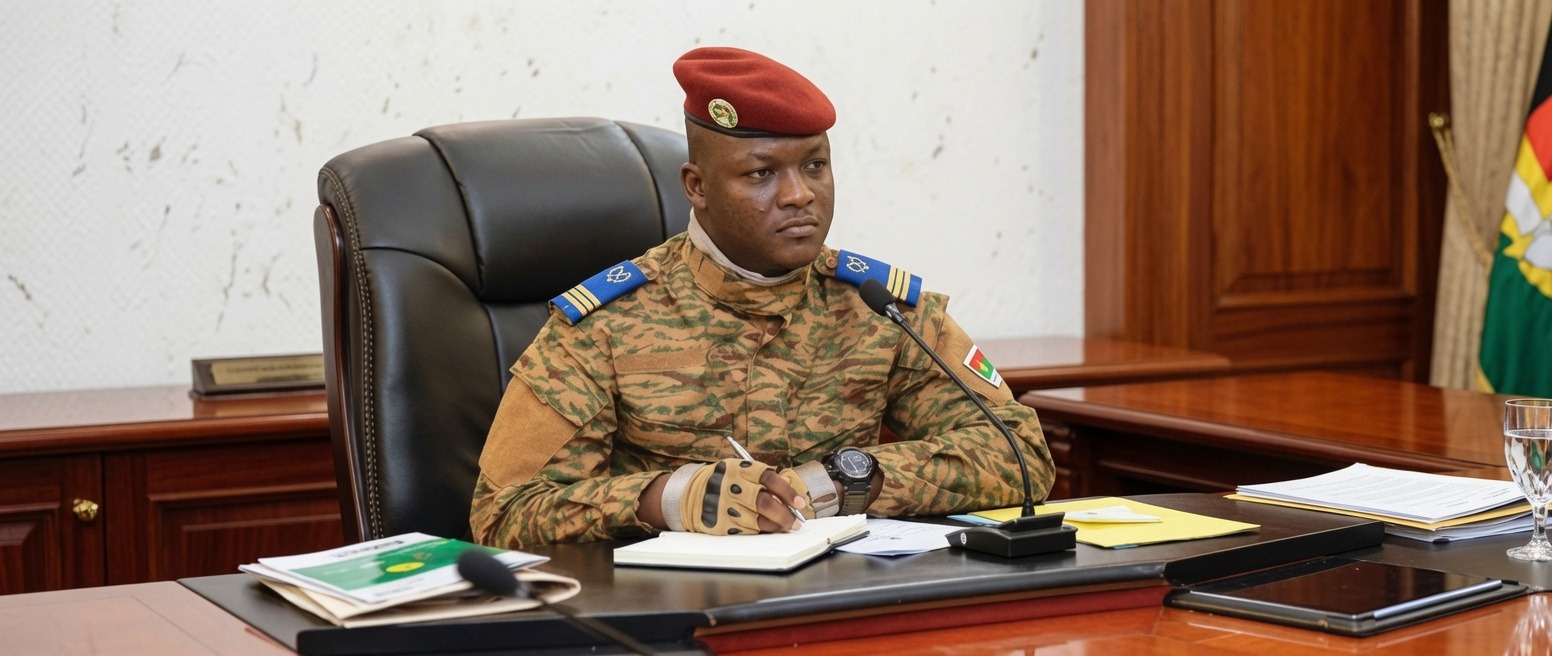
The restoration of the death penalty in Burkina Faso’s legal code marks a dangerous turning point under Captain Ibrahim Traoré’s military regime. Passed unanimously by the transitional legislature, this sweeping reform—branded under the chilling slogan ‘Sentimentalism is over’—signals a hardening of power in Ouagadougou. While framed as a national security measure, critics warn it serves a far more sinister purpose: a calculated effort to eliminate political rivals, with former transitional leader Lieutenant-Colonel Paul-Henri Sandaogo Damiba as the primary target.
The timing of justice: is Damiba’s fate already sealed?
Damiba faces charges of ‘high treason’ and ‘conspiracy against state security’, and the timing of the death penalty’s reinstatement is no coincidence. Legal experts suggest the regime is strategically preparing to pursue the ultimate punishment in Damiba’s upcoming trial. By eliminating any possibility of clemency, the government sends a stark warning to dissenters within the military and political opposition, positioning Damiba as a cautionary tale of irreversible consequences.
From coup architect to condemned: the irony of Burkina Faso’s unstable leadership
Burkina Faso’s turbulent political landscape reveals a bitter irony: the very tactics Damiba once wielded now threaten his own survival. Both his and Traoré’s ascensions to power followed an identical script—armed coups justified by claims of ‘patriotic awakening.’ Yet today, those same methods are being rebranded as ‘capital crimes.’
- January 2022: Damiba overthrew President Roch Marc Christian Kaboré, arguing the move was a necessary ‘patriotic surge’ to restore order.
- September 2022: Traoré seized power from Damiba, this time framing the coup as a defense against ‘state betrayal.’
Now, as Damiba himself faces the death penalty, the regime risks perpetuating the cycle of violent retribution that has destabilized Burkina Faso for years.
The paradox of state terror: does the death penalty solve political rivalries—or fuel them?
Ibrahim Traoré’s insistence on eradicating ‘sentimentalism’ in favor of unyielding state control may backfire spectacularly. History shows that military regimes that weaponize justice against rivals rarely escape the same fate. The return of the death penalty as a political tool does not restore stability—it entrenches fear, deepens divisions, and ensures that today’s executioners may become tomorrow’s condemned.
For a nation already grappling with insurgencies and governance crises, this judicial gambit could prove far costlier than intended, leaving Burkina Faso trapped in a cycle of vengeance with no clear exit.