
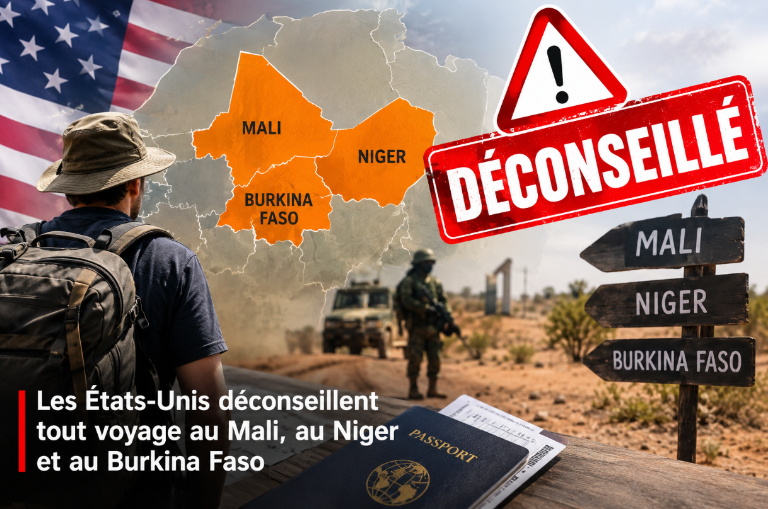
In 2026, travelers face a critical decision when considering destinations in West Africa’s Sahel region. Should they proceed with plans to visit Niger, Mali, or Burkina Faso, or are the risks too severe to justify the journey?
Why the US issued its strictest travel advisory for three Sahel nations
The United States has raised its concerns to the highest level for three Sahel countries, placing Niger, Mali, and Burkina Faso under a Level 4 “Do Not Travel” advisory. This designation reflects an acute threat environment characterized by terrorism, kidnappings, violent crime, and widespread instability.
While other African destinations face varying levels of caution, the situation in these three nations has escalated to a point where Washington is urging its citizens to avoid all non-essential travel. The advisory underscores the persistent challenges posed by armed groups, deteriorating security conditions, and the growing inability of governments to protect both locals and foreigners.
How the advisory impacts different regions in each country
Each of these countries presents unique risks, but all share a common thread of extreme danger:
Mali: extreme volatility outside Bamako
In Mali, the U.S. State Department warns that the entire country poses significant risks. While Bamako remains relatively more stable, even the capital is not immune to threats. Attacks by Islamist militant groups—some linked to Al-Qaeda and ISIS—have targeted security forces, civilians, and infrastructure. Road travel is particularly hazardous due to ambushes and armed banditry.
American government employees are restricted from traveling outside Bamako, citing the inability to ensure their safety in other regions. The risk of kidnapping and violent crime further compounds the dangers for foreign visitors.
Niger: border zones and urban centers face high risks
For Niger, the U.S. advises against all travel, warning that terrorists, criminal networks, and armed factions operate with impunity in several areas. The border regions with Burkina Faso and Mali are particularly volatile, while even Niamey, the capital, sees elevated risks of crime and instability.
Travel restrictions within the country are stringent, and the ability of the U.S. embassy to provide emergency assistance outside Niamey is severely limited. For businesses and humanitarian organizations, this means reevaluating any presence in the country.
Burkina Faso: jihadist attacks and no-go zones
In Burkina Faso, the threat is most pronounced in the northern and eastern regions, where jihadist groups have launched repeated attacks on villages, security outposts, and critical infrastructure. Kidnappings, especially of foreigners, have become alarmingly frequent.
Even in Ouagadougou, the capital, security risks remain high. U.S. government employees are prohibited from leaving the city, reflecting the government’s inability to guarantee safe travel elsewhere in the country. Hotels, restaurants, and mining sites have been targeted in the past, underscoring the indiscriminate nature of the threats.
Beyond the Sahel: which other African countries are under scrutiny?
While Niger, Mali, and Burkina Faso are at the forefront of U.S. travel warnings, they are not alone. Several other African nations face significant security challenges, each with its own set of risks:
- Nigeria: Rated Level 3 overall, but parts of the northeast and northwest are flagged as Level 4 due to terrorism and kidnappings.
- Central African Republic and Chad: Both countries are under Level 4 advisories, citing terrorism, armed conflict, and widespread crime.
- Cameroon and Mozambique: While not entirely off-limits, specific regions in these countries face heightened risks due to insurgent activity and instability.
What this means for travelers, businesses, and aid organizations
The U.S. advisory is more than a mere suggestion—it is a strong indication of the real dangers on the ground. For travelers, the consequences of ignoring this warning could be severe, including:
- Limited or no access to emergency consular assistance in remote areas.
- Disruptions to transportation networks, making travel unpredictable or impossible.
- Increased vulnerability to kidnappings, armed attacks, or health emergencies in regions with weak infrastructure.
For businesses operating in these countries, the risks extend beyond personal safety. Supply chains, project timelines, and local partnerships are all at risk due to the volatile security environment. Humanitarian organizations face similar challenges, as access to vulnerable populations becomes increasingly restricted.
Is travel to the Sahel ever safe?
The U.S. State Department’s advisories are not blanket bans but are tailored to specific conditions in each country. While Niger, Mali, and Burkina Faso are currently flagged at the highest level, other African destinations remain accessible—albeit with caution. The key takeaway for travelers is to:
- Monitor official travel advisories regularly for updates.
- Follow local security guidelines and avoid high-risk areas.
- Acknowledge the limitations of consular support in crisis situations.
The situation in the Sahel is fluid, and conditions can change rapidly. A destination deemed safe one month may become perilous the next due to a sudden attack, political shift, or new security measure. Travelers must weigh the necessity of their trip against the ever-present risks.
The bigger picture: why the Sahel remains a global security concern
The U.S. advisory for Niger, Mali, and Burkina Faso is not just about travel—it reflects a broader crisis in the Sahel. Armed groups affiliated with international terrorist organizations continue to exploit weak governance, porous borders, and local grievances to expand their influence.
For governments and international bodies, the challenge is twofold: addressing the immediate security threats while also tackling the root causes of instability, such as poverty, unemployment, and lack of access to basic services. Until these issues are addressed, the Sahel will remain a high-risk region for locals and foreigners alike.
For now, the message from Washington is clear: the risks in Niger, Mali, and Burkina Faso are too grave to ignore. Travelers, businesses, and aid workers must carefully consider whether the potential rewards outweigh the dangers.