
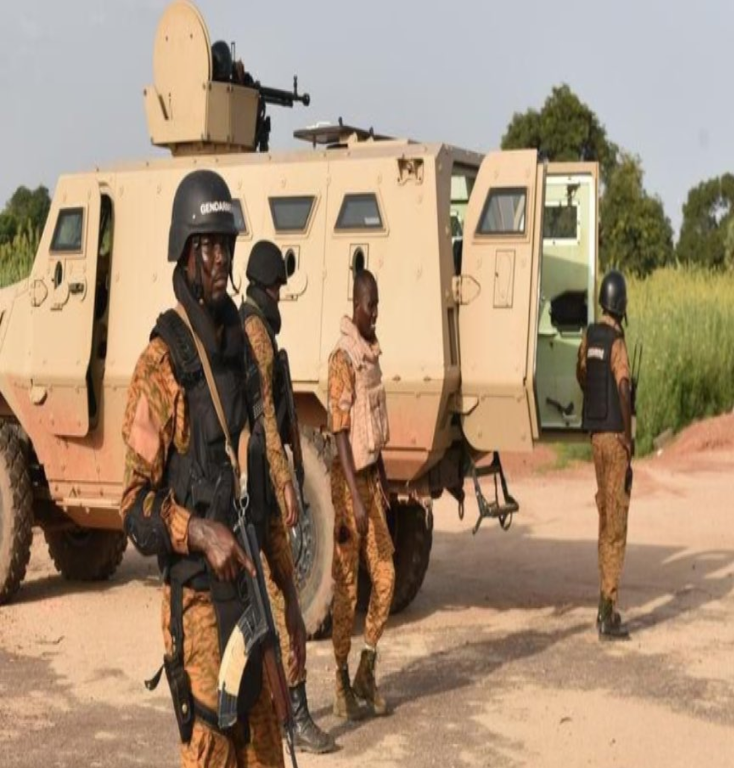
Is Burkina Faso’s military strategy collapsing under relentless jihadist attacks?
The Groupe de soutien à l’islam et aux musulmans (JNIM), Al-Qaeda’s Sahel affiliate, has escalated its offensive in Burkina Faso, claiming to have destroyed a military armored vehicle and killed three pro-government militiamen in a single week. These developments raise a critical question: is the country’s counterterrorism strategy losing ground?
The JNIM’s latest claims—unconfirmed by independent sources—underscore the growing sophistication of militant tactics, including improvised explosive devices (IEDs) and targeted attacks on civilian defense forces. With security forces stretched thin, these ambushes threaten to erode public trust and destabilize key regions.
How did the attacks unfold near Fada N’Gourma?
According to the JNIM’s statements, an armored vehicle belonging to Burkina Faso’s armed forces was destroyed by an IED outside Fada N’Gourma, a strategic hub in the Est region. The group asserts the blast occurred along a critical supply route, highlighting the vulnerability of military convoys despite armored protection.
The use of IEDs has become a hallmark of jihadist operations in the Sahel, forcing troops to adopt costly countermeasures. While the JNIM’s claims lack verification, the tactic itself—disrupting mobility and inflicting losses—remains a persistent threat to military operations.
Why does this location matter for Burkina Faso’s security?
Fada N’Gourma sits at the crossroads of major trade and transport arteries, making it a frequent target for militant groups. Disrupting these routes not only hampers military logistics but also cuts off communities from essential services. The JNIM’s ability to strike here suggests a deliberate strategy to weaken state control in the region.
What happened in Bam province’s militia clashes?
The JNIM also reported killing three members of the Volontaires pour la défense de la patrie (VDP)—civilian volunteers assisting security forces—in Bam province. The group claims to have seized automatic weapons, a potential boon for its arsenal if the weapons are confirmed to be in militant hands.
The VDP’s role in Burkina Faso’s counterinsurgency has made its members prime targets. Their losses not only weaken local defense capabilities but also send a chilling message to communities considering joining state-backed militias. The exact circumstances of the attack remain unconfirmed, but the JNIM’s propaganda value is clear.
What’s the broader impact on Burkina Faso’s security crisis?
The JNIM’s dual claims arrive amid a broader surge in violence across Burkina Faso, where jihadist groups have overrun large swaths of the country. The Est, North, and Centre-Nord regions remain hotspots, with civilians bearing the brunt of the conflict. Schools, hospitals, and markets face frequent closures or attacks, while displacement has surged.
The military’s struggle to contain the insurgency has forced thousands into refugee camps, where access to food, water, and healthcare is increasingly precarious. For authorities, the challenge is twofold: defending territory while restoring essential services and rebuilding public confidence.
How are civilians and militias adapting to the threat?
In response to the escalating violence, communities and pro-government militias have adopted defensive measures, including:
- Night curfews and roadblocks to curb militant movements
- Buried IED detection patrols in high-risk zones
- Relocation of displaced families to safer urban areas
- Formation of local self-defense groups to supplement VDP forces
However, these steps are reactive. Long-term stability will require more than tactical adjustments—it demands intelligence-sharing, economic revival, and a return of state institutions to remote areas.
What’s next for Burkina Faso’s counterterrorism efforts?
The JNIM’s latest attacks serve as a stark reminder of the escalating stakes. With military losses mounting and civilian fatigue growing, pressure is mounting on Burkina Faso’s government to rethink its approach. Key questions remain unanswered:
- Can the military secure critical supply routes without overstretching its resources?
- Will the VDP’s attrition discourage further civilian mobilization?
- How can authorities prevent militant groups from exploiting local grievances for recruitment?
The answers may determine whether Burkina Faso can reverse the tide of insurgency or succumb to the jihadists’ relentless campaign. For now, the military’s ability to hold the line hangs in the balance.