
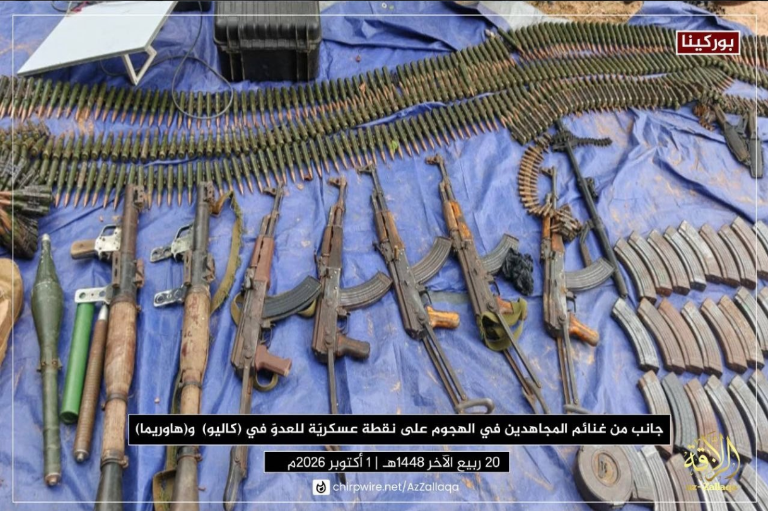
The Burkina Faso security landscape reached a critical inflection point on September 26, 2026, as coordinated jihadist offensives simultaneously struck two strategically vital regions, exposing vulnerabilities in the nation’s defense strategy.
Simultaneous strikes expose Burkina Faso’s shifting security realities
While government forces were focused on routine operations, armed groups launched a dual assault that would redefine the conflict’s trajectory. In the Koulpélogo province, a military outpost in Lalgaye came under devastating attack, resulting in the first casualty of the day—a Burkinabè soldier killed in action. Just hours later, the northern region surrounding Ouahigouya witnessed coordinated strikes that crippled a military armored vehicle, highlighting the adaptability and reach of insurgent forces.
The Group for the Support of Islam and Muslims (JNIM) claimed responsibility for both operations through its propaganda channels, signaling a deliberate campaign to challenge state authority. These attacks, executed with military precision, demonstrate an alarming evolution in jihadist tactics, combining surprise, coordination, and logistical resource extraction.
Lalgaye: a military position’s fall and the aftermath
The assault on Lalgaye, located near the border with Ghana and Togo, followed a familiar pattern of asymmetric warfare. Attackers overwhelmed the isolated checkpoint with superior firepower, breaching defenses before systematically looting arms, ammunition, and critical equipment. The loss of military hardware not only weakens immediate security operations but also bolsters insurgent capabilities through captured resources.
Local testimonies describe chaotic scenes as soldiers engaged in fierce combat before being forced into retreat. The attackers’ rapid withdrawal into surrounding woodland areas underscores their ability to vanish before reinforcements arrive—a persistent challenge for counterinsurgency efforts.
Ouahigouya’s northern front: where infrastructure becomes a target
The northern offensive targeted two military positions near Ouahigouya, a key urban hub in the Yatenga province. While human losses remain underreported, the destruction of a military vehicle sent shockwaves through defense circles. Analysts suggest these strikes were designed to disrupt supply routes and divert government resources, creating pressure points that stretch security forces thin.
The timing of these attacks—simultaneous across hundreds of kilometers—reveals a sophisticated command structure capable of orchestrating complex operations. Such coordination indicates that insurgent groups are not merely reacting to events but shaping the battlefield on their own terms.
Strategic implications: attrition, isolation, and psychological warfare
Security experts warn that these attacks represent more than isolated incidents; they form part of a broader strategy to erode state control. By targeting remote outposts, jihadist forces achieve multiple objectives:
- Material attrition: Capturing weapons and vehicles reduces dependency on external supply chains.
- Territorial isolation: Forcing government forces into urban strongholds creates ungoverned rural spaces where insurgents can operate freely.
- Psychological impact: Delayed claims of responsibility maintain a climate of uncertainty, undermining public trust in official narratives.
Government response: a balancing act between force and fragility
The Burkinabè Armed Forces and civilian defense volunteers swiftly launched pursuit operations, deploying aerial assets to track fleeing attackers. Yet the effectiveness of these measures remains constrained by the asymmetric nature of the conflict. Military convoys continue to face improvised explosive devices (IEDs) on highways, while isolated detachments remain vulnerable to surprise attacks.
In the capital, Ouagadougou, transitional authorities have reiterated their commitment to territorial restoration. However, the recent escalation underscores the monumental challenges ahead. The dual strikes in Lalgaye and Ouahigouya serve as a stark reminder that insurgent groups maintain the initiative, forcing the state to play a perpetual game of catch-up.
Human cost: communities caught in the crossfire
Residents of the affected regions live under constant threat of incursions. While military operations continue in Koulpélogo, civilians bear the brunt of the conflict’s instability. The loss of a soldier in Lalgaye is more than a statistic—it represents a family’s grief and a community’s resilience in the face of relentless adversity. As Burkina Faso stands at this turning point, the path forward demands both strategic adaptation and unwavering determination to reclaim lost ground.