
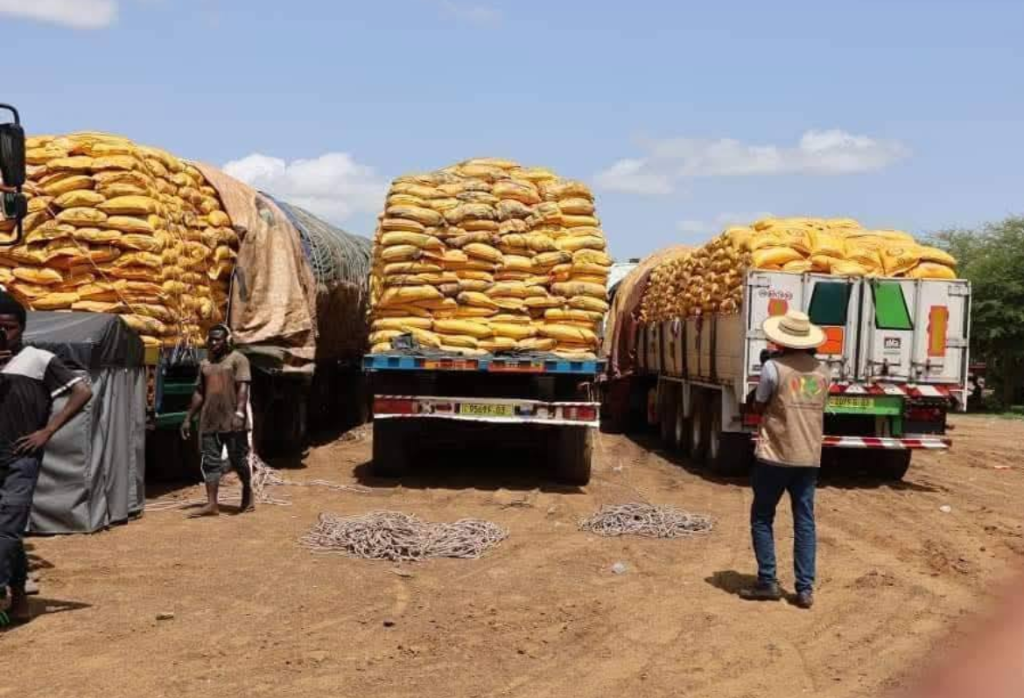
In Burkina Faso, Captain Ibrahim Traoré’s administration continues to champion self-sufficiency, yet the nation remains critically dependent on humanitarian aid to combat a worsening food crisis. Recent shipments of rice from Pakistan, China, and Canada underscore the stark gap between political rhetoric and on-the-ground realities, revealing the junta’s struggle to stabilize food security three years into its rule.
The latest addition to this growing list of international handouts is a substantial 2,422-ton rice donation from Pakistan. While officials celebrated the handover ceremony, the gesture serves as a glaring indictment of the Mouvement Patriotique pour la Sauvegarde et la Restauration (MPSR)‘s failure to ensure food sovereignty. Despite bold declarations of ‘restored independence,’ over 3.5 million Burkinabè now rely on foreign aid just to put food on the table each day.
the illusion of self-sufficiency vs. hard data
This Pakistani rice shipment joins a series of aid packages from Beijing and Ottawa, each one a silent rebuke to Traoré’s promises of making local production the cornerstone of his leadership. The disconnect between words and action is undeniable:
- The nation’s agricultural output has plummeted, leaving its people at the mercy of imports from Asia and the West.
- The donated rice is primarily earmarked for northern and eastern regions, areas still gripped by insecurity and completely cut off from normal trade routes.
security failures deepen food insecurity
While the government blames climate change for the crisis, critics argue that the junta’s heavy-handed military approach has exacerbated structural weaknesses. The ‘all-military’ strategy, coupled with armed groups blockading key areas, has crippled farming communities. Over 2 million internally displaced persons now wander the countryside, turning once-fertile farmlands into idle wastelands.
According to the Integrated Food Security Phase Classification (IPC), parts of the country are teetering on Phase 4 (humanitarian emergency). The situation is dire, with projections indicating that over 600,000 children could face acute malnutrition by year-end. The humanitarian response plan for 2026 is only **18% funded**, signaling growing donor skepticism toward Ouagadougou’s leadership.
a government struggling to deliver beyond rhetoric
Transparency concerns further complicate aid distribution. The Pakistani rice shipment, managed by the Ministry of Humanitarian Action, is just one example of the opacity surrounding crisis response. Military control over aid logistics and strained relations with international humanitarian organizations have eroded trust, leaving critical programs underfunded and ineffective.
As the rainy season approaches, this temporary relief from Pakistan offers fleeting respite to a desperate population. Yet for Ibrahim Traoré, the reckoning draws near. True sovereignty isn’t proclaimed on national television—it’s built in fields his administration has failed to secure. Without a shift from wartime posturing to tangible rural economic revival, a sustainable solution remains out of reach.