
How a private mediation exposed Mali’s crumbling state authority
The recent release of 17 hostages in Mali—facilitated by exiled opposition leader Oumar Mariko alongside fighters from the Group for the Support of Islam and Muslims (JNIM)—has sent shockwaves through the nation’s fragile transition. While the humanitarian outcome is undeniably positive, the circumstances surrounding the event have laid bare critical weaknesses in Bamako’s control over its own territory.
A stark picture of state failure
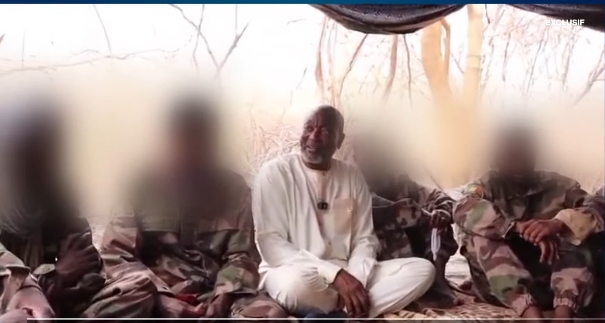
A striking photograph circulating on Malian social media captured the moment: Oumar Mariko, a prominent political figure living abroad, standing beside the freed hostages and JNIM militants. Though the captives are now safe, the image serves as a stark reminder of the Malian government’s inability to secure its people.
How did a civilian opposition leader, who has openly opposed the current authorities, manage to negotiate in areas where state security forces have repeatedly failed? This private mediation underscores a troubling erosion of sovereignty. In vast regions of Mali, the capacity for movement and dialogue appears to reside not with official institutions, but with informal actors. For analysts, this signals a state losing its grip, with power vacuums increasingly filled by non-state forces.
The JNIM’s calculated propaganda victory
The hostage release was no act of benevolence by JNIM. Instead, it was a shrewdly orchestrated public relations maneuver designed to achieve two key objectives:
- Image rehabilitation: By participating in a filmed negotiation and handover, the group seeks to portray itself as a rational and pragmatic actor capable of dialogue—despite its violent history.
- Authority substitution: By acting as de facto judges, protectors, and even detainers in place of local officials, JNIM positions itself as the only functioning authority in the eyes of rural communities, further undermining the legitimacy of the Malian state.
“Sovereignty is not declared in speeches from Bamako; it is proven by a government’s ability to protect its people without intermediaries.”
The hidden costs of shadow negotiations
While families celebrate the return of their loved ones, darker realities lurk beneath the surface. These informal agreements carry grave long-term risks for Mali:
- Terrorism financing: Though never officially acknowledged, ransom payments—often channeled through intermediaries—fund future attacks against Malian security forces.
- Implicit recognition: Seeking mercy from a terrorist leader tacitly validates their control over a region. It signals weakness and bolsters the insurgents’ standing among rural populations.
Two Malis: one official, one abandoned
Mali today exists in two parallel realities:
- The institutional Mali: In Bamako, the narrative remains one of military progress and a promised territorial reconquest.
- The real Mali: In rural areas, abandoned by the state, communities are forced into uneasy coexistence with armed groups to survive day-to-day.
The urgent challenge of restoring state control
The Oumar Mariko episode is more than a humanitarian footnote—it is a warning. When private actors and opposition figures step in to resolve issues as critical as national security, the country risks deeper fragmentation. For Bamako, the challenge is no longer merely military; it is existential. Restoring state authority will require reclaiming control over dialogue, security, and legitimacy from the shadows of the gun.