
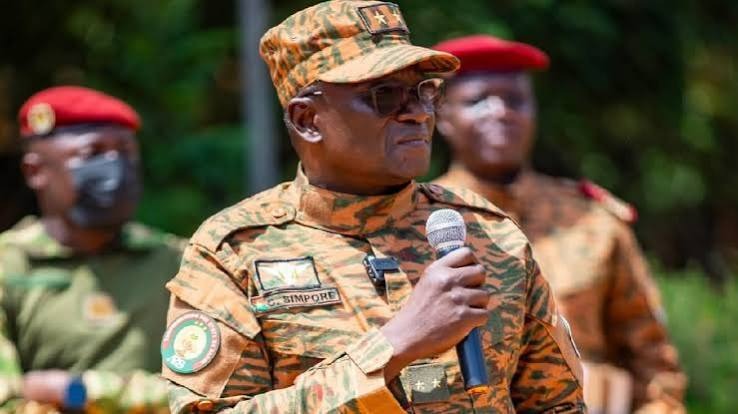
General Simporé’s RTB confession reveals a collapsing security narrative
The nation watched in shock as Burkina Faso’s defense minister, General Célestin Simporé, took the airwaves to defend the military’s embattled performance. On state television, he pivoted toward a striking admission: the army’s current failures stem from historic underinvestment in training. Yet this justification crashes headfirst against an inconvenient truth: yesterday’s under-equipped forces somehow held the line against rising extremist threats—while today’s Moscow-trained units retreat from vast stretches of the country.
From flawed past to catastrophic present: the broken promise of institutional reform
Simporé’s argument rests on one shaky pillar: that Burkina Faso’s military was historically crippled by weak tactical instruction and poor operational readiness. But history refuses to be rewritten. During earlier regimes, despite scarce resources and structural vulnerabilities, government forces maintained control over provincial capitals and coherent territorial defense lines. Today, with over 30 new battalions formed and military instruction touted as a top priority, more than 65% of national territory has slipped from state control.
This dramatic reversal exposes a brutal reality: the much-touted reforms have not strengthened Burkina Faso’s security posture—they have hollowed it out.
Russia’s training model: a lethal gamble that backfired spectacularly
Instead of building on what worked, the post-coup administration embraced a wholesale shift toward Russia’s Africa Corps doctrine. The results have been catastrophic:
- Human cost on an unprecedented scale: From the devastating losses at Mansila to recent routs in the Centre-Nord region, hastily assembled units have paid a staggering price in blood.
- Strategic irrelevance against asymmetric warfare: Moscow-style training prioritizes frontal firepower and brute-force assaults. It is utterly ineffective against agile terrorist cells that strike from motorbike columns and deploy improvised explosive devices.
- Loss of community trust: By discarding grassroots intelligence networks and adopting scorched-earth tactics, the new approach has alienated rural populations—the very source of early warnings that once shielded villages from infiltration.
An insult to fallen soldiers and a nation’s resilience
To declare on national television that yesterday’s army was ‘poorly trained’ is an affront to the memory of thousands of soldiers and gendarmes who fought and died over the past decade. With limited equipment and minimal rations, these men held the line in places like Boussouma—regions now abandoned under the euphemism of ‘tactical withdrawals’. Their sacrifice deserves respect, not revisionism.
Conclusion: propaganda cannot cover the retreat
Two years after Captain Ibrahim Traoré’s takeover, the military’s performance has not improved—it has deteriorated. Blaming yesterday’s deficiencies will not restore control, nor will it justify the bloodshed of today. The truth is clear: Burkina Faso’s security crisis runs deeper than training manuals. It is a crisis of leadership, strategy, and trust.
The nation demands answers—not excuses.