
The remote Vakaga region in the Central African Republic (CAR) has become the latest flashpoint of merciless violence, as reports confirm the beheading and incineration of four young men near Délémbé village. Local residents describe the attack as a calculated act of terror, leaving survivors in shock and communities questioning the unchecked impunity of armed groups operating in the area.
What happened in Délémbé and why it matters
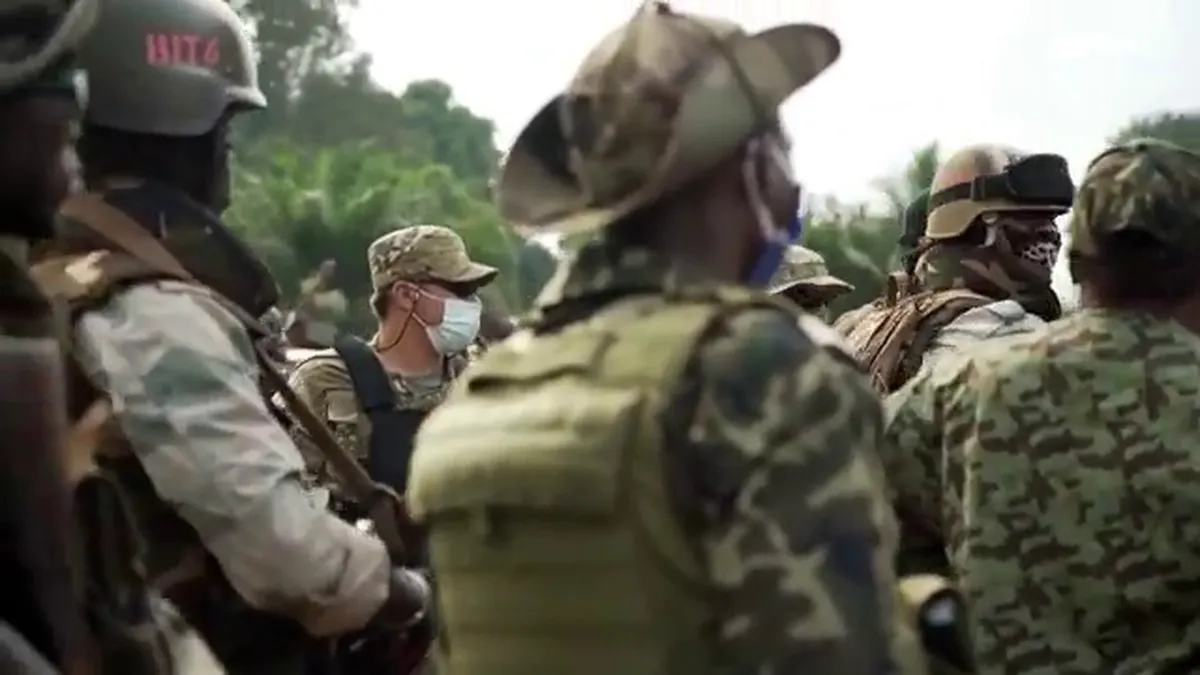
The brutal incident unfolded in the early hours of November 5, 2026, when armed assailants stormed a rural homestead outside Délémbé. According to eyewitness accounts, the attackers—allegedly affiliated with Russian-backed mercenary units—overpowered the men before subjecting them to summary executions. Local leaders warn that such atrocities are not isolated but part of a wider campaign of intimidation aimed at destabilizing the region’s fragile security situation.
The human cost: families shattered and lives lost
The victims, aged between 18 and 25, were identified by relatives as community members known for their agricultural work and community roles. Their bodies were discovered charred beyond recognition, with clear signs of decapitation. The attack left families traumatized and without closure, while local authorities struggle to provide adequate protection amid limited resources and logistical challenges.
The psychological impact on survivors and witnesses is profound. Many have abandoned their homes, fleeing to neighboring towns or temporary displacement sites. “We lived in fear long before this attack,” a local farmer told reporters. “Now, no one feels safe. The killers roam freely, and the government’s presence is nonexistent.”
Voices from the ground: survivors speak out
- Pierre, 32, displaced farmer: “We saw smoke rising before we heard the screams. By the time we ran to help, it was too late. They had already… done the unthinkable.”
- Marie, 45, community leader: “These mercenaries act with total impunity. They know no one will hold them accountable. Our pleas for justice fall on deaf ears.”
- Aïcha, 22, student: “I used to walk freely to the market. Now, I don’t even dare step outside after dusk.”
The ripple effect on local businesses and economy
The ongoing instability has crippled economic activity in Vakaga, a region already grappling with poverty and underdevelopment. Markets have shuttered, trade routes are abandoned, and agricultural production has plummeted as farmers prioritize survival over cultivation. “The attack on the four young men is just the tip of the iceberg,” said a local trader. “The entire region is hemorrhaging. Without safety, there is no economy.”
Small businesses, once the backbone of rural livelihoods, are among the hardest hit. Shops that relied on daily foot traffic now operate at a fraction of their capacity, with owners citing fear and dwindling consumer confidence. The lack of security has also deterred potential investors, deepening the region’s isolation from national and international markets.
International actors and the shadow of foreign armed groups
The presence of Russian-backed mercenary units in Vakaga has drawn global attention to the Central African Republic’s struggle to maintain sovereignty. Reports indicate these groups operate with minimal oversight, often collaborating with local factions to extend their influence. Analysts warn that their actions are not only humanitarian tragedies but geopolitical threats, complicating regional security and donor relations.
Calls for intervention have grown louder, with human rights organizations urging the international community to address the escalating violence. “The international community must recognize that the mercenaries in Vakaga are not merely an internal problem—they are a regional destabilizing force,” said a regional security expert.
The government’s response (or lack thereof)
While CAR officials have condemned the attack, tangible measures to protect civilians remain elusive. Weak governance, logistical constraints, and limited military capacity hinder effective responses. Local leaders argue that without bolstered security and accountability, such atrocities will persist. “We need boots on the ground, not empty statements,” pleaded a village elder.
What’s next for Vakaga?
The road to recovery in Vakaga is fraught with challenges. Immediate priorities include securing humanitarian access to affected populations, providing psychosocial support to survivors, and ensuring the perpetrators face justice. Long-term stability, however, hinges on addressing the root causes of conflict—including the unchecked activities of armed groups and the erosion of state authority.
Yet, as the region braces for more violence, the question remains: How many more lives must be lost before decisive action is taken?