
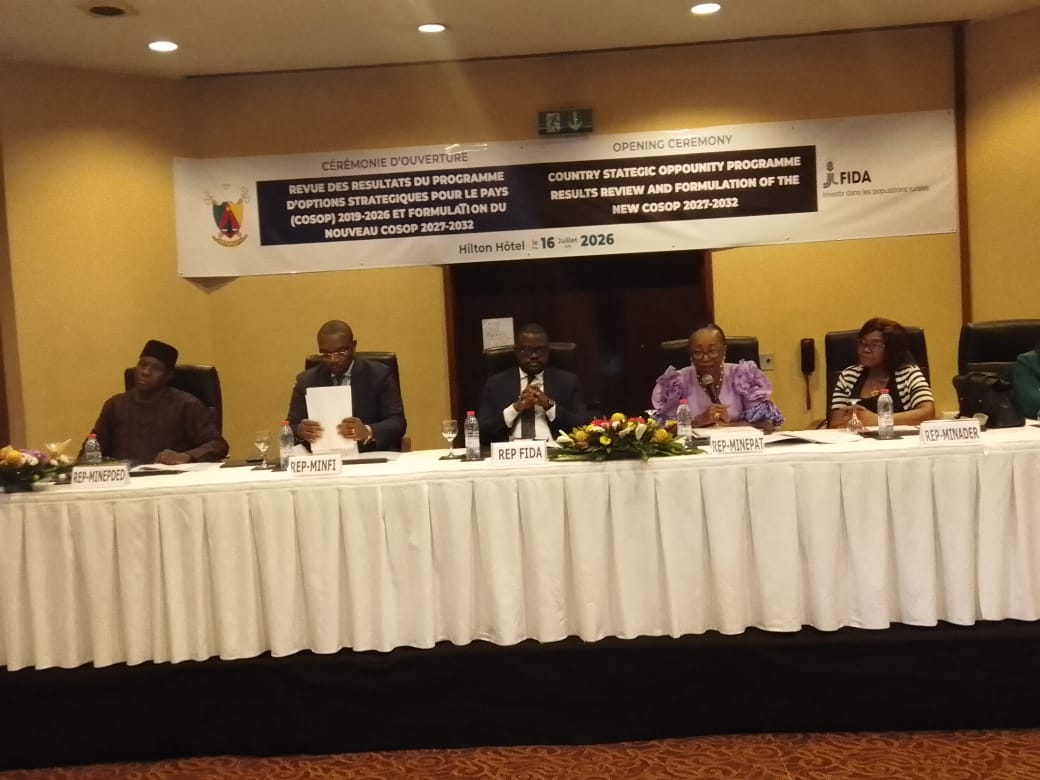
The Cameroun government and the International Fund for Agricultural Development (IFAD) have jointly reviewed the outcomes of their 2019-2026 partnership program, revealing significant strides in rural agricultural productivity.
Strategic agricultural cooperation yields tangible results
A high-level workshop held in Yaoundé on July 16, 2026, showcased the achievements of the Country Strategic Opportunities Program (COSOP) implemented through the Cameroun–IFAD collaboration. The event also served as a platform to outline priorities for the upcoming 2027-2032 COSOP phase.
The COSOP initiative was designed to channel IFAD funding toward impoverished rural communities, with particular emphasis on empowering women and youth through sustainable agricultural ventures. This aligns with Cameroun‘s broader National Development Strategy 2030 and the United Nations Sustainable Development Cooperation Framework.
Agricultural productivity targets surpassed
Under the program’s sustainable productivity enhancement pillar, remarkable progress was documented. A total of 139 cooperatives specializing in rice and onion farming—comprising 10,505 producers (39% women and 49% youth)—have been established and are fully operational. The initial target of 10,000 members by 2024 was exceeded, with over 50% of these cooperatives led by women or young entrepreneurs.
Environmental and social management plans were integrated into all projects. The Youth Agropastoral Entrepreneurship Promotion Program (PEA-Jeunes) achieved a 99% adoption rate of taught techniques, surpassing its 50% target. However, hydro-agricultural land development for rice and onion cultivation reached only 43% of its 1,600-hectare goal, with 649 hectares developed to date.
Rice and onion production gains recorded
Participants at the workshop highlighted substantial improvements in agricultural yields. Phase II of the Agricultural Sector Development Support Program (PADFA II) reported a 74% increase in lowland rice productivity, rising from 2.1 tons to 3.7 tons per hectare against a target of 5 tons. Upland rice production reached 2.5 tons per hectare, achieving 63% of its 4-ton objective. Onion production stood at 18 tons per hectare, representing 86% of the 21-ton target.
Cumulatively, PADFA II contributed 52,996 tons of paddy rice (70.38% of the 74,750-ton target) and 45,000 tons of onion bulbs (52.47% of the 85,562-ton goal). Additionally, the climate-smart agriculture initiative achieved 100% compliance, culminating in a strategic plan for 17 reforms. This includes an early draft of a law guiding the agropastoral sector in Cameroun and three strategic frameworks supporting bamboo restoration policies.
Partnership extended to 2026
The COSOP agreement, originally set to conclude in 2024, was extended to December 31, 2026, following a mid-term review in July 2021 that validated the program’s alignment with national priorities.