
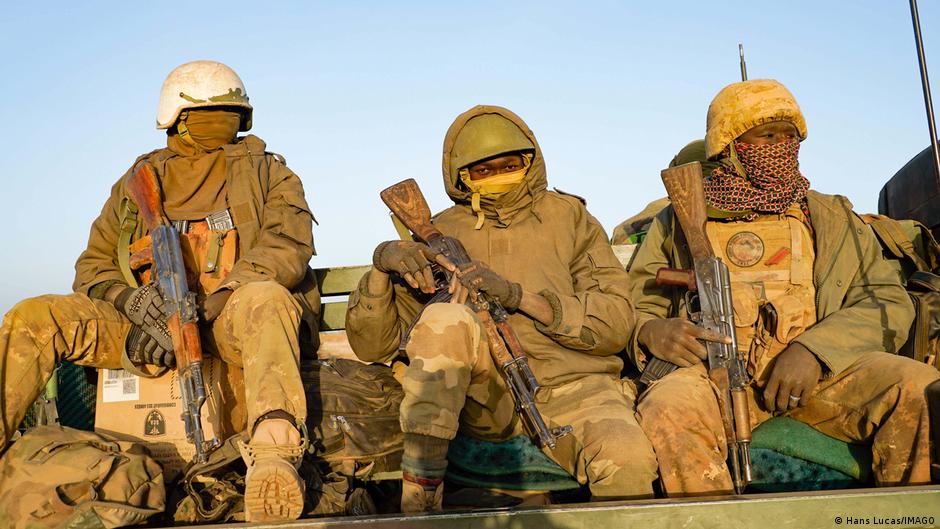
In the vast stretches of Mali’s north and central regions, where armed groups continue to challenge state authority, a puzzling trend has emerged. While Malian soldiers frequently bear the brunt of jihadist attacks, Russian paramilitaries operating under the banner of Africa Corps appear to suffer fewer losses. Several key factors may explain this disparity.
Numbers tell the first part of the story
Military analysts point to a simple but decisive reality: the scale of deployment. Current estimates suggest that between 1,500 and 2,000 Russian mercenaries are active in Mali, a fraction of the over 13,000 soldiers serving in the Malian Armed Forces. This numerical imbalance naturally increases exposure for Malian troops, who are often stationed in high-risk zones along the front lines.
Moreover, their roles differ significantly. While Malian soldiers are typically deployed in forward positions and exposed to daily combat, Russian mercenaries primarily function in support roles. Their mission is to assist local forces rather than replace them, often operating from secure positions where they manage intelligence, coordinate drone surveillance, and provide logistical or advisory support.
As noted by security analyst Mamadou Mouth Bane, who has closely studied the Sahel’s evolving conflict landscape: “The explanation is straightforward. It is the Malian army, not the Russian paramilitaries, that bears the greatest burden of combat. Malians are deployed in the most dangerous sectors, while the Russian units often remain in the background—processing data, communicating with command centers, and providing technical expertise. As a result, most casualties and kidnappings occur among Malian troops.”
Russian losses do occur—but they are less visible
Despite their reduced presence on the front lines, Russian mercenaries are not immune to danger. In recent years, several have been killed during operations in northern and central Mali. However, official casualty figures remain scarce, as neither Bamako nor Moscow discloses detailed loss reports.
Another critical factor is combat experience. Many Russian mercenaries are battle-hardened veterans who have fought in conflicts across Ukraine, Syria, Libya, and other theaters. Their expertise in asymmetric warfare, combined with access to advanced equipment and armored vehicles, gives them a tactical edge over less experienced local forces.
According to Abdoulaye Sounaye, a researcher at the Leibniz-Zentrum Moderner Orient in Berlin and a leading Sahel security expert: “We are comparing two very different forces. On one side, there is a national army with limited resources and varying levels of training. On the other, there are professional mercenaries—highly experienced operators who have honed their skills in multiple international theaters. They arrive in Mali with superior combat techniques, better protection gear, and air or ground mobility assets that allow them to respond rapidly and effectively to jihadist threats. This level of preparedness naturally reduces their exposure compared to the Malian army.”
Strategic focus limits exposure
Analysts also suggest that Russian forces deliberately prioritize high-value missions. With limited personnel, they focus their efforts on securing critical infrastructure, protecting key leaders, and conducting targeted counterattacks rather than maintaining a continuous presence across vast, hostile territories.
This selective engagement allows them to minimize risk while still providing strategic support to Malian troops. Meanwhile, Malian soldiers often remain responsible for holding ground over extended periods, increasing their vulnerability to ambushes, improvised explosive devices, and sustained assaults.
In summary, the lower casualty rates among Russian mercenaries in Mali can be attributed to a combination of smaller deployment numbers, supportive rather than frontline roles, combat experience, superior equipment, and a cautious operational strategy. While the Malian Armed Forces continue to carry the heaviest burden of the conflict, their Russian partners operate with greater discretion—and, in many cases, greater survivability.