
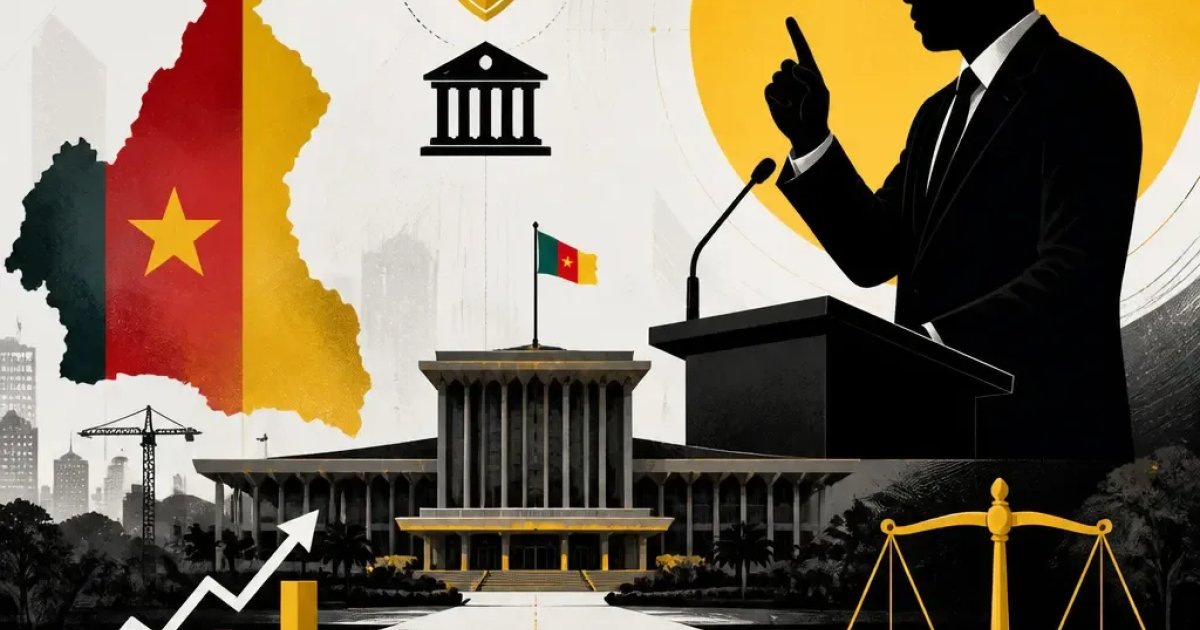
Cameroun government denies power vacuum amid Paul Biya absence
The prolonged absence of Cameroon’s President Paul Biya has intensified public speculation, with the Head of State having been outside the country for nearly two months. In an official government statement released on Sunday, authorities confirmed that Biya remains alive and that there is no power vacuum in the country.
Government reassures public on presidential continuity
The government’s first official response to the prolonged absence came through a statement by Communication Minister and government spokesperson René Emmanuel Sadi. In a televised address, he unequivocally stated, « The President is alive » and emphasized that there is no constitutional crisis or power vacuum.
Sadi also confirmed that President Biya’s return to Cameroon is imminent, though he did not provide a specific date. « We cannot give an exact timeline, » he acknowledged, « but his return is imminent. »
Opposition demands clarity as authorities dismiss rumors
The minister pushed back against opposition claims that the Constitution requires immediate clarification regarding presidential succession. He argued that such interpretations are « overly simplistic and lack legal rigor. »
« There has been no constitutional declaration of a power vacuum, » Sadi stated firmly. He specifically denied rumors suggesting that the Constitutional Council had identified any vacancy in the presidency, calling such claims « unfounded and politically motivated. »
The opposition has repeatedly questioned the President’s ability to perform his duties during his extended absence, particularly as Cameroon faces ongoing security and economic challenges. Government officials, however, have declined to disclose Biya’s exact location or the reasons behind the duration of his stay abroad.
The uncertainty surrounding the President’s absence has fueled public debate, with critics accusing the administration of opacity. Meanwhile, the government continues to assert that all state functions are operating normally under the leadership of the existing cabinet.
Constitutional framework under scrutiny
Under Cameroon’s Constitution, the President remains in office until a successor is officially sworn in. The opposition has argued that the absence—now approaching two months—constitutes a de facto vacancy, particularly in light of Biya’s advanced age and the lack of public appearances. However, government officials maintain that constitutional provisions are being respected and that no legal breaches have occurred.
As the nation awaits further updates, the government’s insistence on stability contrasts sharply with growing public skepticism. While authorities have pledged transparency, they have yet to provide detailed explanations for the President’s prolonged absence or outline contingency plans for presidential succession.