
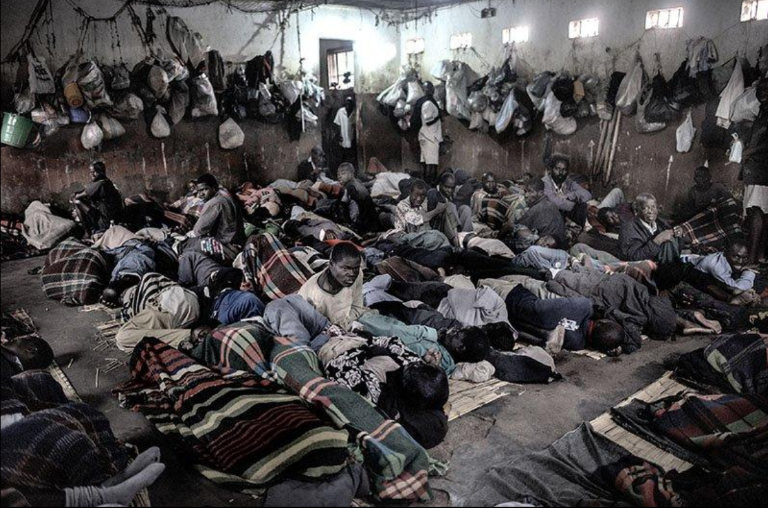
A devastating question haunts Nigeria after 33 deaths in a single overcrowded cell
When 50 detainees were crammed into a 12-square-meter cell in Minna, Nigeria, on the night of September 16–17, 2026, the air itself became a killer. Thirty-three people lost their lives in just hours—14 of them children. The tragedy, now confirmed by a government-appointed inquiry, exposes a brutal truth: Africa’s prison systems are not just overcrowded—they are death traps.
Why did 33 human lives vanish in a space where breathing was a struggle? The answer lies not in one failure, but many: extreme overcrowding, suffocating heat, a breakdown in basic care, and a catastrophic delay in response. Survivors described conditions so dire they resorted to drinking their own sweat to stay alive. Officials tasked with guarding them allegedly ignored pleas for help for hours. This was not an accident. It was a foreseeable and preventable disaster.
What the inquiry revealed: how a cell became a death chamber
The independent commission’s findings, released on October 27, paint a harrowing picture. The victims—33 detainees, including 14 minors—were packed into a single holding cell under the Nigeria Security and Civil Defence Corps (NSCDC). Nearby, another 17 detainees survived, but only after enduring conditions that violated every standard of human dignity.
The report highlights a deadly combination:
- Extreme overcrowding: nearly 50 people crowded into a space meant for one-tenth that number, leaving no room to sit or stand upright.
- Deadly heat and poor ventilation: temperatures soared, suffocating air trapped bodies in a toxic, oxygen-depleted environment.
- No access to water or sanitation: detainees had no clean water to drink and no functional toilets. Survivors reported being forced to improvise to survive.
- Failed oversight: guards allegedly ignored repeated distress signals, delaying lifesaving intervention for hours.
The commission concluded that these deaths were both predictable and preventable. Among the survivors’ testimonies was a chilling detail: some were children as young as 12, locked in with adults in clear violation of international standards. Others had been detained without legal process, held beyond legal time limits in facilities unfit for human occupancy.
From tragedy to accountability: what happens next?
The official death toll stands at 33, not 37 as initially reported. Forty-one others survived the horrific night. But the real crisis is not the number—it is the system that allowed such conditions to exist. The commission has called for sanctions against responsible officers, criminal prosecutions where warranted, and compensation for victims’ families and survivors.
Yet punishment alone will not prevent the next tragedy. The deeper issue is structural: Africa’s prisons are operating beyond capacity, and the crisis is spiraling. As of 2023, 37% of people in African prisons were awaiting trial—innocent in the eyes of the law, but incarcerated in conditions that violate their fundamental rights.
Cases drag on for years due to understaffed courts, inadequate legal aid, and a reliance on pre-trial detention that has ballooned populations beyond what any facility can safely hold. The result? Human beings—mothers, fathers, children—are treated not as individuals with rights, but as excess bodies in a broken system.
The global scale of the crisis: africa is not alone—but it is among the worst
According to the Prison Matters 2025 report by the United Nations Office on Drugs and Crime (UNODC), over 90% of African countries with available data operate prisons above official capacity. Globally, more than 60% of prison systems are overpopulated. This is not a Nigerian issue. It is an African—and international—crisis of justice, dignity, and governance.
Across the continent, prisons operate in a state of chronic emergency. Many facilities were built decades ago and have never been renovated. Budgets for food, medicine, and maintenance are chronically underfunded. In some cases, entire institutions are so dilapidated they pose immediate health risks. Yet governments continue to detain people in these conditions, often for minor offenses or simply because no alternatives exist.
This is not detention. It is warehousing—human beings treated as inventory in a system that has lost its moral compass. And when a 12 m² cell becomes a tomb, that moral failure is laid bare for all to see.
Time for action: how can africa break the cycle of suffering in its prisons?
Reforming Africa’s prisons cannot mean building more of the same. It requires rethinking the entire approach to justice and detention. Here’s what must change:
- Speed up justice: reduce case backlogs through dedicated courts, digital case management, and dedicated magistrates.
- Expand alternatives to detention: divert non-violent offenders, juveniles, and those with mental health needs from prison to community-based programs.
- Guarantee legal aid: ensure every detainee has access to a lawyer, regardless of income.
- Improve conditions: renovate existing facilities, provide clean water, proper sanitation, and adequate medical care.
- Enforce separation by age and risk: children must never be held with adults; low-risk detainees must not be exposed to violent offenders.
- Independent oversight: establish transparent monitoring bodies empowered to inspect prisons and enforce human rights standards.
The United Nations Nelson Mandela Rules are clear: dignity is not conditional. It is a right—even in detention. Yet in Minna, 33 people died in a cell that denied them even the right to breathe. Fourteen were children. Their deaths were not inevitable. They were the result of choices—and inaction—by those in power.
A question for every african government: can a system that kills its detainees still claim to deliver justice?
The Minna tragedy is not just Nigeria’s burden to bear. It is a wake-up call for every African nation where prisons have become zones of neglect, where the right to life ends the moment a cell door slams shut. When a 12 m² space becomes a death chamber, the justice system has failed—not once, but systematically.
Governments can respond with outrage, inquiries, and promises. But real change begins when leaders recognize that human dignity is not negotiable—even for those accused of crimes. Until then, more tragedies will follow. And each will carry the same unanswered question: how many more lives must be lost before Africa’s prisons are fit for humanity?