
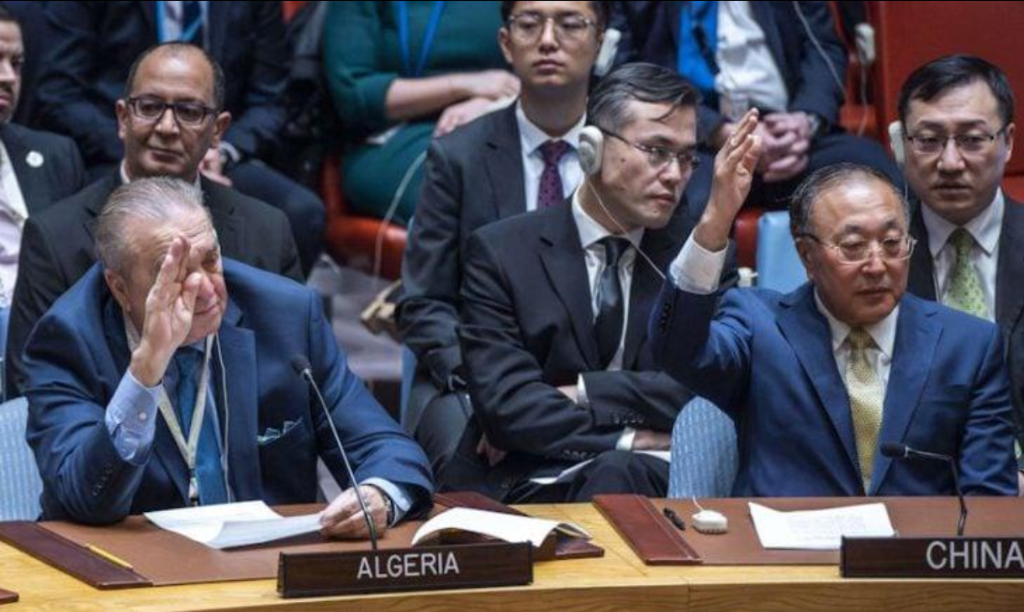
For the first time in decades, the future of the United Nations in Western Sahara hung in the balance this week. On October 30, 2026, the UN Security Council became the stage for a high-stakes diplomatic showdown that left both Washington and Moscow empty-handed—and left the people of Western Sahara staring into an uncertain abyss.
Two rival resolutions, each backed by one of the Security Council’s permanent members, crashed against the rocks of hardline positions. The first, an American-led proposal, sought to reframe the decades-old conflict by placing Morocco’s autonomy plan at the center of negotiations. The second, a Russian counterbid, aimed to preserve the status quo by extending the existing UN mission without changes. Neither survived. Neither secured the backing needed to move forward. And as the dust settled, the only certainty was that the UN’s presence in Western Sahara—and with it, the prospects for a political solution—was now in free fall.
Why did the US resolution fail to gain traction in the Security Council?
The American draft represented a bold attempt to break the decades-long deadlock over Western Sahara. It proposed rebranding the thirty-five-year-old UN mission—currently known as the Mission for the Referendum in Western Sahara (MINURSO)—into the United Nations Mission in Western Sahara (MINUSO), dropping the referendum reference entirely. More significantly, it positioned Morocco’s autonomy initiative under Moroccan sovereignty as the exclusive framework for future negotiations.
But the proposal was met with immediate resistance from Russia. Moscow argued that such a move would predetermine the outcome of the peace process, undermining the core principle of self-determination enshrined in the UN Charter. By framing autonomy as the only viable path, critics said, the US was closing the door on other options—including independence—that the Sahrawi people might ultimately choose.
The Security Council vote revealed a deep split. Eleven members supported the US draft. Three abstained: China, Pakistan, and Somalia. But thanks to the veto power wielded by Russia as one of the council’s five permanent members, the resolution failed to pass. The veto rendered the overwhelming majority meaningless, exposing once again the structural weaknesses of the UN’s decision-making body.
Moscow’s fallback plan: preserving continuity—or playing for time?
With the American initiative dead on arrival, Russia quickly tabled its own resolution. Unlike the US proposal, this one did not seek to alter the mission’s name, structure, or mandate. It simply called for a one-year extension of the existing MINURSO—until October 31, 2027.
Moscow framed this as a pragmatic measure to prevent a dangerous vacuum. “A sudden withdrawal of the UN would only deepen instability,” a senior Russian diplomat stated. Yet the plan failed spectacularly. Only Russia, China, and Somalia voted in favor. The United States opposed it outright. Eleven countries abstained. The lack of a nine-vote majority meant the resolution died without ever facing a veto.
Washington’s opposition underscored a fundamental divide: while Russia sought to maintain the mission’s current structure, the US viewed even a temporary renewal without reform as a concession to the status quo. The stalemate had now become a two-way impasse—neither side could impose its vision, and neither could accept the other’s.
The self-determination question: the heart of the conflict remains unresolved
At the core of the diplomatic collision lies a single, unanswered question: what future do the people of Western Sahara deserve? The territory has been locked in a territorial dispute since 1975, when Morocco annexed the former Spanish colony. The Polisario Front, which represents the Sahrawi people, insists on a referendum offering independence as an option. Morocco counters with a plan for broad autonomy under Moroccan sovereignty.
The UN mission was created in 1991 to organize a referendum. But decades of disagreement over voter eligibility and the modalities of the vote have prevented it from ever taking place. MINURSO’s original mandate has long outlived its purpose—and yet, it remains the only international presence on the ground.
By pushing to eliminate the referendum from the mission’s identity, the US effectively sidelined the possibility of an independent outcome. To Sahrawi leaders, this amounted to a betrayal of the very principle that justified UN involvement in the first place. “We did not fight for decades to have our right to choose traded away in New York,” said a Polisario representative.
A mission in limbo: what happens now to MINURSO?
With neither resolution adopted and the existing mandate set to expire on October 31, 2026, the Security Council faces a stark choice: act decisively or risk abandoning Western Sahara altogether. The absence of a decision means the UN’s peacekeeping presence could vanish overnight—leaving the territory without international monitoring, humanitarian oversight, or a clear political path forward.
But the deeper crisis is one of credibility. The double failure exposed how easily the Security Council can be paralyzed by geopolitical rivalries. When permanent members cannot agree, even a 14-to-1 vote in favor of a resolution is meaningless. The veto weapon, designed as a safeguard, has become a tool of paralysis.
For the Sahrawi population, the stakes are existential. They have already endured decades of displacement, conflict, and broken promises. Now, as two of the world’s most powerful nations use Western Sahara as a chessboard in a larger struggle, their right to self-determination is slipping further away.
October 30, 2026 may well be remembered not as a moment of progress, but as the day the international community gave up on finding a just solution—leaving the people of Western Sahara to face an uncertain future alone.
Key outcomes from the October 30 Security Council vote
- US-led resolution: 11 in favor, 0 against, 3 abstentions, 1 veto (Russia) – Rejected
- Russian-led resolution: 3 in favor, 1 against (US), 11 abstentions – Failed due to insufficient majority
- MINURSO mandate: No renewal decision; existing mandate expires October 31, 2026
- UN presence: Future of MINURSO uncertain; risk of abrupt withdrawal looms
What’s next for Western Sahara?
The diplomatic gridlock cannot continue indefinitely. The Security Council must either:
- Find a compromise resolution that respects the right to self-determination while acknowledging regional realities, or
- Acknowledge failure and begin planning for a post-UN transition—one that could leave the territory even more vulnerable to instability and unmet humanitarian needs.
Either way, the people of Western Sahara are paying the price—not just for the conflict itself, but for the inability of the world’s most powerful nations to put justice above power.