
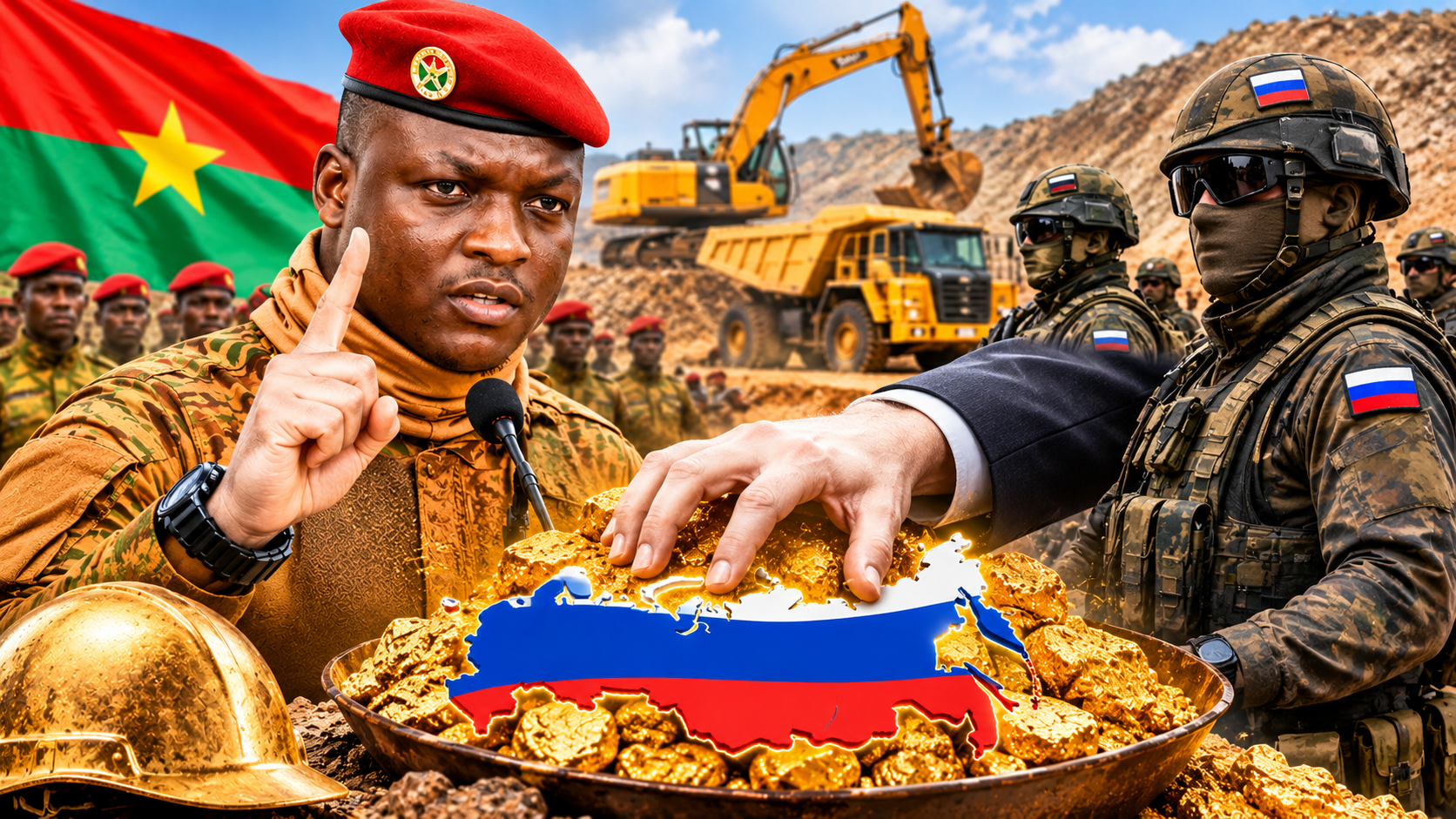
The claim that Burkina Faso’s natural resources belong exclusively to its people has become a central pillar of the current administration’s political narrative. Yet, as Russian security firms increasingly dominate the protection of gold mining sites, questions persist about the nation’s actual control over its most valuable economic asset. When foreign entities shape the security framework of strategic mining operations, does the promise of full sovereignty hold up under scrutiny?
Sovereignty in name only: The paradox of national ownership
Ibrahim Traoré’s government has repeatedly emphasized the importance of reclaiming economic independence, positioning the country’s gold reserves as a symbol of national pride and self-sufficiency. The rhetoric of “100% Burkinabè” gold suggests a decisive break from past dependencies, but declarations alone cannot guarantee true autonomy over strategic resources.
A mine is far more than an extraction site it is an economic ecosystem where security, logistics, financial flows, and operational control intersect. When foreign security firms assume critical roles in these domains, the implications extend beyond commercial interests. They challenge the very foundation of Burkina Faso’s ability to govern its own resources.
The Russian footprint: Security partnerships with hidden implications
The military junta’s pivot toward Moscow is framed as a move toward sovereignty and a rejection of traditional partnerships. However, the growing presence of Russian security firms in Burkina Faso’s mining sector raises concerns about the extent of their influence. These companies do not merely provide protection they operate within a framework that affects the entire value chain of gold production.
Who precisely oversees the security of these sites? What contractual obligations bind these firms to Burkinabè authorities? And most critically, how do these arrangements align with the nation’s long-term economic goals? Without clear answers, the narrative of national ownership risks sounding hollow.
The limits of sovereignty rhetoric versus operational reality
Sovereignty is not achieved through declarations or regulatory changes alone it is proven through action. For Burkina Faso to assert genuine control over its gold, the state must demonstrate that it dictates the terms of exploitation, security, and revenue distribution. Yet, when foreign actors play a decisive role in safeguarding these assets, the lines between national control and external influence become blurred.
The paradox is stark: how can a nation claim full mineral sovereignty while outsourcing the very security that enables its extraction? This is not to suggest that Russia directly controls the mines or their output. Rather, it underscores the distinction between legal ownership of resources and the practical power to manage their protection and economic benefits.
What does true economic sovereignty look like for Burkina Faso?
The real test for Burkina Faso is not merely replacing one set of foreign partners with another. It is ensuring that every collaboration regardless of origin serves the national interest and remains transparent, accountable, and subject to domestic oversight. A strategic partnership should never morph into economic or security dependency.
Citizens deserve clarity on who protects their mines, who benefits from security contracts, who sets operational standards, and how revenues are reinvested. The gold extracted from Burkina Faso’s soil must serve its people first not foreign entities, private interests, or opaque networks. Declarations of national ownership are meaningless without the mechanisms to enforce them.
The way forward: Control, transparency, and accountability
For sovereignty to be more than a political slogan, Burkina Faso must prioritize three key imperatives: exclusive control over security arrangements in mining zones, full transparency in all contracts and financial flows, and unfettered accountability to national institutions and the public.
The gold beneath Burkina Faso’s land is its birthright a resource that should fuel development, infrastructure, and social progress. But true ownership begins with the power to decide, the means to enforce, and the will to ensure that every ounce of gold contributes to a prosperous and sovereign future.
By Henri Nkeng — Journalist