
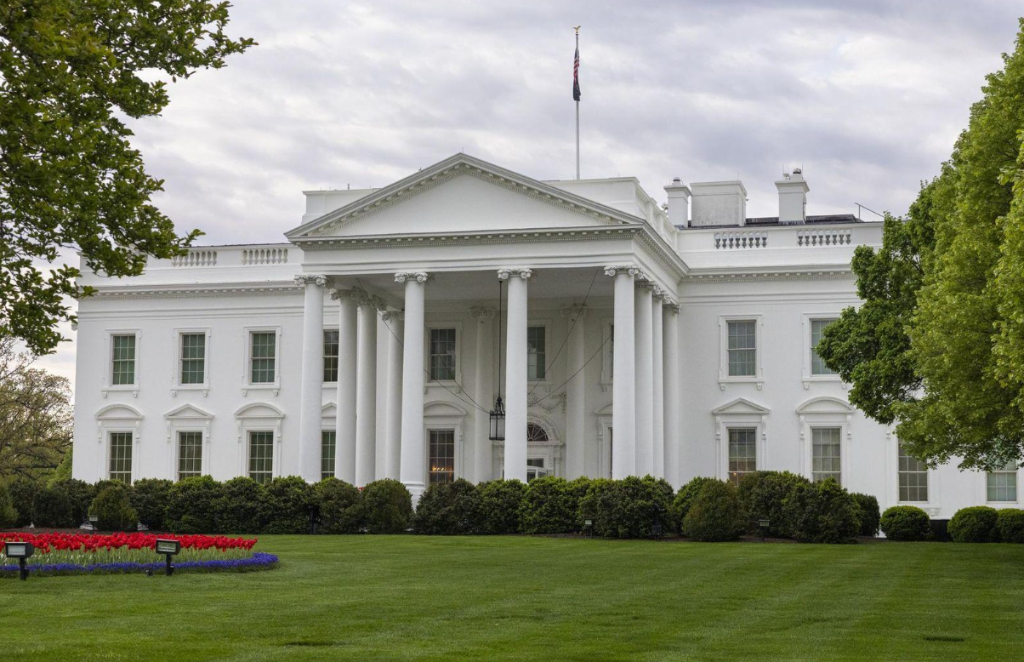
The transfer of $17.6 million from a Congolese government account to a US defense contractor has triggered a political firestorm in Washington. At the heart of the controversy is Richard Grenell, a former Trump administration official and longtime Trump ally, who faces allegations of orchestrating the opaque transaction. As the White House scrutinizes the allegations, questions mount over the origin of the funds, their intended use, and the transparency of the payment process.
What do we know about the transfer from Kinshasa to Texas?
On May 29, 2025, a payment of $17.6 million was reportedly sent from a Congolese government account to Texas Armament & Technology (TX-AT), a Texas-based defense firm. While the transfer itself is confirmed, the circumstances surrounding it remain murky. The transaction has raised alarms because part of the funds—reportedly $5.6 million—was allegedly intended for the Kennedy Center, Washington’s premier cultural institution where Grenell served as director during that period.
Despite these claims, there is no clear documentation or record of the supposed donation to the Kennedy Center. The absence of verifiable proof has fueled speculation, but it has not, on its own, established wrongdoing. The White House has acknowledged the sensitivity of the matter, emphasizing the need for full transparency in how public funds are managed and allocated.
Who is Richard Grenell, and why does his name matter?
Richard Grenell is no stranger to controversy. As a former US Ambassador to Germany and a key figure in Donald Trump’s inner circle, Grenell has held significant influence in American politics. His connection to this transaction has turned a financial dispute into a political liability, with critics alleging that he may have leveraged his proximity to Trump to secure favorable treatment for donors.
Grenell has vehemently denied any wrongdoing, asserting that he did not solicit or authorize the diversion of funds meant for the Kennedy Center. While his denial does not resolve the allegations, it underscores the political stakes involved in this case. The White House’s legal team is now investigating the matter, but no conclusions have been reached.
Was there a quid pro quo?
Reports suggest that Grenell may have implied that donations to the Kennedy Center could grant donors access to VIP events and direct influence with Trump. However, the authenticity of these claims remains unverified. Without concrete evidence, it is premature to conclude that a formal quid pro quo agreement existed. Still, the allegations have fueled perceptions of favoritism and ethical lapses in the handling of public and private funds.
What does this mean for the Democratic Republic of the Congo?
For the DRC, the implications extend beyond Washington’s political drama. If the funds originated from a public Congolese account, the transfer raises critical questions about governance, contract transparency, and accountability. Why was such a large sum sent to a US defense company, and what, if anything, did the Congolese government receive in return?
Turhan Mildon, a Turkish businessman with business interests in the DRC—particularly in infrastructure—has been cited in connection with the transaction. However, his involvement does not necessarily prove a direct link between the payment and a specific Congolese public contract. The lack of clarity has left many unanswered questions:
- Was the transfer part of a commercial contract, or was it an unrelated transaction?
- Who authorized the payment, and on what legal basis?
- What goods or services were supposed to be provided in exchange?
- Were the $5.6 million truly intended for the Kennedy Center?
Where are the missing documents?
The answers to these questions likely lie in the contracts, bank transfer orders, administrative approvals, and financial records of the entities involved. Without access to these documents, it is impossible to definitively determine whether the transaction complied with legal and ethical standards. The opacity of the process has only deepened suspicions of mismanagement.
Why accountability in Kinshasa matters
In a country where public trust in institutions remains fragile, this case highlights the urgent need for stronger oversight and transparency in financial dealings. Every transaction involving public funds must be backed by verifiable documentation, proper authorization, and a clear, legitimate purpose. If irregularities are confirmed, authorities must hold those responsible to account through appropriate legal channels.
For now, however, the available information does not provide conclusive evidence of embezzlement or criminal wrongdoing. The investigation is ongoing, and until more facts emerge, the allegations remain unproven.
What’s next for this high-stakes financial mystery?
The $17.6 million Congo-to-US transfer sits at the intersection of financial transparency, political influence, and cross-border governance. The White House’s review could shed light on the true nature of the transaction, the roles played by key individuals, and whether any laws were violated.
Beyond the political and legal fallout, the case underscores a critical question: Who ultimately controls the flow of public money, and how can citizens trust that it is being used for its intended purpose? Until these questions are answered with concrete evidence, the controversy will continue to simmer, leaving Kinshasa and Washington to grapple with the fallout.