
Why Russia isn’t the dominant arms supplier Africa relies on
In Sahel nations like Mali, Burkina Faso, and Niger, Moscow has cultivated a high-profile military presence, often overshadowing other global players. Yet, when it comes to actual arms exports, the data tells a different story. Contrary to popular belief, Russia is not the leading military supplier to African governments. The real leaders are the United States and China, whose combined influence reshapes the continent’s security alliances.
New SIPRI figures reveal the shifting military supplier landscape
The latest Stockholm International Peace Research Institute (SIPRI) data, released in March 2026 and covering 2021–2025, provides a clear snapshot. Across the entire African continent, the US accounts for 19% of major arms imports, followed closely by China at 17%. Russia ranks third with 15%, while France trails at 8.3%. Breaking it down further, in Sub-Saharan Africa alone, China leads with 22%, pushing Russia to a distant second place at 12%, with Turkey close behind at 11%. These numbers challenge the narrative that portrays Russia as Africa’s top military partner.
China expands its defense footprint with full-spectrum offerings
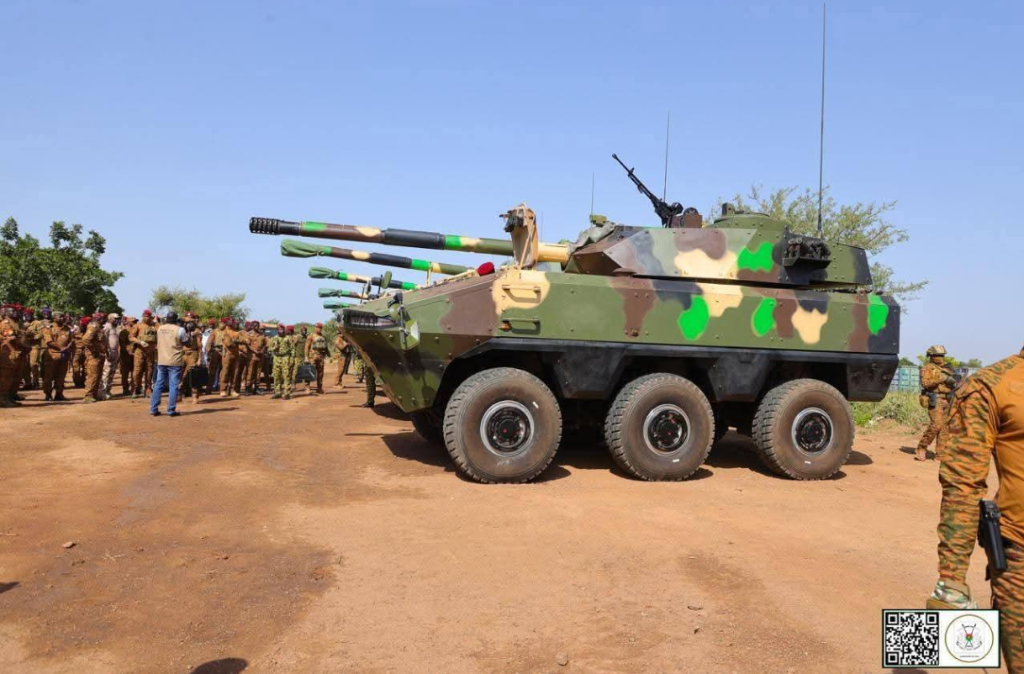
China’s growing role in Africa’s defense sector aligns with the continent’s urgent need for modern military capabilities against terrorism and armed insurgencies. Beijing delivers a broad array of equipment: armored personnel carriers, surveillance and combat drones, air defense systems, radar units, artillery, and transport aircraft. In 2024, Burkina Faso received 116 Chinese infantry transport vehicles and six assault vehicles, according to SIPRI figures cited by regional analysts. Mali has engaged with China North Industries Group Corporation (NORINCO) for military systems, training, and potential technology transfers, including armored vehicles and artillery systems.
Beyond hardware, China is cultivating long-term defense relationships. Its approach includes maintenance support, soldier training, and gradual technology sharing—elements critical to sustaining operational readiness in high-threat zones.
Russia’s influence remains strong but asymmetric
Despite weaker export numbers, Russia maintains a visible and politically impactful presence in Africa. Countries like the Central African Republic and Mali continue to host Russian military advisors, trainers, and operational support units through restructured entities like the Africa Corps, succeeding the Wagner Group. This hands-on engagement bolsters Moscow’s diplomatic and media profile, even as its commercial footprint declines.
Russia’s export decline is stark: global arms sales dropped by 64% from 2016–2020 to 2021–2025, largely due to war in Ukraine, sanctions, and domestic rearmament priorities. Yet, this hasn’t erased its role as a strategic partner for certain African governments seeking rapid security solutions.
The real test: effectiveness in counterterrorism, not just arms sales
African nations face a complex security crisis that demands more than weaponry. Sustainable counterterrorism requires reliable intelligence networks, air mobility, cross-border coordination, resilient state presence in fragile zones, and well-trained, well-equipped forces. While new suppliers like the US and China offer advanced platforms and long-term support, they also introduce challenges—technological dependency, maintenance costs, spare part availability, and arms proliferation risks.
As Africa diversifies its defense partnerships, it gains leverage but also complexity. The continent is no longer dependent on a single supplier. With the US leading in total African arms imports and China dominating in Sub-Saharan Africa, the balance of power in military cooperation is quietly but decisively shifting.
What’s next for Africa’s military alliances?
The rise of Beijing and Washington as top arms suppliers doesn’t just change who sells weapons—it redefines how Africa builds its security architecture. African governments now have the option to balance partnerships, demand technology transfer, and shape long-term defense capabilities. In this evolving market, China is leveraging industrial scale, competitive pricing, and integrated support packages, while the US emphasizes alliance-building and interoperability. Russia, though still influential on the ground, no longer sets the pace in contract volume or regional supply chains.
The question facing African leaders isn’t just “Who sells the most weapons?” but “Which partnerships deliver lasting security and sovereignty?” The answer will shape Africa’s defense future—and its role in global geopolitics.