
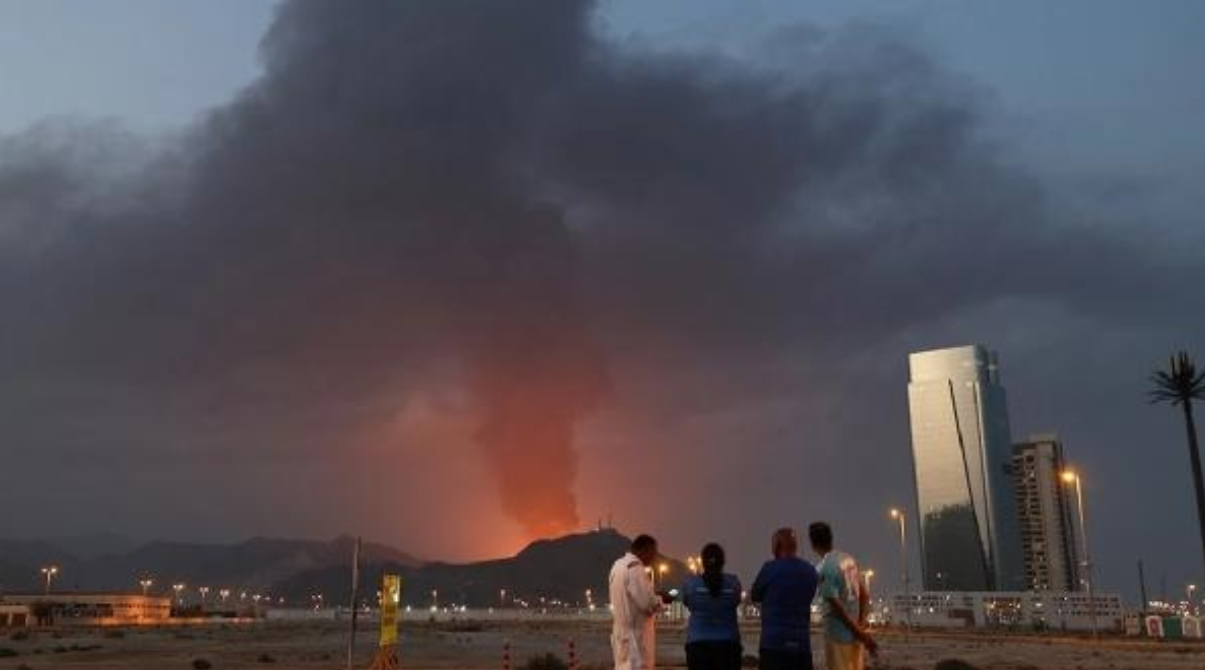
Did Trump flip the script on Iran with a late-hour strike at the Strait of Hormuz?
With the midterm elections just hours away, Donald Trump made a last-minute gamble that has sent shockwaves across Washington and global oil markets. On November 2, the United States launched precision strikes against Iranian-linked targets on Qeshm Island in the Strait of Hormuz—a move swiftly condemned by Tehran but framed by the White House as a defensive measure. As ballots open tomorrow, the question looms: has this military escalation strengthened the president’s hand or handed the opposition a powerful campaign weapon?
From diplomatic calm to sudden strikes: a contradiction few voters will ignore
Just days before the election, Trump had publicly signaled cautious optimism toward Iran, hinting at the possibility of renewed diplomatic engagement. Yet within hours, the administration executed strikes that not only contradict those statements but also risk escalating a conflict that a majority of Americans already oppose. Polling from late August showed only 31% of voters approving of the administration’s approach to Iran, while 63% disapproved—with rising fuel prices at the top of voters’ concerns.
By authorizing strikes so close to Election Day, Trump has reintroduced military action into the campaign narrative, giving Democrats a fresh opening to frame the president as reckless in foreign policy and distracted from domestic priorities like inflation and economic security.
The Strait of Hormuz: where geopolitics meets voter wallets
The Strait of Hormuz isn’t just a military flashpoint—it’s an economic artery. This narrow waterway connects the Persian Gulf to the Indian Ocean and carries nearly 20% of the world’s oil supply. Any disruption risks sending global oil prices surging, a development that hits Americans directly at the pump. With gas prices already weighing on household budgets, even the specter of instability in Hormuz could sway undecided voters.
- Global oil markets are on edge, with traders already pricing in a risk premium due to the escalation.
- Retail fuel prices in the U.S. have crept up in recent weeks, fueling voter frustration over inflation.
- Congressional races in energy-dependent states such as Texas, Alaska, and North Dakota could see heightened turnout driven by gas price concerns.
For Republicans, this timing is perilous. While some conservative voters may applaud a firm stance against Iran, others—especially in swing districts—could see the strikes as unnecessary provocation likely to worsen their economic pain.
A presidency caught between two fires
Trump’s political dilemma is stark: double down on military assertiveness to energize his base, or risk appearing weak by pulling back in the final stretch of the campaign. The White House insists the strikes were defensive and proportional, aimed at deterring Iranian provocations. But critics argue the move is less about security and more about projecting strength ahead of a referendum on the president’s leadership.
The administration faces a paradox: every bomb dropped on Iranian targets may rally some supporters, but the specter of prolonged conflict could erode voting confidence just as Americans head to the polls. With every dollar spent on military engagement coming at the expense of domestic priorities, the political cost of this gamble may prove heavier than the Pentagon’s budget.
What the midterms could mean for America’s Iran policy
If Republicans lose control of the House or Senate, Trump’s Iran strategy will come under immediate scrutiny. A Democratic-controlled Congress could launch investigations into the legality of the strikes, challenge military spending, and push for renewed diplomacy. It could also signal a broader rejection of Trump’s foreign policy—one that increasingly prioritizes confrontation over negotiation.
Even if the strikes don’t decide the election outcome directly, they may shape voter perceptions in critical battlegrounds. In states like Pennsylvania, Michigan, and Wisconsin—where economic anxiety already trumps foreign affairs—the gesture could backfire, reinforcing the narrative that Trump is more focused on global flashpoints than on kitchen-table issues.
Countdown to the ballot: will voters reward boldness or punish escalation?
As Americans cast their votes, the final question is not just about who controls Congress—it’s about whether the president’s last-minute military move will be seen as leadership in a dangerous world or reckless brinkmanship. The Strait of Hormuz strikes may have been intended as a show of force, but in the final hours before the midterms, they risk becoming the very issue that decides Trump’s next chapter in office.
One thing is certain: in a campaign defined by division and distrust, the president’s final act before Election Day has already rewritten the narrative—and the stakes couldn’t be higher.