
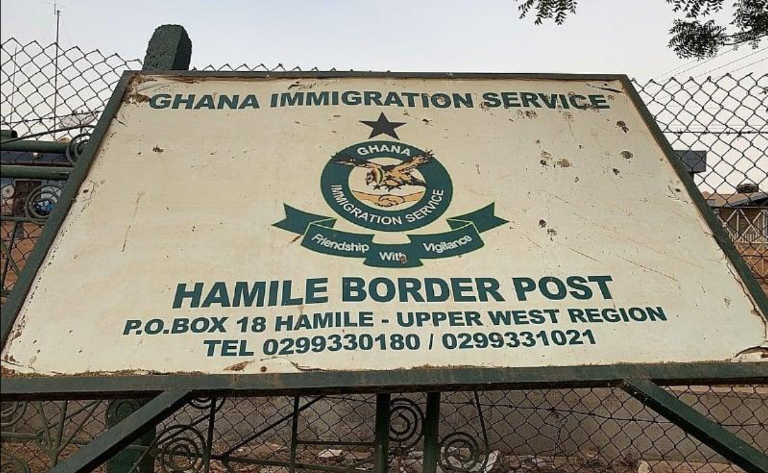
When a tricycle transporting suspected explosives detonated near the Ghana-Burkina Faso border, it wasn’t just lives that were lost—it was the illusion of control. The deadly blast in Hamile has left one immigration officer dead and another severely injured, exposing the delicate balance between border enforcement and the hidden dangers that lurk in unregulated movement. With smuggling routes doubling as powder kegs, this tragedy forces Ghana to confront a critical question: are its border security measures inadvertently fueling the very risks they aim to prevent?
From pursuit to tragedy: the chain of events that led to the hamile explosion
The explosion occurred during a security operation targeting a tricycle—commonly called a okada in West Africa—believed to be carrying dynamite and other explosives. Witnesses reported that the vehicle was traveling along an unauthorized route near the border, a common practice to avoid formal checkpoints. When security forces attempted to halt the vehicle, the occupants refused to comply, triggering a pursuit. It was during this chase that the explosives detonated, killing the immigration officer and critically injuring his colleague. The civilians aboard the tricycle were also killed in the blast.
The Ghana Immigration Service has yet to release a full account of the incident, leaving several questions unanswered. Was the explosives cache linked to regional armed groups? Were the occupants connected to criminal networks exploiting porous borders? Or was this simply a case of reckless smuggling spiraling into disaster? Without definitive answers, the tragedy serves as a stark reminder of how quickly control can slip from authorities’ grasp.
Hamile: a border town caught between commerce and chaos
Hamile sits in Ghana’s Upper West Region, a stone’s throw from Burkina Faso—a country grappling with escalating jihadist violence. This small but strategically vital town is a hub for cross-border trade, where goods, people, and information flow freely between communities. But this convenience comes at a cost. Unregulated routes crisscross the area, offering smugglers and illicit traders an escape from official scrutiny. While these paths fuel local economies, they also serve as invisible highways for dangerous cargo, from contraband fuel to, as this case shows, explosives.
The Ghanaian government has steadily increased border surveillance in recent years, deploying more officers and installing checkpoints to curb irregular movement. Yet the Hamile explosion reveals the limits of this approach. When enforcement actions turn into high-speed chases, the risks multiply. The incident underscores a harsh truth: without addressing the economic and social realities driving cross-border activity, security measures alone cannot eliminate the dangers.
Regional instability casts a long shadow over Ghana’s borders
The blast occurred against a backdrop of deepening insecurity in the Sahel. Burkina Faso has faced relentless attacks by armed groups, displacing thousands and straining relations with neighboring states. Ghana, though not directly targeted, has responded by tightening its northern defenses, fearing spillover violence. Yet the Hamile tragedy suggests that security strategies focused solely on deterrence may be backfiring.
So far, no evidence ties the explosion to a terrorist attack or Burkina Faso-based militant groups. Instead, preliminary reports point to a failed smuggling operation gone wrong. But the incident has reignited debates about whether Ghana’s border policies are inadvertently pushing smuggling networks into more dangerous—or explosive—territories. Are crackdowns on unauthorized routes driving traffickers toward riskier, less monitored paths? The answers may force Ghana to rethink its approach to border management entirely.
What’s next? balancing security with reality in the borderlands
In the wake of the Hamile blast, Ghanaian authorities face a dual challenge: investigating the exact causes of the explosion while preventing similar tragedies in the future. The ongoing inquiry will determine whether explosives were intentionally smuggled, accidentally detonated, or misused in a way that defies current security frameworks. Until then, the nation is left to grapple with the consequences.
For long-term solutions, experts emphasize the need for a three-pronged strategy:
- Intelligence-led enforcement: Moving beyond checkpoints to disrupt smuggling networks at their source, using local informants and cross-border cooperation.
- Community engagement: Partnering with border residents to identify hazardous routes and encourage voluntary compliance without resorting to high-stakes pursuits.
- Alternative livelihoods: Addressing the economic drivers behind smuggling by providing legal trade opportunities or vocational training near border zones.
Without these measures, Ghana risks repeating the same cycle: tightened controls leading to more dangerous detours, more violent confrontations, and ultimately, more tragedies like Hamile. The question now isn’t just what caused the explosion—it’s whether Ghana is willing to confront the tough choices required to prevent the next one.
Beyond the headlines: the human cost of border insecurity
While political and economic debates rage, the true weight of the Hamile explosion lies in its human toll. A family lost a father. A colleague lost a friend. A nation lost a moment of security it thought it had secured. As Ghana mourns, the tragedy serves as a sobering reminder that border security isn’t just about patrols and policies—it’s about people. And when those people become casualties, the cracks in the system become impossible to ignore.