
Diplomatic U-turn as Ouagadougou seeks euros after Moscow’s empty pledges
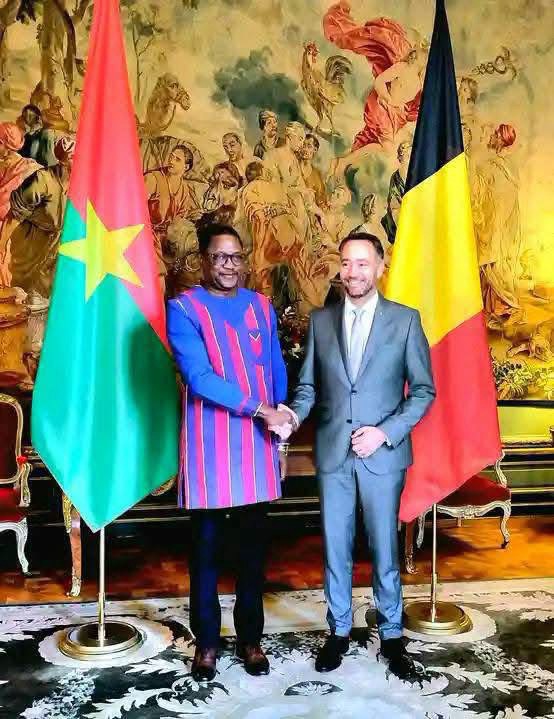
For years, Burkina Faso’s military leadership has framed its relationship with the West as a zero-sum battle: either Ouagadougou would break free from European aid and forge new alliances with Moscow, or it would remain shackled to former colonial powers. Yet the twin visits to Brussels last week by Foreign Minister Karamoko Jean Marie Traoré reveal a far more pragmatic reality. Just days after high-profile talks in Moscow yielded no immediate cash injections, the Burkinabè delegation returned to Belgium to secure fresh financial commitments underscoring the stark gap between political rhetoric and economic necessity.
The diplomatic pivot comes at a moment when the junta’s anti-Western narrative is colliding head-on with the country’s pressing fiscal needs. With public finances stretched thin and security spending skyrocketing, Burkina Faso can no longer afford the luxury of ideological purity. The question now is whether Moscow will ever deliver on its pledges or if Brussels, long demonised by the regime, will remain the only viable source of support.
Moscow’s Memorandums: Grand Promises, No Immediate Funds
The Russian connection was supposed to be Burkina Faso’s financial lifeline. At the recent Russia-Africa summit, officials proudly signed cooperation agreements, including a memorandum between the AES Investment and Development Bank and Russia’s VEB.RF. But signing papers is not the same as writing cheques. These frameworks lay out future investment frameworks not instant cash injections. So far, none of the promised Russian funds have materialised in Ouagadougou’s treasury.
This raises a critical question: Can Moscow realistically replace the billions in European aid and multilateral loans that Burkina Faso absorbs annually? The regime’s own budget projections tell another story. In 2026, the country faces a projected deficit of nearly half a trillion West African francs about 4% of GDP. Without external financing, how will the junta fund security operations, rebuild infrastructure, or maintain basic services for a population under strain?
What Burkina Faso Actually Needs
Emergency liquidity: Immediate budget support to cover shortfalls and prevent currency collapse.
Long-term investment: Credible projects in energy, transport, and agriculture to stimulate growth.
Debt sustainability: Restructuring or refinancing existing obligations to avoid default.
So far, none of these have been delivered by Russia. Meanwhile, Brussels has just reaffirmed its commitment pledging €40 million in development aid through Belgium’s Enabel agency for the post-2027 period. This is not charity. It is recognition that Burkina Faso, despite its protestations, remains critically dependent on European partnerships.
Brussels Rises as the Pragmatic Partner
The meetings in Brussels were not symbolic gestures. They were negotiations. After the minister met with EU High Representative Kaja Kallas and Belgian Deputy PM Maxime Prévot, concrete financial commitments were secured. These funds will not replace all Western support, but they demonstrate a clear pattern: Ouagadougou continues to turn to Brussels when the going gets tough.
For a regime that has spent years vilifying Europe, this return visit is politically awkward. It exposes a contradiction at the heart of the junta’s strategy: how to claim sovereignty while desperately courting the same institutions it publicly rejects. The Burkinabè people and international observers are watching closely. Where, they may ask, are the tangible returns from the Moscow alliance?
Brussels, by contrast, operates on a different logic. It does not demand ideological conformity before releasing funds. It evaluates projects, disburses grants, and supports public services. The €40 million pledge is just the latest in a series of engagements that keep Burkina Faso’s economy afloat whether the junta likes it or not.
Can Ideology Finance a Nation?
No country builds its future on slogans alone. Sovereignty is measured not in press releases, but in roads built, schools staffed, and security forces equipped. Burkina Faso’s leaders have every right to diversify partnerships. But they cannot credibly present Moscow as the solution while quietly returning to Brussels for survival funds.
The junta now faces a choice. It can continue to frame Europe as an adversary while relying on its euros. Or it can acknowledge reality: that development requires partnership, not posturing. The latter path may not be politically appealing, but it is the only one that offers real financial stability for a nation in crisis.
What’s Next for Burkina Faso’s Financial Future?
The coming months will reveal whether Moscow can deliver on its promises or if Ouagadougou must make a fuller reconciliation with Brussels. One thing is certain: the clock is ticking. With each passing day without fresh Russian funds, the cost of anti-Western rhetoric rises. Meanwhile, the EU’s conditional but reliable support remains available ready to be claimed by a government that finally chooses pragmatism over posture.
The junta’s financial balancing act is not sustainable. Sooner or later, it will have to answer a simple question: What does Burkina Faso truly gain from its pivot to Moscow and what does it lose by keeping Brussels at arm’s length?
By Henri Nkeng — Journalist