
Facing a pivotal moment: why GEX 2026 could make or break regional security
As West Africa grapples with shifting threats—from maritime piracy to transnational crime and spillover from Sahelian conflicts—the GEX 2026 multinational military exercise arrives at a critical juncture. Bringing together France, Côte d’Ivoire, and Gabon in a dual-phase drill, this operation isn’t just about training troops. It’s a strategic litmus test: can these nations forge a new model of military cooperation that transcends old dependencies? Or will it merely reinforce patterns of foreign influence under a different name?
Two operations, one goal: breaking geographic barriers in defense collaboration
GEX 2026 unfolds in two distinct phases, each designed to test interoperability across land, sea, and air domains. The first, FANGHA 2026, runs in Côte d’Ivoire from November 7–14, 2026, followed by WAIYA 2026 in Gabon from November 24–29. Together, they aim to simulate real-world scenarios where coordinated action spans multiple borders—a necessity in an era where security threats ignore national lines.
The exercise pools over 2,000 troops: 1,181 from Côte d’Ivoire, 850 from France, and 100 from Gabon, with observers from Benin, Guinea, Liberia, and Senegal. But beyond numbers, the true test lies in whether these nations can develop shared procedures, seamless communication, and joint decision-making under pressure.
A strategic pivot: France’s evolving role in African defense
GEX 2026 arrives as France reshapes its military footprint in Africa. Withdrawals from Mali, Burkina Faso, and Niger, combined with adjustments in Côte d’Ivoire and Gabon, signal a shift from permanent bases to flexible partnerships. The return of Port-Bouët camp to Ivorian control in 2025 and evolving Gabonese deployments underscore this transition.
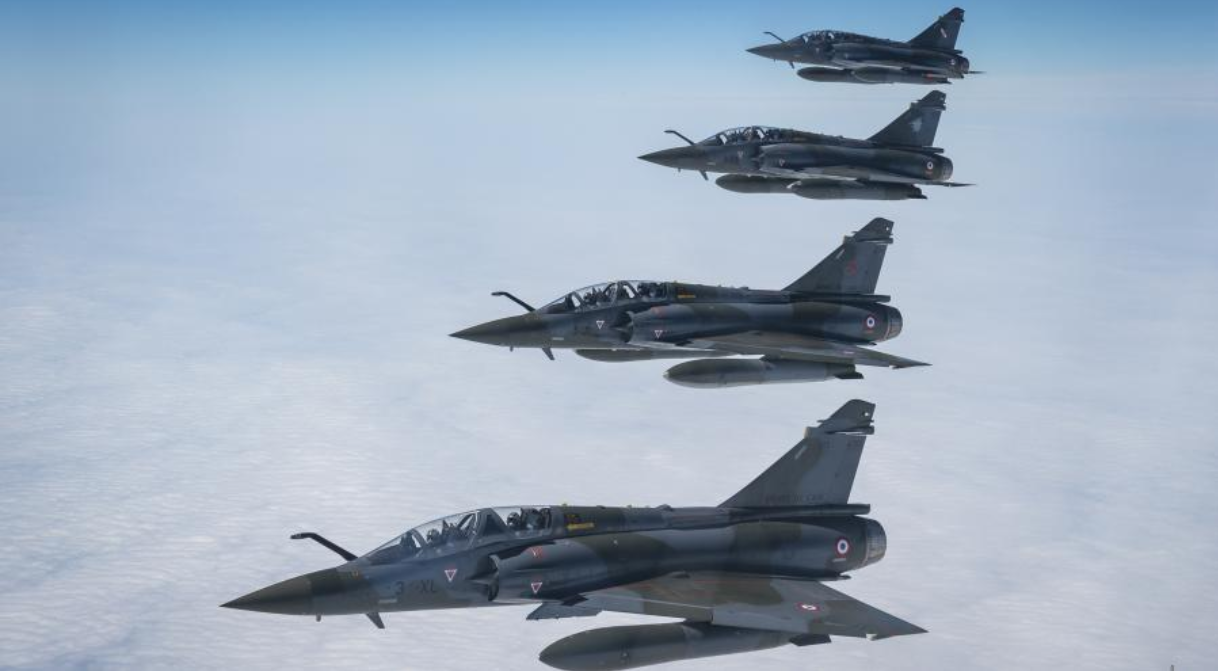
Yet France isn’t abandoning influence—it’s recalibrating it. The Mistral amphibious assault ship and Mirage 2000 fighter jets deployed for GEX 2026 demonstrate that Paris still wields significant power projection. But the focus now is on training, knowledge exchange, and episodic deployments rather than garrisoned control.
The Gulf of Guinea: a high-stakes battleground for security and economy
Stretching from Senegal to Angola, the Gulf of Guinea is the economic lifeline of West and Central Africa. Home to major ports, oil reserves, and critical shipping lanes, it’s also a hotspot for piracy, illegal trafficking, and regional instability. Côte d’Ivoire’s northern regions and Gabon’s maritime zones are particularly exposed to spillover risks from Sahelian conflicts.
By focusing on this area, GEX 2026 isn’t just a military drill—it’s a statement. Stability here depends on cooperation that crosses borders, integrating land, sea, and air capabilities into a unified response. The question is: can this model outlast the exercise?
Local vs. foreign: what GEX 2026 means for African defense autonomy
For Côte d’Ivoire and Gabon, the stakes are high. They’re not just participating—they’re betting on a future where their armies can plan, command, and execute operations independently. The exercise offers a rare chance to test interoperability with international partners while building domestic capacity.
But real autonomy requires more than equipment or training. It demands sustainable mechanisms for intelligence sharing, maritime surveillance, and crisis management. If GEX 2026 delivers only temporary gains, the old cycle of dependence risks repeating itself. The true measure of success lies in what happens after the maneuvers end.
Beyond the drills: a new era for African military partnerships?
GEX 2026’s regional appeal—with observers from Benin, Guinea, Liberia, and Senegal—hints at a broader ambition: a West African defense architecture that grows organically. If successful, it could set a precedent for other nations facing similar threats. If not, it risks becoming another high-profile but hollow gesture.
The exercise forces a fundamental rethink: Is military cooperation evolving, or is it merely rebranding? The outcome could redefine security dynamics across the Gulf of Guinea—and beyond—for decades to come.
Key takeaways from GEX 2026
- Interoperability over isolation: Success hinges on shared procedures and trust across participating armies.
- Flexibility vs. permanence: France’s shift to episodic deployments reflects a global trend, but its long-term impact remains uncertain.
- Local ownership matters: Côte d’Ivoire and Gabon’s strategic goals include reducing reliance on foreign partners.
- Regional ripple effect: Observer participation suggests potential for wider security collaboration in West Africa.
- Outcomes beyond the drill: The real test will be whether lessons from GEX 2026 translate into lasting reforms.