
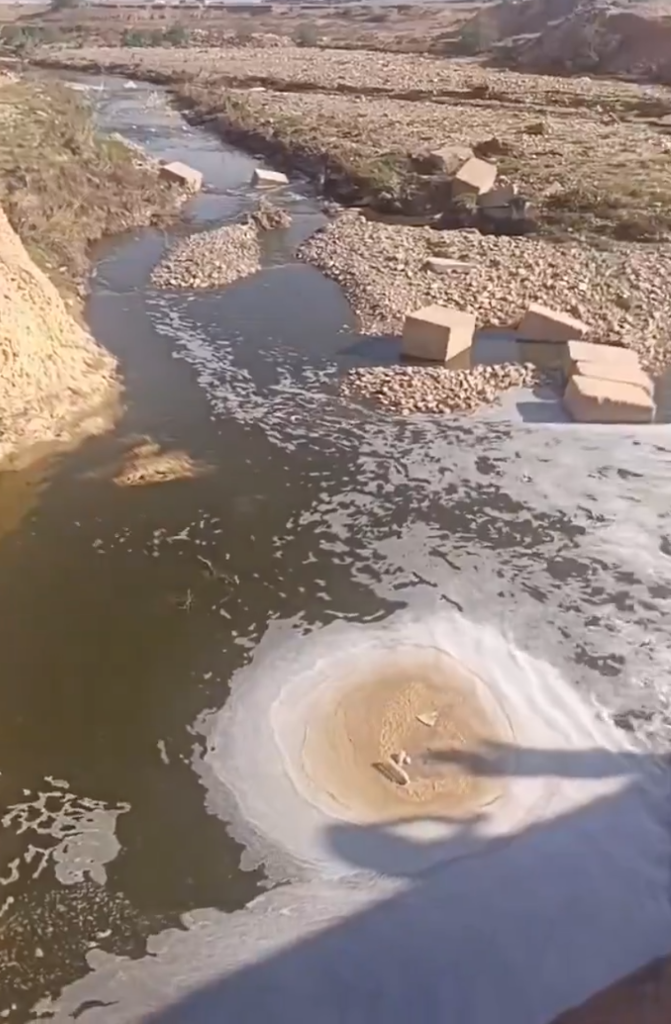
Tlemcen’s water supply hangs in the balance
Can a contaminated river ignite a full-blown diplomatic crisis between Algeria and Morocco? In the wilaya of Tlemcen, the oued Mouilah—a critical water source for the region—has become the latest flashpoint in an already tense relationship between North Africa’s two largest economies. Algerian authorities have raised alarm over rising pollution levels, pointing to industrial and domestic discharges originating from Moroccan territory. With the oued acting as a lifeline for the Hammam Bougara dam, the stakes couldn’t be higher: environmental degradation, public health risks, and what could become a protracted international dispute.
Pollution levels spark urgent environmental and health alerts
Recent assessments by Algerian officials reveal alarming contamination in the oued Mouilah. Lab results indicate dangerous concentrations of nitrites, traces of heavy metals, pharmaceutical residues, and microbiological substances that threaten both aquatic ecosystems and human health. The Hammam Bougara dam, a key water supply for multiple communities, now faces heightened risks of contamination, increasing treatment costs and placing additional strain on local water resources.
The situation is compounded by the dam’s reliance on the oued for its water supply. Persistent pollution could impair water purification processes, raise production costs, and exacerbate water scarcity in a region already grappling with climate-related droughts and rising demand. Authorities have implemented emergency monitoring and treatment measures to safeguard potable water supplies, but the long-term impact remains uncertain without a sustainable solution.
The transboundary blame game: Morocco in the crosshairs
At the heart of the dispute is the allegation that polluted waters from Moroccan industrial and domestic sources flow into the oued Mouilah via the oued Isly. Algerian officials claim the contamination originates across the border, but verifying the exact source demands rigorous scientific investigation. Authorities emphasize the need for independent studies, comprehensive water sampling across the basin, and traceable data to confirm—or refute—their accusations.
Without conclusive evidence, the Moroccan government has not formally acknowledged responsibility. While Algeria’s claims remain unproven, the absence of transparency from either side fuels speculation and deepens mutual distrust. For now, the accusations stand as an official stance pending further verification, but the implications for bilateral relations are already severe.
Could the oued Mouilah become a battleground for international law?
With diplomatic relations between Algeria and Morocco already strained, the water pollution crisis has raised the specter of a legal showdown. Regional parliamentarians from Tlemcen have urged that the case be escalated to international bodies, while Algerian authorities hint at pursuing legal recourse under international environmental law. Such a move would hinge on principles like transboundary harm prevention, state cooperation, and shared responsibility for natural resources.
The international legal framework obligates states to prevent activities within their borders from causing environmental harm to neighboring countries. Yet, turning accusations into a formal case requires more than political posturing—it demands verifiable evidence, cooperative investigations, and adherence to procedural norms. At present, any talk of international litigation remains speculative, but the possibility highlights how environmental disputes can quickly escalate into geopolitical flashpoints.
A crisis simmering in already fragile relations
The oued Mouilah controversy arrives at a precarious moment in Algerian-Moroccan relations. Since the rupture of diplomatic ties in August 2021, the two nations have been locked in a cycle of political and regional disagreements, with water emerging as the latest strategic vulnerability. Both countries face severe water challenges—climate change, shrinking aquifers, and growing demand—making shared water resources a potential trigger for deeper conflict.
While there is no indication of military escalation, the pollution crisis has the potential to transcend technical concerns and become a matter of national sovereignty and state accountability. The oued Mouilah is more than a river; it is a symbol of interconnected fate, where environmental degradation could spill over into diplomatic fallout. Whether this becomes a technical crisis or a full-blown dispute hinges on how both nations respond—and whether cooler heads prevail.
From crisis to cooperation: can science bridge political divides?
More pressing than legal arguments is the need for urgent, science-based action. Determining the exact origin of the pollution, assessing health risks, and implementing long-term basin monitoring must take precedence over political maneuvering. An independent, multidisciplinary team—comprising hydrologists, toxicologists, and environmental engineers—could provide the objectivity needed to resolve this dispute.
Water does not recognize borders, and neither do its consequences. A sustainable solution demands transparency, cooperation, and a shared commitment to environmental stewardship. For Tlemcen’s residents, time is running out. For Algeria and Morocco, the oued Mouilah offers a stark reminder: when resources are at risk, diplomacy must not dry up.