
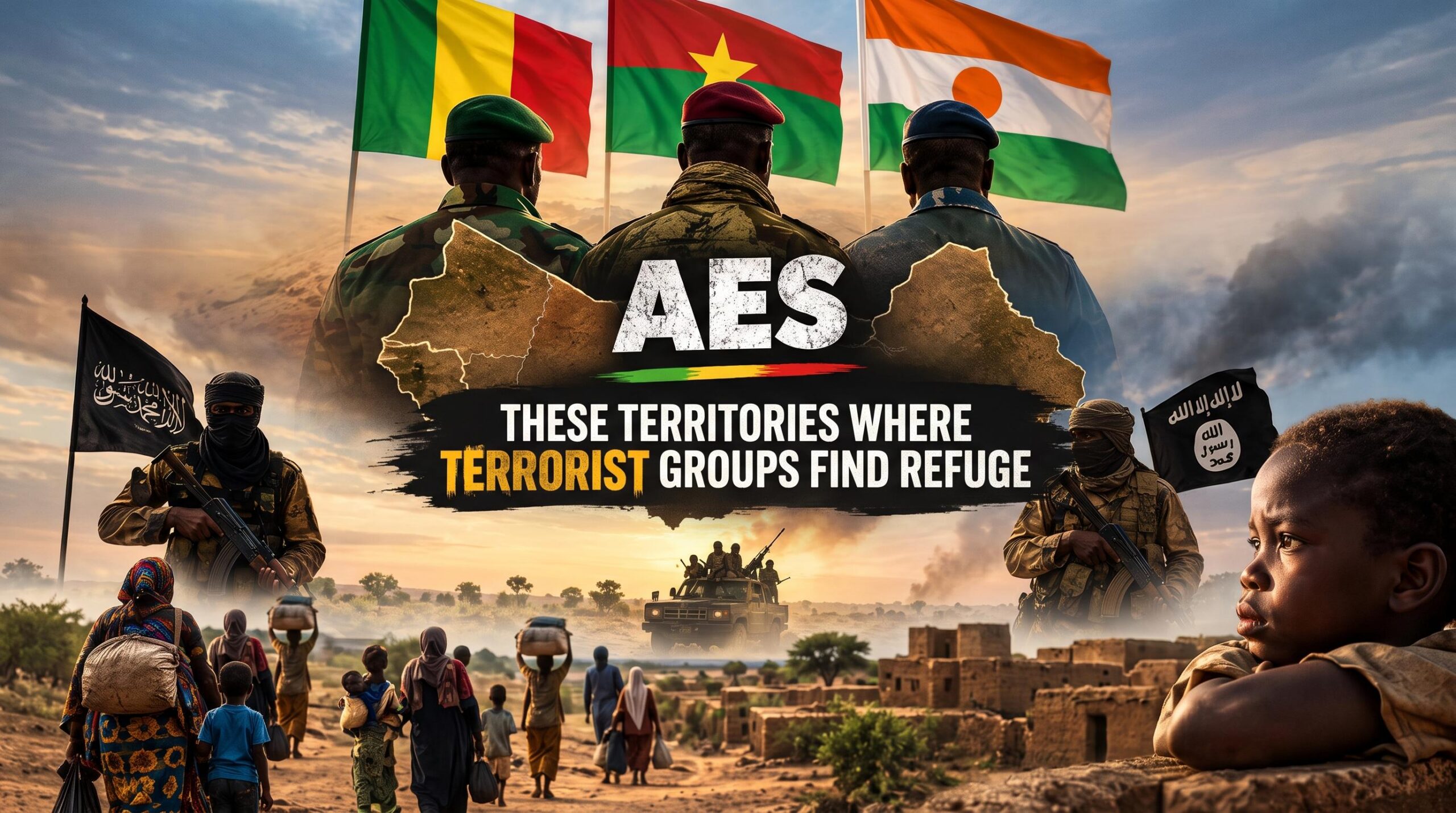
The violent clashes that erupted in the Sahel on October 9, 2026, between the Support Group for Islam and Muslims (JNIM) and the Islamic State in the Sahel (ISIS-S) have once again thrown a harsh spotlight on a critical question: how can military regimes in the region fulfill their security pledges when armed groups continue to thrive on their own soil?
Whose victory, whose loss? the unanswered questions from Tessit
On that fateful morning, two rival jihadist factions clashed in Tessit, a strategic zone straddling the border between Mali and Burkina Faso. According to claims from sources close to the JNIM, the group suffered a significant setback, losing ground in multiple fronts. Conversely, factions aligned with ISIS-S asserted the opposite, stating that the JNIM suffered a decisive defeat and that their forces seized new territories.
These conflicting narratives make it impossible to determine which group truly emerged victorious. However, one truth remains undeniable: both organizations retained operational capacity and remain a persistent threat to the civilian populations caught in the crossfire.
The human toll is immediate: communities face forced displacement, disrupted livelihoods, and restricted access to essential services. The instability has also halted economic activities, leaving families in a precarious state as they struggle to rebuild their lives.
Broken pledges: why security rhetoric clashes with reality
The military juntas of Mali, Burkina Faso, and Niger collectively known as the Alliance of Sahel States (AES) have positioned themselves as the vanguard of security and sovereignty. Yet, the ongoing presence and activity of armed groups like JNIM and ISIS-S expose a glaring gap between their stated goals and ground realities.
The discontinuity between promises and action is stark. Since seizing power, the juntas have framed their legitimacy around regaining control over terrorized regions and eliminating militant threats. Still, the relentless clashes in Tessit and beyond reveal a harsh truth: terrorist groups are not merely surviving; they are actively contesting and reshaping territorial control.
The junta leaders frequently point to external interference accusing neighboring states of harboring militants or providing safe havens as a primary factor fueling the crisis. While such claims warrant scrutiny, attributing the entire crisis to outside forces oversimplifies the situation. The persistence of armed groups within national borders suggest failures in internal counterterrorism strategies, intelligence gathering, and territorial governance.
From rhetoric to results: the benchmark for junta legitimacy
The strategic pivot away from Western partnerships and the embrace of new military alliances particularly with Russia were touted as decisive steps toward restoring order. Yet, these shifts have not translated into tangible security improvements for civilians. The United Nations reported in 2026 that JNIM and ISIS-S continue to maintain a strong operational presence in critical zones, including Tessit and Ménaka in Mali, as well as parts of Niger and Burkina Faso. The report also highlights repeated clashes between these groups over territorial control.
This ongoing violence underscores a fundamental challenge: sovereignty is not merely about choosing geopolitical partners or rejecting foreign influence. It is, at its core, about a state’s ability to protect its people and assert authority over its own territory.
Security as a political tool: the dangerous calculus of persistent instability
As the crisis deepens, a pressing political question emerges: can the AES regimes justify their prolonged grip on power by citing persistent insecurity as an unavoidable necessity?
There is no credible evidence to suggest that the juntas are actively colluding with terrorist groups to prolong instability. Such accusations require concrete, verifiable proof. However, it is legitimate to examine the potential political exploitation of insecurity a situation where threats remain unresolved, and authorities insist that the fight against terrorism justifies their continued rule.
This distinction is crucial. While the absence of definitive evidence absolves the juntas of intentional collaboration with militants, it does not absolve them of accountability for their failure to deliver on security promises.
The international community has watched closely as the juntas redefine alliances, but civilians are not waiting for geopolitical shifts they demand immediate protection and sustainable stability.
What does sovereignty truly mean? shifting the focus to tangible action
For the people of the Sahel, sovereignty is not measured by the withdrawal of foreign troops or the signing of new defense agreements. It is measured by their ability to move freely, to farm their land, to send their children to school, and to live without the constant fear of violence.
The authorities in Bamako, Ouagadougou, and Niamey face a clear and urgent mandate: they must demonstrate tangible results. This means dismantling militant networks, restoring local governance, and re-establishing a visible and effective state presence in contested territories.
Until the AES can prove that it has reshaped the security landscape, the question will persist: What value does sovereignty hold if it cannot ensure the safety of its citizens?
For the communities of Tessit and beyond, the answer cannot come soon enough.
By Henri Nkeng — Journaliste / Rédacteur