
How Chinese firms reshaped the infrastructure landscape in Sénégal
The once-dominant French companies in Sénégal’s public works sector now find themselves struggling to secure large contracts. Recent data reveals a striking shift: while Chinese enterprises now dominate over 30% of major public projects, French firms account for a mere 5%. This transformation is reshaping the country’s infrastructure, energy, and industrial sectors.
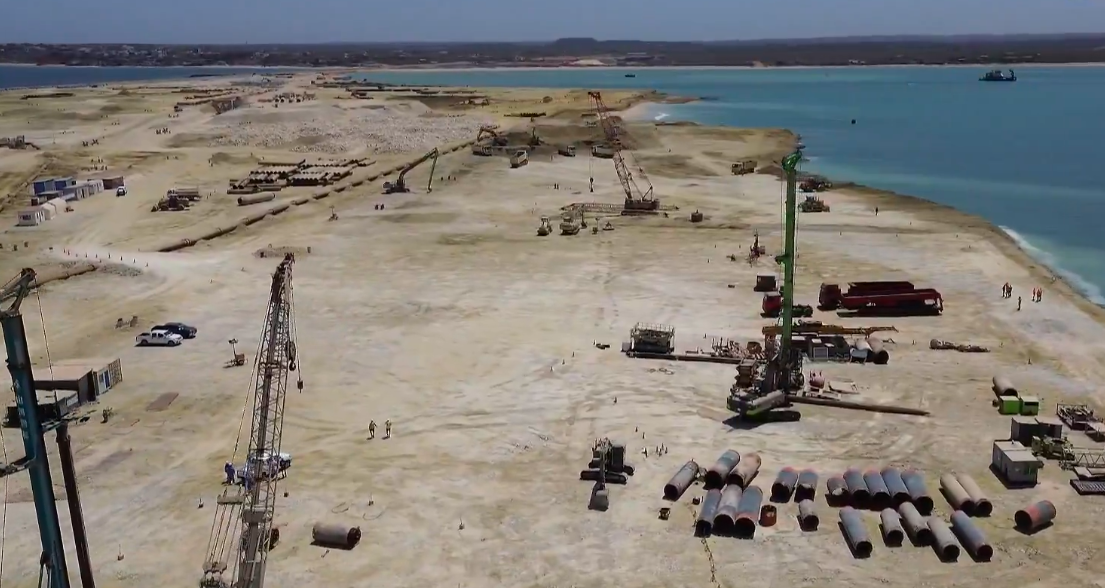
The newly constructed deep-water port in Ndayane, situated south of Dakar, exemplifies this trend. Costing over $2 billion, this strategic project is designed to accommodate massive container ships along the Atlantic coast and is expected to revolutionize Sénégal’s logistics, employment, and connectivity. Though the project is led by the Emirati company DP World, the construction consortium is primarily composed of Chinese firms. “We had international competitors, including several French companies, but ultimately, they were not selected,” explains David Gruar, DP World’s site director. Reports indicate that the French-led consortium, including Eiffage, was approximately 20% more expensive than the winning bid.
A few kilometers away, the Diamniadio new city project offers another case in point. This initiative aims to ease congestion in Dakar by developing a modern urban hub featuring a stadium, railway station, hotels, and residential buildings. The majority of these contracts were awarded to Turkish companies, with additional contributions from Chinese and Tunisian firms. Bohoum Sow, Secretary-General of the APROSI, notes that there are “no French companies” involved in the industrial platform within the new city.
Why Chinese firms are winning Sénégal’s infrastructure bids
Analysts attribute China’s success to its deep understanding of local needs and its willingness to adapt to Sénégal’s evolving market. For instance, a Chinese-backed cardboard packaging plant employs and trains local workers, introducing an industry that previously did not exist in the country. “This is the kind of flexibility and responsiveness we appreciate. They identify specific needs and deliver solutions efficiently,” says Bohoum Sow.
China’s aggressive investment strategy in Africa over the past two decades has positioned it as a key player in the continent’s economic diplomacy. “Their flag is flying high here,” observes a local observer. Bohoum Sow acknowledges this shift, stating, “It’s a win-win situation. Sénégal needs infrastructure, and China provides it. The times have changed, and so have our partners.”
Can French firms regain their foothold?
Despite their declining share of the market, some French companies are adapting by embracing local partnerships and innovative approaches. The Ragni Group, a French family-owned business specializing in public lighting, secured a 70 million euro contract to install 36,000 solar street lamps across Sénégal. To win the bid, Ragni established a local subsidiary managed by a Senegalese executive, emphasizing flexibility, quality, and cost-effectiveness. “The local employment and cost efficiency were decisive factors,” says Birama Diop, Ragni’s Senegal director.
Caroline Richard, a representative of Proparco in Sénégal, believes French companies still have opportunities, provided they align with the new market realities. “French firms can thrive by meeting higher standards and leveraging local expertise. The demand for skilled labor and sustainable projects is growing, and they are well-positioned to capitalize on it,” she remarks.
As solar-powered streetlights illuminate Sénégal’s cities, they symbolize a new business model: one where French companies must be more agile, forge stronger local partnerships, and compete on price against entrenched rivals from China, Turkey, and the United Arab Emirates.
With the landscape of public contracts rapidly evolving, the question remains: can French enterprises adapt quickly enough to reclaim their once-dominant position in Sénégal’s infrastructure sector?