
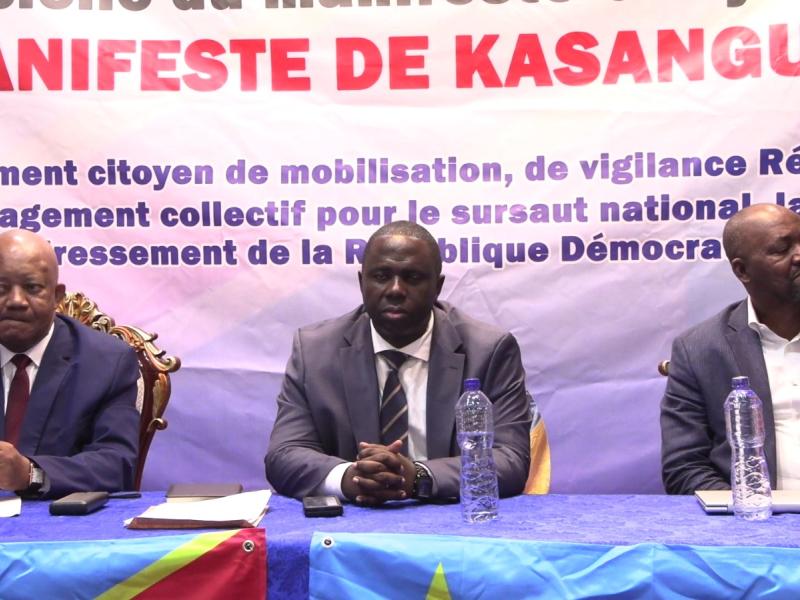
In a significant move toward national renewal, the Crisis Committee of Civil Society for Peace and Security in the République démocratique du Congo (CCPS-RDC) officially presented a new citizen roadmap this Friday in Kinshasa. Known as the “Manifeste de Kasangulu,” this document is designed to serve as a strategic guide for the total rebuilding and recovery of the nation. According to the organizing bodies, the text represents a unified response to the complex political, security, and socio-economic hurdles currently facing the country.
A collective vision for national transformation
The manifesto is the culmination of an inclusive process involving delegates from various provinces. It outlines a comprehensive vision for national change, focusing on pillars such as transparent governance, public safety, social justice, and active civic engagement. The document also addresses critical sectors like education, healthcare, economic growth, environmental safety, and the consolidation of the rule of law.
During the opening of the presentation, Sylvie Nakweti, a senior official in communication and advocacy for DYCOD-RDC, praised the unwavering dedication of civil society groups involved in this national rebirth initiative. Professor Iyoka Jean Bedel further explained that the manifesto is an educational and participatory tool intended to provide the République démocratique du Congo with a solid foundation for future action.
The road to recovery
Me Patient Bashombe Matabishi, the coordinator of the CCPS-RDC, highlighted the historical weight of this launch. He noted that the document was named after the town of Kasangulu, where the drafting committee held its working sessions. “This manifesto illustrates the vision of civil society for the recovery of the Congo,” he stated, emphasizing that the country is navigating a pivotal crisis that requires a clear path forward.
The timing of the launch, occurring just days before the national independence anniversary, was intentional. It serves as a call for every citizen to recognize their role in history and participate in the national dialogue, rather than leaving such debates solely to political figures. To support the manifesto’s goals, a new ideological movement called the BLOC-RDC was introduced, aimed at fostering active citizenship and national sovereignty. Me Patient Bashombe Matabishi was appointed to lead this movement, with Professor Iyoka Jean Bedel serving as secretary general.
Constitutional consensus and regional security
Addressing the ongoing debate regarding constitutional changes, the CCPS-RDC coordinator reiterated the need for a broad national consensus. He warned that any reform process that ignores provincial input or threatens national unity could lead to instability. The manifesto advocates for maintaining the Constitution as a vital tool for social cohesion, suggesting that its core provisions should only be altered through a shared agreement among the people.
The gathering brought together nearly 200 civil society organizations, including academics, medical professionals, legal experts, and youth leaders. The assembly called for a massive awareness campaign to ensure the manifesto is understood and adopted by both the domestic population and the Congolese diaspora.
This initiative arises during a period of heightened tension in the eastern regions of the République démocratique du Congo, where aggression from the AFC/M23 rebellion, backed by Rwanda, has triggered a severe humanitarian crisis. With millions displaced and diplomatic efforts at a standstill, the “Manifeste de Kasangulu” emerges as a critical attempt to find internal solutions to the nation’s most pressing challenges.