
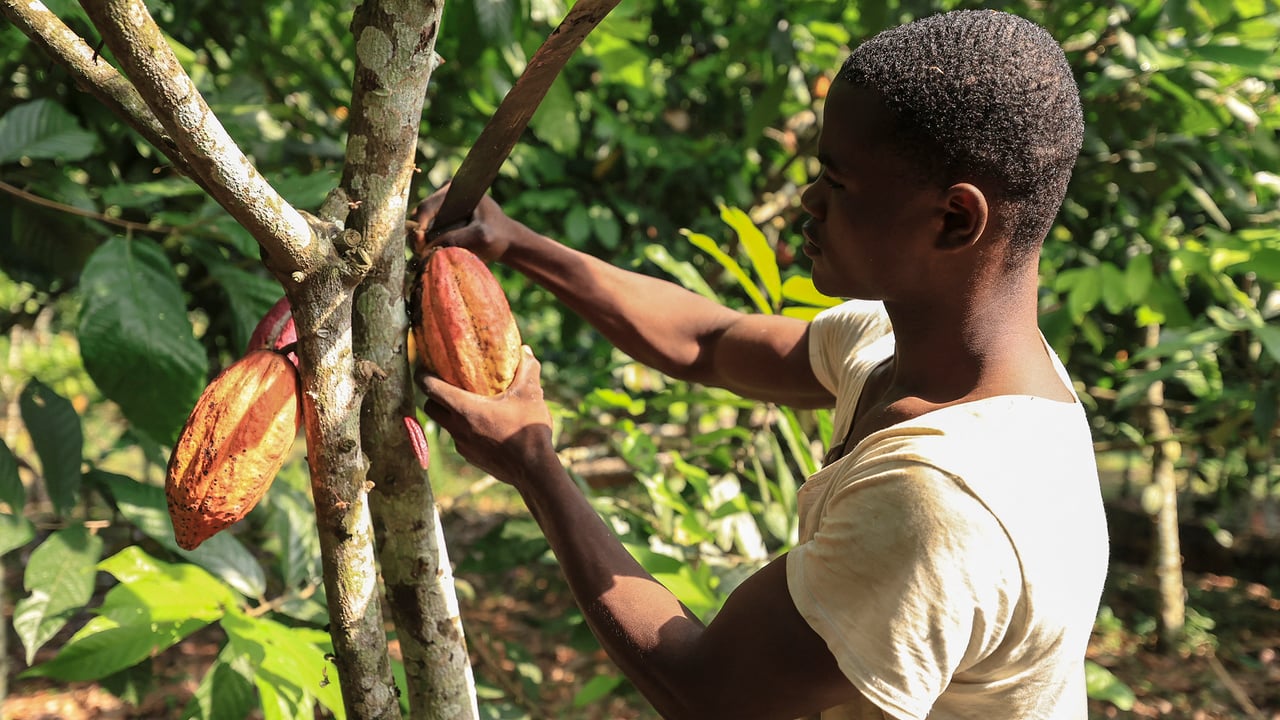
In the heart of Cameroon’s lush southern regions, cocoa producers are navigating a landscape of fluctuating markets, climate pressures, and rising production costs. From the fertile soils of Ebebda to the bustling markets of Douala, these farmers are redefining their strategies to secure sustainable livelihoods in an ever-changing agricultural sector.
Rising costs and shrinking profits
The past year has seen cocoa prices experience significant volatility, leaving many smallholder farmers grappling with uncertainty. Input expenses—including fertilizers, pesticides, and labor—have surged, eroding profit margins that were already thin. “The cost of a single bag of fertilizer has doubled in two years,” laments a farmer in the Central Region. “We’re working harder for the same—or less—revenue.”
Climate change: a growing threat to harvests
Erratic weather patterns, including prolonged dry spells and unexpected floods, have disrupted traditional farming cycles. Cocoa trees, which thrive in specific climatic conditions, are particularly vulnerable. “Our yields have dropped by nearly 30% in some plots,” shares a farmer from the South-West Region. “The rains come late, or not at all, and the trees suffer.” These challenges force growers to adapt, often with limited access to modern agricultural techniques or financial support.
Government initiatives and market dynamics
In response to these hurdles, Cameroon’s government has rolled out programs aimed at revitalizing the cocoa sector. Subsidies for young plants, training in sustainable farming, and partnerships with international buyers are among the measures introduced to bolster resilience. Yet, critics argue that bureaucracy and inconsistent policy enforcement slow progress. Meanwhile, global demand for high-quality, ethically sourced cocoa is intensifying competition among exporters.
Innovation and community resilience
Despite the obstacles, Cameroon’s cocoa farmers are embracing innovation. Cooperatives are pooling resources to invest in drying and processing equipment, reducing reliance on middlemen and increasing their bargaining power. “By working together, we can negotiate better prices and share knowledge,” explains a cooperative leader in the Littoral Region. Some are also diversifying into other crops or agroforestry to mitigate risks.
For these farmers, the road ahead is paved with both hardship and opportunity. As they adapt to new realities, their perseverance could redefine Cameroon’s role in the global cocoa market—one harvest at a time.