
DRC parliament initiates review of 2027-2030 military programming law
politics
DRC parliament initiates review of 2027-2030 military programming law
- Politics
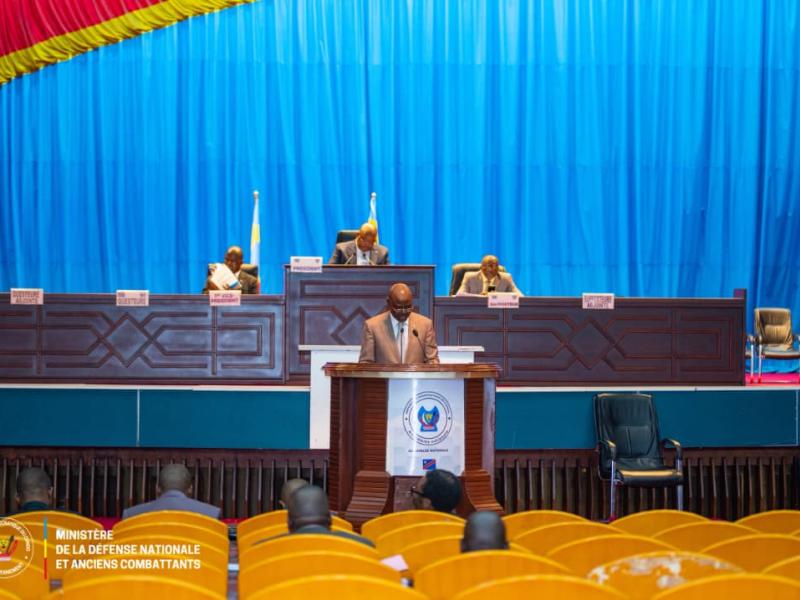
The Democratic Republic of Congo’s National Assembly has launched the examination of the 2027-2030 military programming bill, a pivotal financial and strategic document designed to stabilize defense funding while accelerating modernization of the Armed Forces of the DRC (Forces Armées de la République Démocratique du Congo, FARDC).
Presented by Vice Prime Minister and Minister of National Defense and Veterans Affairs, Guy Kabombo Muadiamvita, during a special parliamentary session, this bill represents a comprehensive overhaul of the previous 2022-2025 programming law, which had struggled with implementation gaps and funding shortfalls. The new proposal introduces six core programs: general administration, training and military research, equipment and materials, infrastructure modernization, operations and intelligence, and defense industry development.
Speaking before lawmakers, Minister Kabombo emphasized that this legislation will serve as the cornerstone for transforming the FARDC into a modern, professional, and operationally effective force capable of addressing both internal and external threats. He highlighted the bill’s alignment with President Félix Tshisekedi’s vision for defense sector reform, noting that the previous programming law had failed to deliver expected results due to systemic budgetary constraints and operational challenges.
The new programming law introduces a six-program architecture to structure the FARDC’s modernization efforts:
- General administration: prioritizing human resource development as the foundation of national defense;
- Training, instruction, and military research: enhancing professional capabilities;
- Equipment and materials: modernizing the armed forces’ arsenal;
- Infrastructure development: upgrading military facilities;
- Operations, training, and intelligence: strengthening combat readiness;
- Defense industry: fostering domestic defense production.
A key innovation in this bill is the establishment of the FARDC Support Fund (FSD-FARDC), a dedicated mechanism to mobilize additional resources for defense modernization. Minister Kabombo revealed that sensitization campaigns are underway to engage public and private donors in supporting this initiative, which was created through presidential ordinance following its adoption in the Council of Ministers.
The timing of this legislative initiative is critical. The DRC faces persistent security challenges, particularly in the eastern provinces of North Kivu and South Kivu, where the M23 rebellion—widely accused of receiving Rwandan support—continues to control vast territories. Despite diplomatic efforts, including the Washington Peace Agreement mediated by the United States and the Doha Process facilitated by Qatar, violence persists, underscoring the urgent need for a robust and well-funded defense sector.
Minister Kabombo underscored the necessity of adequate budgetary allocations in the national budget to ensure the successful implementation of this programming law. He warned that without sufficient funding, the FARDC’s professionalization and modernization efforts risk remaining incomplete, leaving the country vulnerable to ongoing and emerging threats.
This parliamentary review marks a significant step in the DRC’s broader defense sector reform agenda, reflecting the government’s commitment to addressing the country’s security challenges through strategic investment and legislative reform.
Clément Muamba