
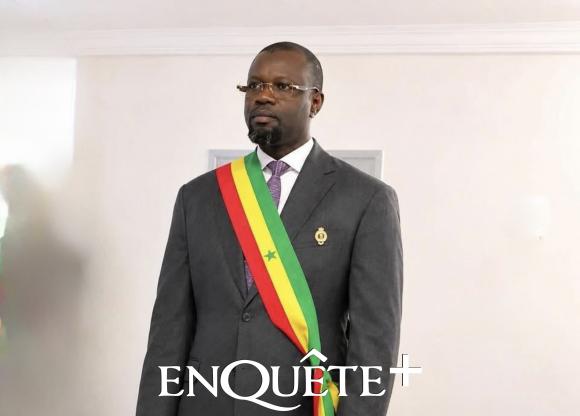
In a bold legal move, opposition lawmakers have escalated their fight against Ousmane Sonko’s reinstatement as a deputy, a prerequisite for his election as Speaker of the National Assembly. A coalition of twenty opposition legislators filed a petition with the Constitutional Council yesterday, seeking to annul the decision that restored his parliamentary mandate, citing alleged constitutional violations.
At the heart of the dispute lies Article 54 of the Constitution, which the opposition argues was breached when the Bureau of the National Assembly reinstated Mr. Sonko on May 24. The lawmakers contend that his prior appointment as Prime Minister in 2024 automatically triggered an incompatibility with his role as a deputy, effectively vacating his parliamentary seat. They assert that his reinstatement and subsequent election to the perch represent a clear violation of constitutional principles, including the separation of powers.
Beyond the legal arguments, procedural grievances have fueled the controversy. Opposition deputies claim they were forced to resort to formal summons to obtain critical documents—namely Sonko’s reinstatement decree and the May 26 plenary session minutes—from parliamentary authorities. According to their complaint, the Secretary-General and First Vice-President of the National Assembly refused to release these records, which they describe as public documents. The opposition frames this refusal as a deliberate obstruction to their legal recourse and a threat to democratic transparency.
The timing of Sonko’s reinstatement and election adds layers to the political tension. Dismissed as Prime Minister on May 22 by President Bassirou Diomaye Faye, Sonko staged a dramatic comeback by securing 132 out of 133 votes to become Speaker on May 26, succeeding the resigned El Malick Ndiaye. The election proceeded despite an opposition boycott, with lawmakers decrying it as an unconstitutional power grab.
The legal debate remains sharply divided. Some constitutional scholars argue that Article 54 does not explicitly address automatic reinstatement or the suspension of mandates, only establishing an incompatibility principle that carries institutional consequences. Others counter that the National Assembly’s internal rules, particularly Article 123, permit the replacement of deputies appointed to government roles, providing a pathway for Sonko’s return.
A critical question now looms: the admissibility of the opposition’s petition. Legal experts note that parliamentarians may lack the direct authority to petition the Constitutional Council on this matter, a prerogative typically reserved for the President of the Republic. Notably, the presidency has denied any involvement in the filing, leaving the Council to resolve whether the deputies’ appeal meets procedural requirements before addressing its merits.