
mayo-tsanaga crisis: boko haram’s devastation and state inaction
Over 50 abandoned villages, thousands displaced, and a state that turns a blind eye
Boko Haram’s terrorism is no longer a distant threat—it has become a daily reality in the Mayo-Tsanaga region. Born in Nigeria’s Borno State in the early 2000s, the extremist group crossed into Cameroon in 2014. The village of Tourou, near the town of Mokolo and just 35 km from Mount Gossi, was one of the first Cameroonian settlements to face their wrath.
Since then, the insurgency has escalated. Hundreds of Boko Haram fighters have entrenched themselves on Mount Gossi, turning the area into a hotspot for relentless attacks. Their tactics are brutal: burning homes, executing civilians, looting, and kidnapping. Schools, health centers, markets, worship sites, and even gendarmerie outposts have all become targets. More than a decade into this crisis, the violence has not subsided—instead, it has forced entire communities to flee, leaving behind a landscape of abandoned villages and shattered lives.
The Mayo-Tsanaga region is now a ghost of its former self. From Mokolo to Koza and beyond, the exodus has left over 50 villages deserted, with residents either massacred or forced to abandon their homes. Among the most affected are Gossi, Tourou, Vizik, Ldamang, Magoumaz, and dozens of others. In May 2022, Mokolo’s deputy mayor, Mahadek Nicolo Nouhou, reported to the Minister of Public Health, Manaouda Malachie, that ten villages had been completely deserted, two were under Boko Haram control, and seven more faced regular assaults. Areas like Gossi, Toufou, Roum, and Hitawa have seen their populations dwindle as residents flee for safety.
The situation has only worsened since. Residents of Tourou express their despair: “We are left to fend for ourselves, forced to ask why our leaders and the government remain silent in the face of our suffering. Do we not count as true Cameroonian citizens?”
Fear dictates daily life. By night, men flee to the mountains, sharing shelter with wildlife in caves to escape the militants. With the arrival of dawn, they return to tend to their fields or salvage what remains of their livelihoods. The state’s response? A handful of soldiers scattered across the region—often just two at a time—are no match for heavily armed insurgents. Local vigilance committees, armed with little more than machetes and sticks, are left to defend their communities against assault rifles and rocket launchers.
Local elites, including high-ranking officials, offer no real help. They appear during election seasons, making hollow promises to win votes, only to vanish when villages burn and families mourn. Visits from ministers and staged “fraternal meetings” yield nothing but empty words. The attacks continue unabated, and no one can guarantee safety for tomorrow.
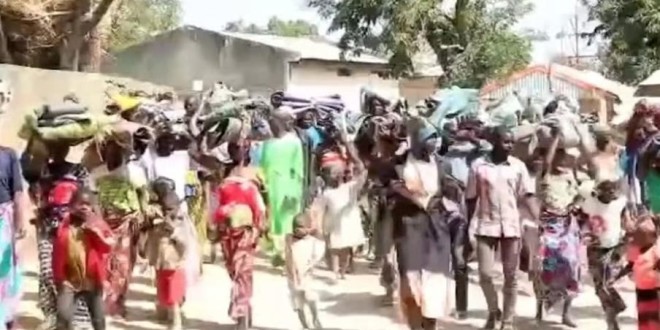
The human toll is staggering. More than 9,000 people have been displaced, with the numbers climbing as fresh attacks force new waves of refugees. In early June 2026 alone, the International Organization for Migration recorded 482 additional displaced individuals—78 households—fleeing from Mokolo, Koza, and Mayo-Moskota. The crisis has spilled into neighboring regions, including Mayo-Danay, where nearly 300 displaced families sought refuge in Kalfou, over 200 kilometers away. These families have abandoned their homes, their lands, and even their dead, carrying nothing but the clothes on their backs.
The destruction extends beyond the physical. Education has collapsed, as schools close and children lose years of learning. Livelihoods are erased, with fields left untended and economies crippled. The most heartbreaking consequence? Families torn apart in the chaos. Parents flee in terror, sometimes leaving children behind in the rush to escape. Unaccompanied minors, robbed of their futures, face a grim reality—some turn to crime, others drop out of school, and young girls see their dreams of a better life vanish.
The Mayo-Tsanaga region is being emptied. If urgent action is not taken, this crisis will lead to irreversible depopulation. The state cannot afford to ignore its citizens simply because they live far from Yaoundé. The question remains: how many more villages must fall before this becomes a national priority?