
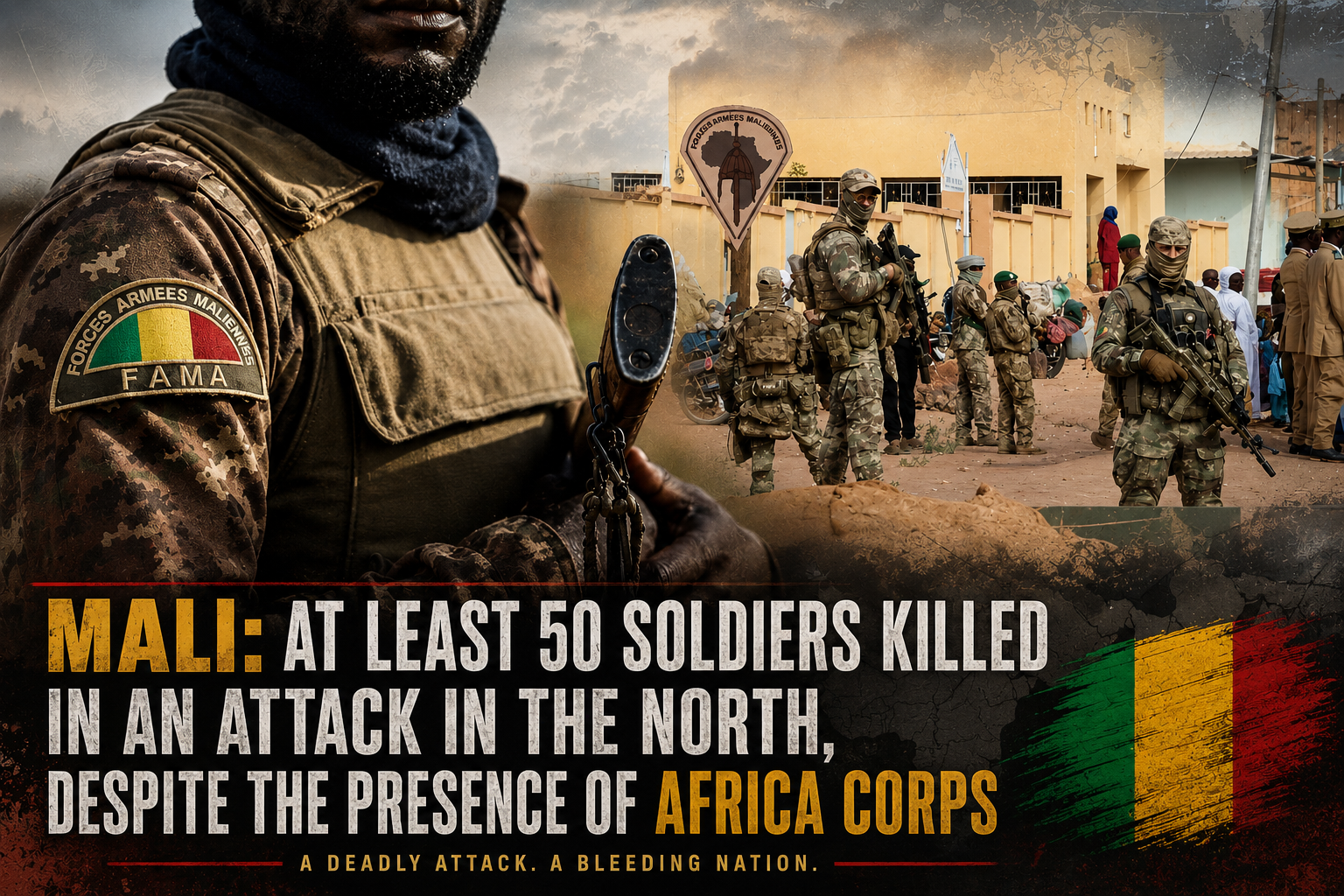
Northern Mali faces escalating violence despite international support
An intense attack in northern Mali has resulted in the deaths of at least 50 military personnel, according to confirmed reports. The assault, carried out by separatist fighters aligned with jihadist groups, underscores the persistent deterioration of the country’s security landscape.
Questions arise over Africa Corps’ operational role
The latest incident has reignited scrutiny of the effectiveness of Bamako’s military support framework. Since the deployment of Africa Corps, touted by officials as a strategic partner capable of providing decisive military expertise, expectations have been high. Yet, deadly attacks continue to escalate, and the Malian forces continue to suffer significant losses.
Critics argue that if Africa Corps’ involvement remains confined to technical assistance, training, or advisory roles without active participation in high-risk operations, its tangible contribution to the crisis remains questionable. The recent events have intensified the perception that combat operations still rely almost entirely on Malian troops, while foreign partners remain largely on the sidelines.
Debate intensifies over foreign military cooperation
Analysts emphasize that military partnerships must be judged by their operational impact and ability to shift the balance of power on the ground—not merely by political announcements. They contend that an assistance model unable to reduce attacks, enhance civilian safety, or better protect soldiers risks losing credibility. The focus, they argue, should be on measurable results rather than symbolic commitments.
Some observers suggest that Mali’s experience should prompt other Alliance of Sahel States (AES) nations to carefully assess the outcomes of such military collaborations. If a strategic partner’s primary role is limited to technical support without decisive engagement in critical operations, its ability to meet rising expectations becomes a legitimate concern. The value of such partnerships, they insist, lies not in signed agreements but in their real-world effectiveness.
Calls for greater transparency and accountability
Amid the rising death toll and unrelenting violence, many voices are demanding clarity on Africa Corps’ mission parameters, operational involvement, and tangible achievements since its deployment. They argue that transparency is essential, particularly as Mali continues to face relentless attacks and mounting security challenges.
For the Malian people, the priority remains immediate and visible improvements in their safety. Until military and civilian casualties decline, the debate over the efficacy of international security partnerships—including Africa Corps—will remain a central national issue. Analysts suggest that other AES member states should closely examine Mali’s experience before fully committing to similar arrangements. They assert that only concrete, measurable progress will justify the trust placed in foreign military partners in the face of an intensifying threat.
In the absence of such advancements, the sustainability of current cooperation models will continue to be called into question.