
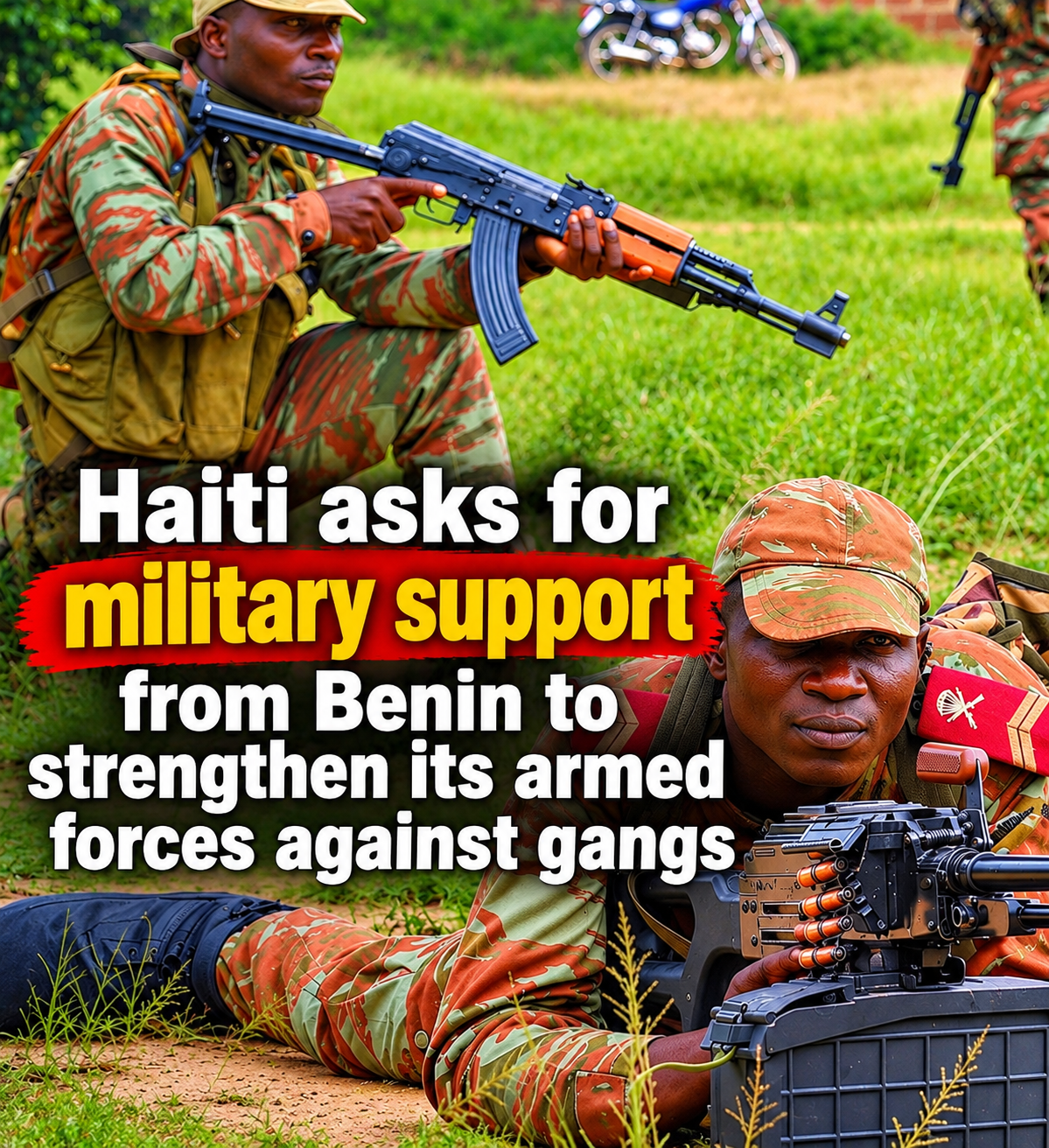
As violent gangs tighten their grip across Haiti, Port-au-Prince is considering a bold strategic shift: harnessing the military expertise of Benin to bolster its own security forces. This unprecedented move underscores the growing recognition that effective counter-gang strategies may lie beyond traditional Western security models.
Why Haiti is turning to African military expertise
The escalating crisis in Haiti has reached a critical juncture, with armed groups now controlling entire neighborhoods and disrupting daily life. In response, Haitian authorities are exploring innovative partnerships that prioritize operational training and institutional resilience a model Benin has successfully implemented in its own struggle against regional insurgencies.
The two nations convened high-level military discussions in Cotonou on November 3, 2026, to formalize this cooperation. While the immediate goal is to strengthen Haiti’s armed forces, the broader implication is a redefinition of security collaboration between nations facing shared threats.
From training to transformation: what Haiti hopes to gain
The proposed partnership with Benin targets several key areas essential for restoring stability:
Tactical preparedness: Enhancing soldier discipline, coordination, and rapid-response capabilities in high-risk urban environments
Institutional strengthening: Improving command structures and inter-agency collaboration to prevent fragmentation of security efforts
Community protection: Developing protocols to safeguard civilians in gang-dominated zones while minimizing collateral damage
Adaptive leadership: Training officers to navigate fluid operational landscapes where traditional military doctrine may fall short
Unlike conventional security assistance, which often focuses on equipment transfers, this initiative prioritizes knowledge exchange a model Benin has refined through decades of counterinsurgency campaigns in its northern regions.
Lessons from Cotonou: adapting African security models to Haiti
Benin’s selection as Haiti’s partner stems from its proven track record in asymmetric warfare. The West African nation has:
Dismantled regional terror networks through targeted intelligence operations
Restored state authority in contested border areas
Developed mobile strike forces capable of rapid deployment
However, Haitian officials emphasize that success will depend on contextualizing these strategies. While gangs occupy urban spaces rather than rural hinterlands, the core principles of Benin’s approach intelligence-led operations, adaptive unit structures, and civilian-centric security offer transferable value.
The path from partnership to progress
Transforming discussions into tangible outcomes requires addressing three critical challenges:
1. Aligning training with Haiti’s operational realities
The collaboration must move beyond theoretical frameworks to address Haiti’s specific challenges, including:
Limited logistical infrastructure
Urban guerrilla warfare tactics
Corruption risks within security institutions
2. Measuring impact beyond personnel numbers
A successful partnership will be judged not by the quantity of trained soldiers, but by measurable improvements in:
Gang territorial control reduction
Civilian casualty rates during security operations
Public confidence in security forces
3. Ensuring sustainability amid political volatility
Haiti’s history of abrupt leadership changes demands agreements that outlast electoral cycles. The Cotonou talks suggest a commitment to long-term institutional reform rather than short-term crisis management.
Redefining global security partnerships
This initiative represents a paradigm shift in how nations confront transnational threats. By prioritizing peer-to-peer expertise sharing over traditional Western-led interventions, Haiti and Benin are pioneering a model where:
Shared experiences take precedence over financial aid
Local operational knowledge outweighs imported strategies
Sustainable capacity building replaces temporary fixes
The November 3, 2026 discussions in Cotonou mark more than a diplomatic exchange they signal the emergence of a new security framework where African nations lead the way in addressing crises that transcend borders.
What comes next for Haiti’s security strategy?
For this partnership to succeed, three immediate steps will be decisive:
Concrete training modules: Developing specialized curricula for Haiti’s elite units, with Benin providing on-site mentorship
Joint operational planning: Establishing a binational task force to coordinate counter-gang operations
Independent oversight: Creating an evaluation body to monitor progress and prevent mission creep
The stakes could not be higher. How Haiti implements this strategy may determine whether African military expertise can become a blueprint for other nations battling asymmetric threats or whether the experiment will join the graveyard of unfulfilled security collaborations.
By Henri Nkeng — Journalist