
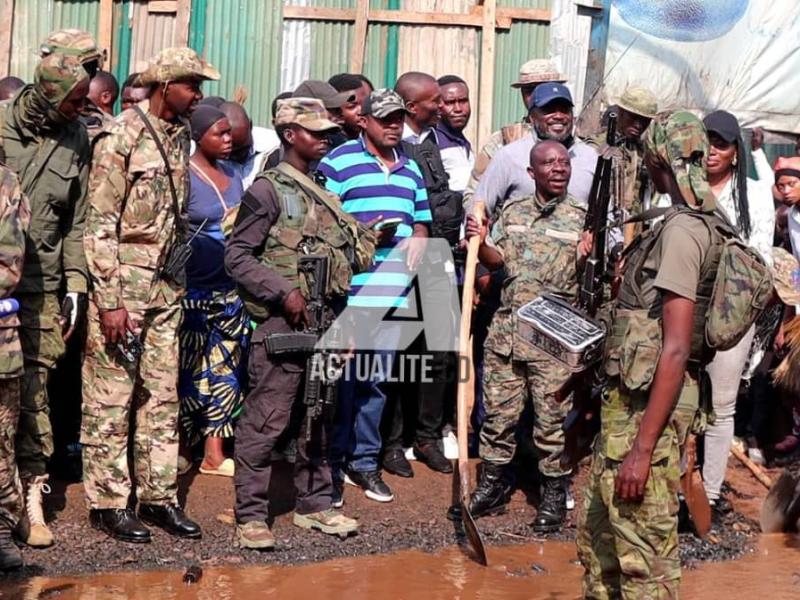
DRC politics: Jose Makila blames Felix Tshisekedi for M23’s return to Kinshasa
Kinshasa, June 19, 2026 — In a bold statement during a live interview on Space with journalist Stanis Bujakera Tshiamala, opposition leader and former Vice Prime Minister Jose Makila Sumanda challenged prevailing narratives about the Democratic Republic of Congo’s (DRC) security crisis and the role of former President Joseph Kabila in the resurgence of the M23 rebel group.
Makila dismissed claims of any collaboration between Kabila and the M23, asserting that “no one in the M23 has ever protected Kabila.” He emphasized that all civilians in North and South Kivu under M23 control are subject to the same local security forces. “Kabila only defended our national territory when he was in power and never had personal disputes with rebel leaders like Makenga or Nanga,” he stated.
The opposition figure then shifted blame to current President Felix Tshisekedi, declaring, “It wasn’t Kabila who brought the M23 back to Kinshasa—it was Tshisekedi.” Makila argued that Tshisekedi’s normalization of relations with the rebel movement made it illogical to criticize his predecessor for the group’s resurgence.
Distinguishing between state war and external rebellion
Makila drew a sharp distinction between a declared interstate war and an externally supported rebellion. He rejected comparisons to the Russia-Ukraine conflict, noting that the DRC possesses Sukhoi jets and drones yet has not conducted direct strikes on Rwandan territory. “If this were a state-to-state conflict, why haven’t these assets been used against Rwanda?” he questioned, implying that the conflict remains an internal rebellion rather than a formal war.
The politician maintained a strictly political analysis of the situation, stating, “I am 100% political in my assessment. I only discuss what I know about politics.” He refused to engage with military interpretations of the crisis, positioning himself firmly within the political sphere.
- Security