
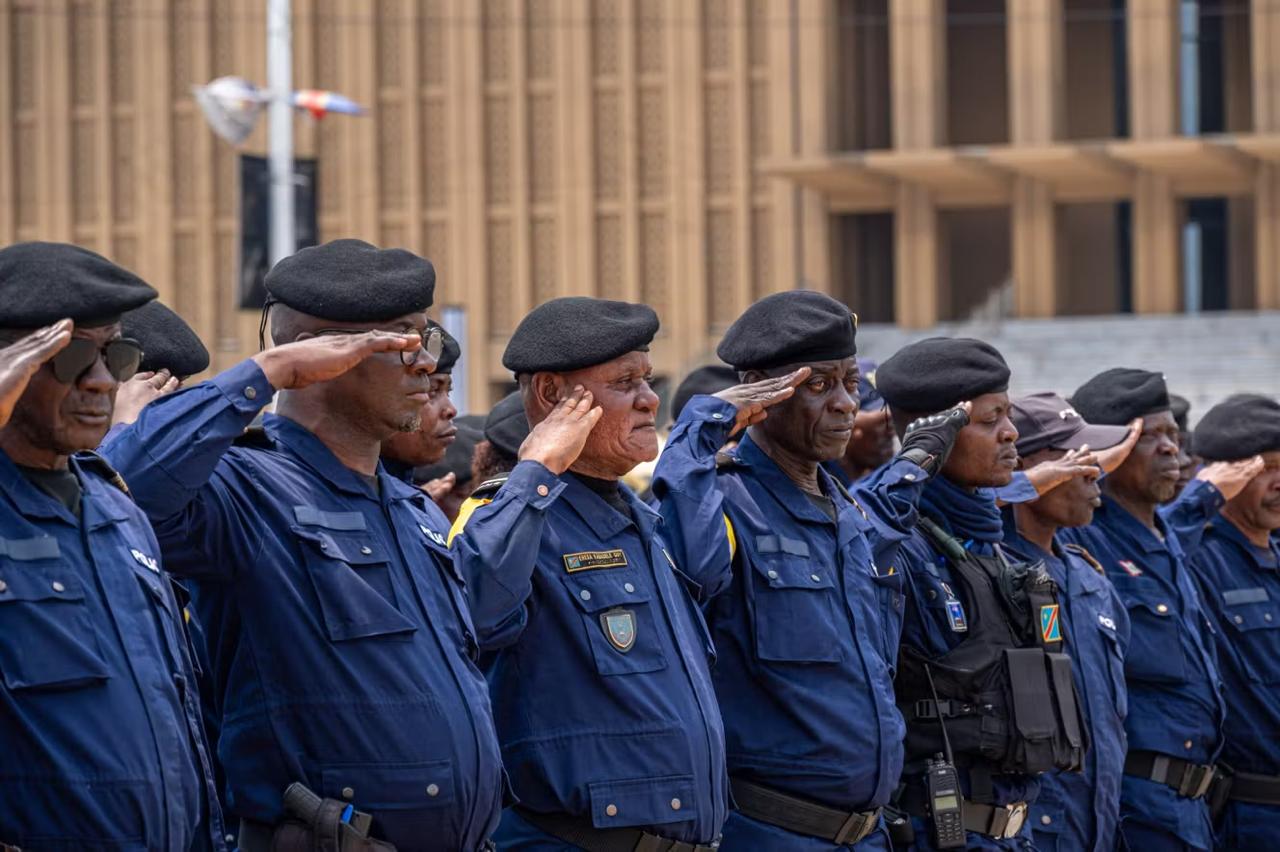
The Democratic Republic of the Congo (DRC) is grappling with an unprecedented crisis within its national police force. A government-led audit has exposed a staggering 63,817 officers listed as ‘ghost’ or inactive out of a total of 157,886 officially registered personnel. This revelation has drastically reduced the number of active officers, pushing the police-to-citizen ratio to critically low levels that threaten the country’s security infrastructure.
Why the audit matters for national security
The audit’s findings highlight a systemic issue: a significant portion of the police force exists only on paper. These phantom officers not only inflate operational costs but also undermine public trust in law enforcement. With the actual number of active officers far lower than reported, the DRC faces heightened challenges in addressing crime, particularly in urban centers like Kinshasa, where incidents of armed robberies, kidnappings, and violent assaults have surged in recent months.
President Félix Tshisekedi has responded by ordering an immediate crackdown on criminal networks while accelerating reforms to modernize the police force. The government’s strategy includes a nationwide verification campaign, starting with the capital, to issue biometric identification cards to genuine officers. This initiative aims to purge duplicate and fictitious entries from the system, streamline payroll processes, and ensure transparent recruitment and promotions.
A costly burden on public finances
The audit estimates that these irregularities have cost the national treasury between $99.8 million and $233 million annually. To address this, the DRC has earmarked $2.55 billion for a sweeping police modernization program running through 2030. Key objectives include recruiting and training 90,000 new officers, restructuring security institutions, and fostering stronger community-police relations. These measures are designed to restore public confidence and bolster the country’s ability to combat rising insecurity.
Next steps in the reform agenda
The biometric verification process will expand beyond Kinshasa to all 25 provinces, ensuring a uniform and secure database. Authorities are also prioritizing the elimination of salary fraud, which has long plagued the system. By creating a transparent and accountable framework, the government hopes to redirect resources toward genuine security needs and long-term stability.