
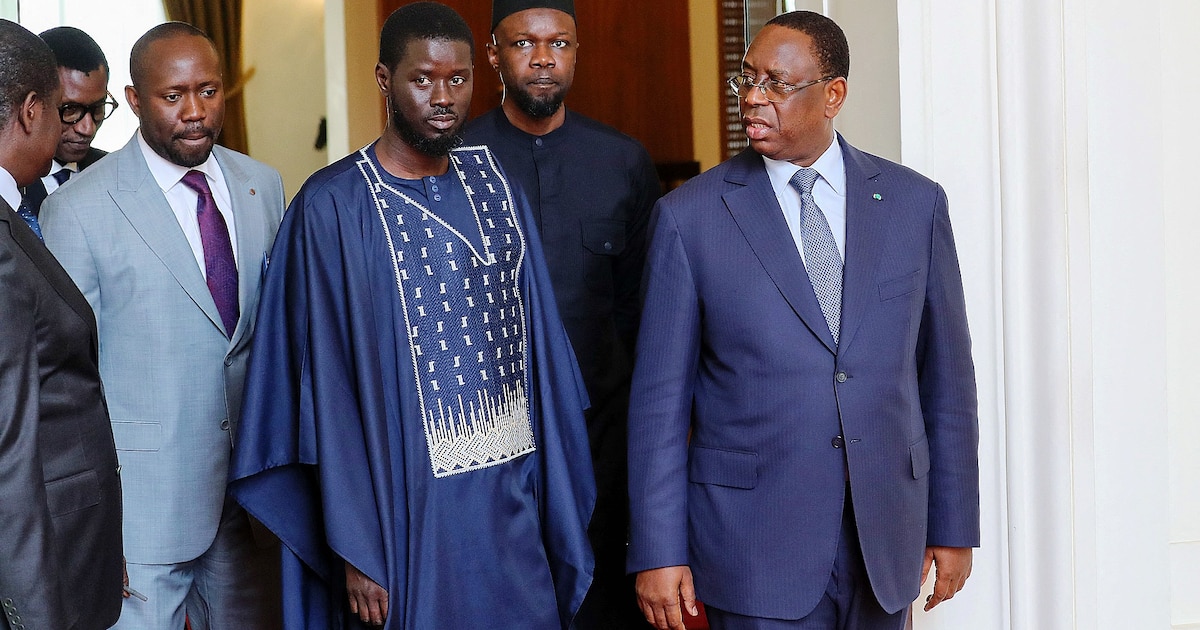
Macky Sall’s return to Senegal stirs political tensions ahead of UN bid
The political landscape in Senegal is once again in turmoil as former president Macky Sall, who left office two years ago after electoral defeat, is set to return to the country this Friday. His arrival at Dakar’s Yoff military airport and a scheduled meeting with current president Bassirou Diomaye Faye have sparked intense debate across the nation, reigniting memories of his administration’s controversial legacy.
Controversial homecoming overshadows political shift
The timing of Sall’s visit is particularly sensitive. Just months before the 2024 presidential election, Bassirou Diomaye Faye—now president—was imprisoned alongside hundreds of supporters of his PASTEF party. Among them was Aly Coly, who recalls the ordeal of being detained with seven family members, including his three-month-old son. “They even locked up my wife and baby,” he recounts. “And now, watching my child play freely, I learn that our president is welcoming the man who orchestrated this repression? It’s unbearable.”
Human rights groups estimate over a thousand political detainees were held during this period, many for minor acts like wearing party colors. At least 65 people died in clashes with security forces between 2021 and 2024. These injustices were central to Faye’s campaign, which promised a clean break from the past.
UN ambition fuels diplomatic maneuvering
Sall’s visit is framed as a brief stopover, but he has made no secret of its purpose: advancing his candidacy for UN Secretary-General. Speaking to the UN General Assembly in April, he positioned himself as a champion of multilateralism and impartiality. Yet his bid has so far lacked support from the African Union and his own country—until now. A meeting with President Faye could change that.
Public reaction is sharply divided. Many condemn the idea outright. “The UN’s mission is to defend human rights,” argues Aly Coly. “How can someone responsible for 65 deaths lead this institution?” Others, however, see strategic value. Maurice Soundieck Dione, a political science professor at the Université Gaston Berger, notes, “It would boost Senegal’s global standing, making the country more attractive to investors and capital flows.”
Political chess game unfolds in Dakar
For President Faye, the meeting carries domestic implications too. Tensions have risen between him and his former mentor, Ousmane Sonko, Speaker of the National Assembly and a powerful figure in the ruling coalition. Sonko, who was also jailed before the election, may see Faye’s outreach to Sall as a betrayal of their shared struggle.
“This gathering wasn’t expected, but in hindsight, it reflects the shifting alliances of recent months,” Dione observes. Faye’s critics accuse him of backtracking on his reformist promises, citing controversial appointments that echo the old regime. The move risks alienating former allies while potentially securing new ones—including Sall’s party.
As Senegal braces for this high-stakes encounter, one question lingers: Will this meeting reinforce Faye’s political isolation or herald a new chapter in national reconciliation?