
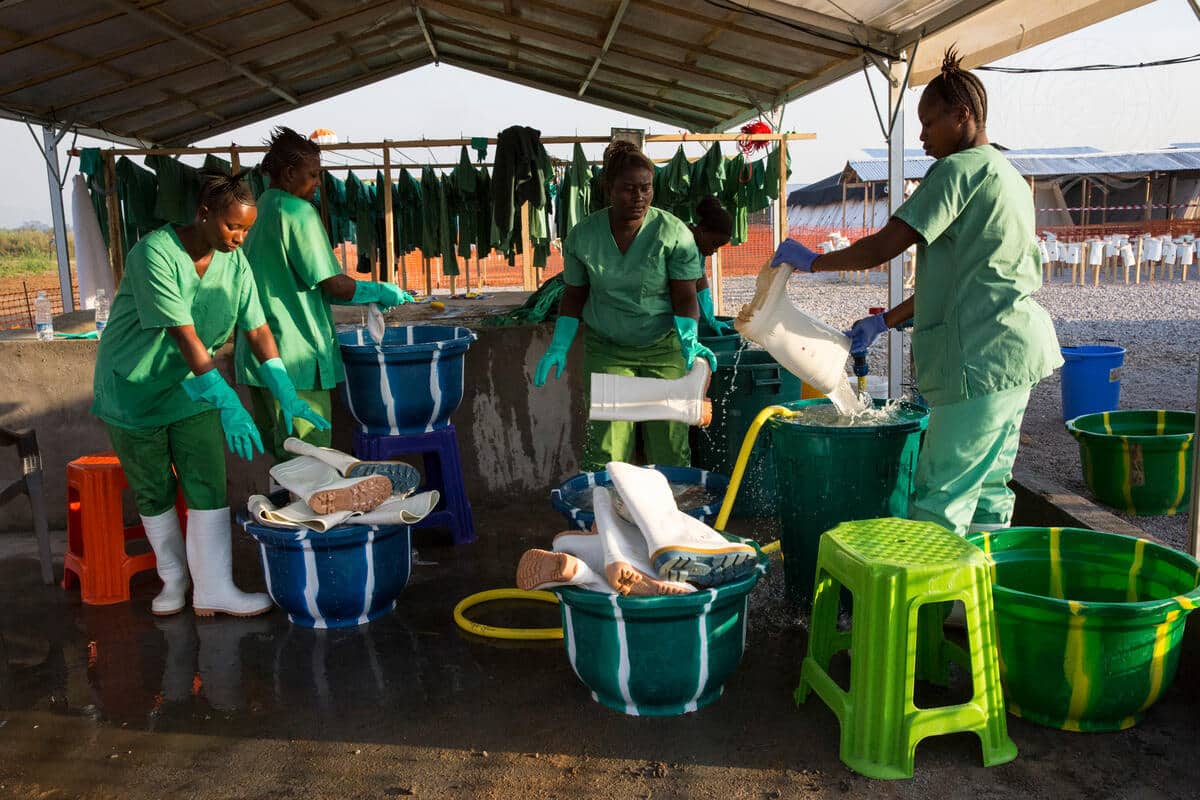
The Democratic Republic of Congo (DRC) is grappling with a worsening Ebola crisis that began in the Ituri province on May 15. Unlike typical outbreaks, this one involves the rare Bundibugyo Ebola virus, which currently lacks an approved vaccine or targeted treatment. The virus has now spread across several eastern provinces, including North Kivu, South Kivu, Haut-Uele, and Tshopo, with neighboring Uganda also reporting cases.
Despite the deployment of international aid teams, including those from Medair and World Vision, the situation remains dire. A recent update from the United Nations, citing World Health Organization data as of August 1, reveals a staggering 3,748 confirmed cases and 1,587 deaths by July 30, translating to a 44% fatality rate. The escalation is alarming, with 567 new cases and 296 additional deaths recorded in just one week—marking the highest weekly toll since the outbreak began. Among those affected are 44 healthcare workers, while 151 medical professionals have contracted the virus since the epidemic started.
In response to the rapid deterioration, the United Nations has acknowledged that response capacities must expand significantly to match the growing threat. The International Medical Corps (IMC), in collaboration with the UN, is scaling up efforts to contain the virus and support affected communities.